
Whether planting a new lawn from seed or sod, it seems that many local landscapers and home builders have forgotten that soil preparation is the most important step for successful establishment. In the rush to build new homes throughout Bartow County, our office has been getting numerous calls from frustrated homeowners that end up with dead or dying lawns within a few months after moving in. Typically, home warranties do not include landscaping, and the contractors are long gone by the time the problem has manifested. The home passes inspection and no one is held accountable for poor landscape installation practices.
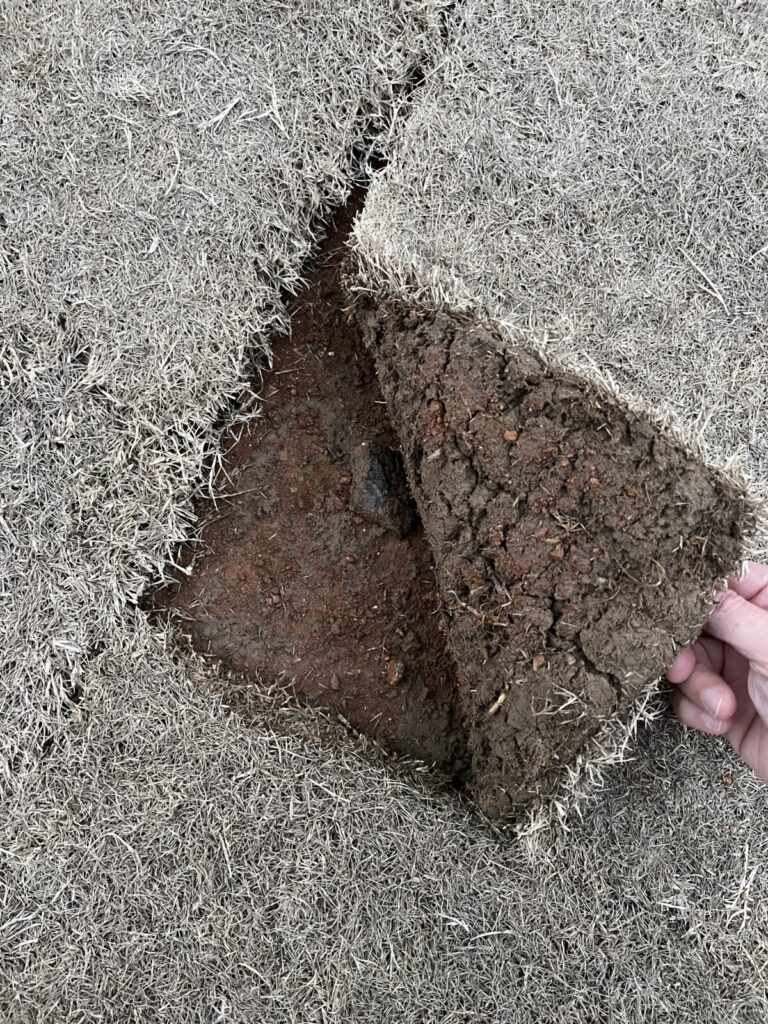
Unfortunately, many homeowners end up spending a lot of money to replace the lawn and end up making the same mistakes with different landscapers. The cheapest quote to replace a lawn is typically not going to be the best option, since the quickest way to cut costs is by neglecting soil preparation. Most new homeowners are not going to be able to afford a high-quality landscaping job. Planting grass seed or sod directly on top of compacted clay soil with no soil preparation is never going to end well. Ultimately, the cost of replacing a lawn by cutting corners to save some money ends up costing more than if it had been done properly the first time.
Good soil preparation begins with a soil test to determine pH and nutrient levels. In most cases, the topsoil around a newly constructed home has been removed and you are left with a clay subsoil that is very acidic and does not have enough nutrients to establish a new lawn. This is the part that takes some time to correct with limestone; a change in soil pH can take a minimum of three to four months and should be done prior to planting a permanent lawn. Most home builders don’t have that kind of time on their hands, which is why this step is often neglected.
Remove any surface debris such as rocks, tree stumps, construction trash, etc. Any stumps or debris will eventually decay and leave deep depressions in the lawn several years later if not removed prior to planting. Also, any drainage issues should be corrected with proper rough grading or the installation of subsurface drainage, if needed.
The next step for soil preparation is cultivation of the soil to overcome any soil compaction issues. Obviously, a new home site will have highly compacted soil—the consistency of concrete—which is good for the foundation of a home. However, it will be very difficult to grow anything in this situation. The soil should be tilled several inches deep and any limestone recommended by the soil test should be incorporated into the soil. In most cases, this is not a job that a homeowner can do with just a walk behind rototiller. A heavy tractor implement is required for this job.
Replacing the topsoil or adding soil amendments such as compost are highly beneficial as well. The recommended rate is 500 to 1,000 pounds of compost per 1,000 square feet incorporated into the upper four inches of soil. Sand is not recommended as an amendment to Georgia’s clay soils. Final grading and adding a starter fertilizer based on the soil test should be delayed until right before planting.
A final consideration is the timing of planting certain grass species. We are seeing a lot of dormant sod being planted in the winter months, which is a risky endeavor. This winter especially has been unforgiving with abnormally dry weather and extreme temperature fluctuations—a recipe for dead sod. If there is no soil preparation and no irrigation system in place to keep the sod from drying out, then we do not recommend planting sod in the winter. Warm-season grasses such as Bermudagrass and Zoysia should ideally be planted in mid to late spring or early summer. Cool-season grasses such as Fescue should ideally be planted in the fall or early winter. For more information, see our free UGA Extension Bulletin 1533-2, “Lawns in Georgia: Establishment” on our website or call our County Extension office with any questions.
