
A local church trustee was finding holes in his church’s mail this summer. Not the kind of “holy” mail they wanted to receive. The trustee brought samples of the mail to the extension office for closer examination. Strangely, holes were chewed through the outer layer of the envelopes, but the mail inside was intact—a small miracle in itself. Also, if there were a stack of envelopes in the mail pile, only the top or bottom envelopes were chewed and those sandwiched in the middle were not affected. This was observed on multiple occasions throughout the summer and fall.
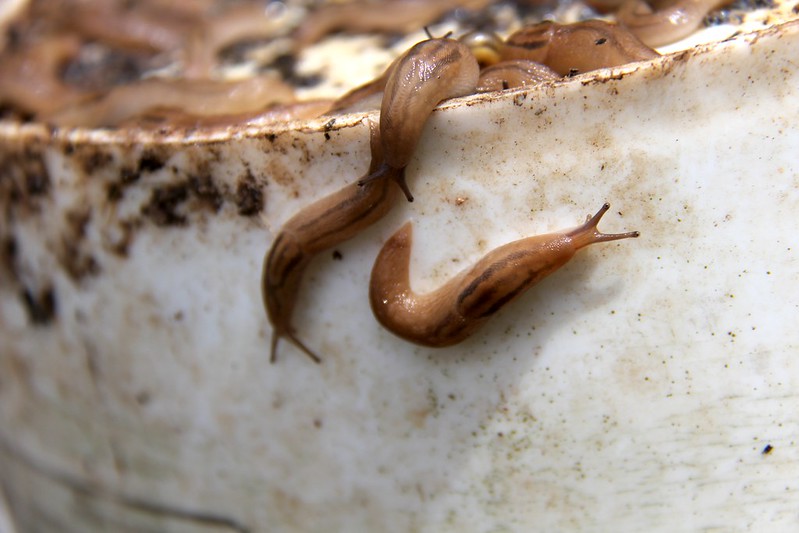
According to the church trustee, this obviously involved some kind of strange, demon-possessed animal or insect. He sprayed and dusted the mail box with insecticides on multiple occasions, but to no avail. Perplexed by the demon’s immortality, the trustee sought the help of the county Extension agent, who came highly recommended by local neighbors. After closer examination of the Holy mail under the microscope, it was determined that there were signs of scat and slime trials, which clearly indicated slugs or snails were involved with the chewing damage.
Further inquiry about the mailbox revealed that there were problems with water seeping through the box and causing the top and bottom pieces of mail to become damp—especially with all the rain this summer. Slugs, by their very nature, must have moisture to survive and are known to eat damp paper on occasion. Ultimately, the solution involved either finding a water tight mailbox as a replacement, or sprinkling slug/snail bait around the mailbox as a control treatment. The moral of the story: we now know why the postal delivery service is called SNAIL MAIL. A few weeks later, the church trustee stopped by my office to thank me for solving their issue. The church’s Holy mail is no longer holey.
Slugs and snails are more often a problem in leafy vegetables, strawberries, flowers, and certain perennials such as Hostas. Note that slugs and snails are not insects, so most insecticides won’t work on them. Slugs and snails are actually mollusks, which are closely related to clams and oysters. Slugs mainly feed at night and then hide by day, finding moist places under leaves or mulch to avoid drying out. To reduce slug and snail damage in a garden, avoid watering plants during the evening. Plants that stay moist all night are far more likely to have slug/snail damage. Instead, water during the early morning hours to allow plants to dry more quickly and minimize problems at night. Of course, you don’t have much control over the weather—which may force you to take a more aggressive measure for control.
One option for trapping and collecting slugs is to place boards, shingles, newspaper or perhaps junk mail around plants that are being eaten by slugs. The slugs will congregate under these items and you can easily scoop them up or squish them when you scout for slugs during the daytime. There are also slug/snail baits that you can purchase at your local garden center. Some of the more common bait products contain iron phosphate or sulfur and are considered organic treatment options. Control products that contain metaldehyde are also effective, but tend to get inactivated by rain and can be toxic to pets that ingest it. Be sure to read and follow the product label for application rates and safety precautions. Avoid contacting plant leaves with these bait products, which could cause leaf injury. Place bait products on the ground around plants that are susceptible to slug/snail damage. And most importantly, don’t forget to keep your mailbox closed tight!
