Perilla mint (Perilla frutescens) also known as the Beefsteak Plant, is an invasive annual weed that poses a serious threat to livestock in pastures throughout the southeastern United States. Originally introduced from eastern Asia for culinary, ornamental, and medicinal purposes, the plant has become widely established in natural areas, hayfields, and grazing lands. While it may appear harmless at first glance, perilla mint is highly toxic to cattle, other ruminants, and horses. Producers should learn to identify this plant and manage infestations early to reduce the risk to their animals.

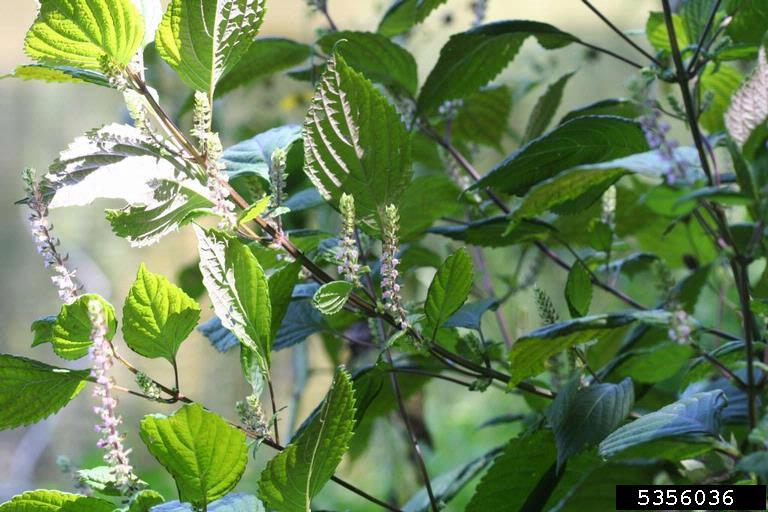
Perilla mint is a member of the mint family (Lamiaceae) and shares many of the characteristics common to that group. The plant grows upright and typically reaches about two feet in height, though in shaded and fertile areas it can grow as tall as five or six feet. The stems are square, which is a common identifying feature of mint family plants. Leaves occur opposite each other along the stem and have coarsely serrated edges. Many plants display a purple coloration on the underside of their leaves, which can help with identification in the field. When crushed, the leaves release a distinctive mint-like aroma.
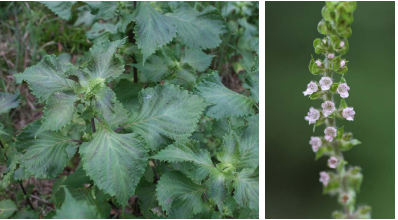
The plant produces flower spikes that can reach about six inches in length and contain many small white to purple flowers. Flowering typically occurs between July and September. Perilla mint is a prolific seed producer, with each plant capable of producing roughly 1,000 to 1,500 seeds. These seeds can remain viable for several years, allowing infestations to persist once the plant becomes established. In winter, the dried stems often remain standing, which can help identify areas where new populations are likely to emerge the following growing season.
Perilla mint thrives in disturbed areas and is commonly found along fence lines, woodland edges, creek banks, and shaded portions of pastures. It also tends to establish around hay rings, feedlots, barns, and other areas where livestock traffic disturbs the soil. These environments provide fertile conditions that favor rapid plant growth and seed production.
The primary concern with perilla mint is its toxicity to livestock. The plant contains compounds known as perilla ketones that can cause a condition called atypical interstitial pneumonia in cattle and other animals. When animals consume the plant, fluid accumulates in the lungs, reducing oxygen exchange and causing severe respiratory distress. Affected animals may show symptoms such as labored breathing, coughing, and weakness. In severe cases, death can occur within hours or within a few days of consumption.
The risk of poisoning is highest when the plant enters the flowering and seed production stages. Unfortunately, this period often coincides with late summer conditions when forage quality and availability may decline. Livestock may also congregate in shaded areas during hot weather, which are locations where perilla mint frequently grows. These factors increase the likelihood that animals will consume the plant.
Effective management focuses on preventing the plant from establishing and producing seed. Maintaining healthy, dense pasture stands is one of the most important preventive strategies. Overgrazed or poorly managed pastures allow weeds like perilla mint to invade and spread. Producers should regularly scout pastures, particularly shaded or disturbed areas where infestations are most likely to occur.
Several herbicides are effective for controlling perilla mint. Preemergence herbicides such as Grazon P + D, Weed Master, and Grazon Next HL can be applied before seedlings emerge in late spring. These treatments work best when applied prior to seed germination and followed by rainfall to move the herbicide into the soil.
| Trade Name: | Active Ingredient: | Rate per Acre: |
| Grazon P+D | picloram +2,4-D | 32 fl. Ounces |
| Weed master | dicamba + 2,4-D | 32 fl. Ounces |
| Grazon Next HL | aminopyralid + 2,4-D | 19 fl. Ounces |
Postemergence herbicide options include products containing 2,4-D, aminopyralid, dicamba, glyphosate. These should be applied to actively growing plants during the seedling stage through early flowering for the best results. If herbicides are used, livestock should be removed from treated areas until the plants are fully controlled to reduce the risk of accidental consumption.
| Trade Name: | Active Ingredient: | Rate per Acre: |
| Grazon P+D | picloram +2,4-D | 16 fl. Ounces |
| Weed master | dicamba + 2,4-D | 16 fl. Ounces |
| Grazon Next HL | aminopyralid + 2,4-D | 19 fl. Ounces |
| Round Up (41% a.i.) | glyphosate | 24 fl. Ounces |
Mechanical methods such as mowing or hand pulling can also be effective when performed before the plants produce seed. However, because perilla mint produces large numbers of seeds, control efforts often need to continue for several seasons.
*Grazing Restrictions as well as other restrictions may be present after applying some of these products. Make sure to consult with the product label for more information.