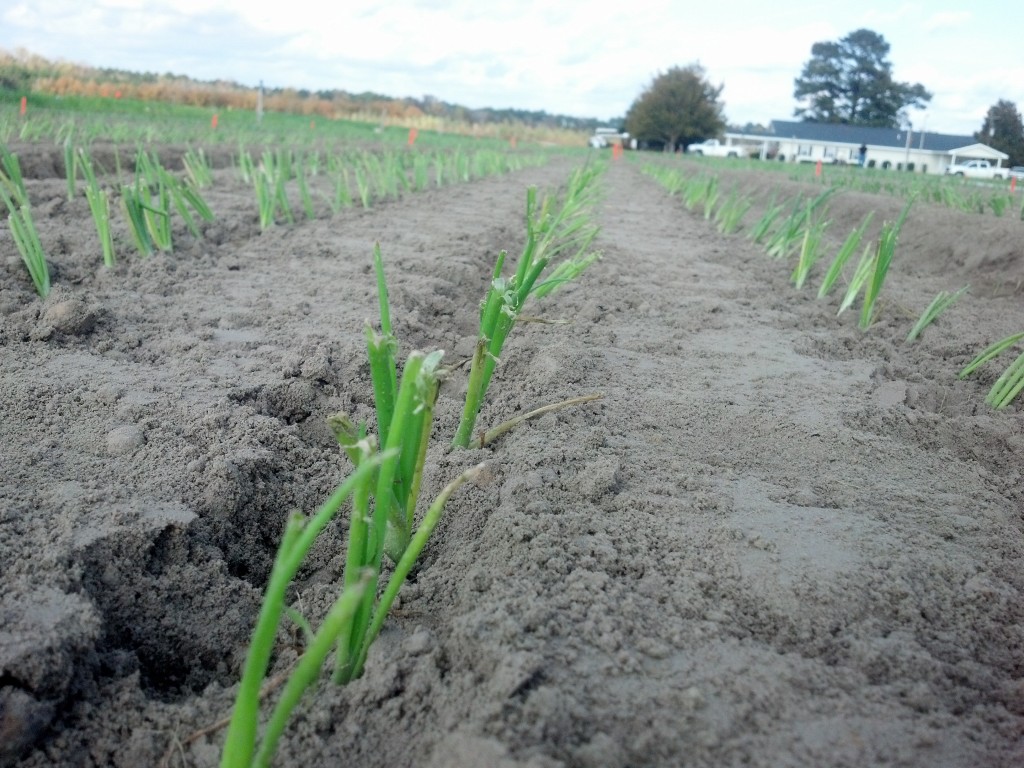
Squash bugs can be a frustrating pest in commercial cucurbit production because they are easy to overlook early and difficult to control once populations build. While they are most commonly associated with squash and pumpkins, they may also be found in other cucurbit crops, including cucumbers, melons, and gourds. Their feeding can reduce plant vigor, cause wilting, and in severe situations contribute to plant decline.
Identification
Adult squash bugs, (Anasa tristis) , are flattened, brownish-gray to dark brown insects that are about ⅝ inch long. They often have a dull, shield-like appearance and may be found hiding around the base of plants, under leaves, or beneath plant debris.

(Photo by Jonathan Smith – Tattnall County Extension)
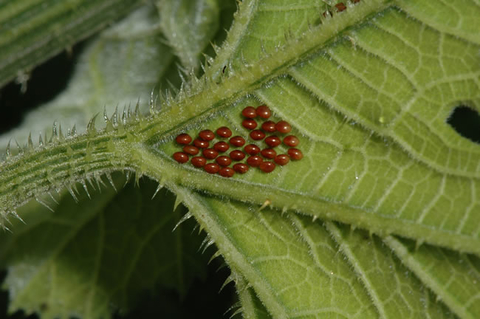
The eggs are small, oval-shaped, and usually bronze to reddish-brown. They are commonly laid in clusters on the undersides of leaves, often between leaf veins where the veins form a V-shape. Egg masses may also be found on stems.
After hatching, the young nymphs are small and often light greenish-gray with black legs. As they develop, they become gray to brownish-gray and begin to resemble smaller versions of the adults. Nymphs go through several growth stages before becoming adults.
Life Cycle and Seasonal Activity
Squash bugs overwinter as adults in protected areas such as plant residue, field borders, under clods of soil, around buildings, under rocks, discarded plastic, old mulch, and other sheltered locations. In the spring, adults emerge and move into cucurbit crops to feed, mate, and lay eggs.
Eggs usually hatch in about 7 to 10 days, and nymphs can develop into adults in about four to six weeks. In Georgia, squash bugs may have multiple generations per year, which means populations can build quickly if left unchecked. Since different life stages can overlap during the growing season, scouts may find eggs, nymphs, and adults in the same field at the same time.
This overlapping development is one reason squash bugs can become hard to manage. Adults are more difficult to control than young nymphs, so timing is critical.
Crop Injury
Squash bugs feed with piercing-sucking mouthparts. They remove sap from leaves and stems, which can cause yellowing, browning, wilting, and reduced plant vigor. Under heavy pressure, plants may wilt rapidly, and young or stressed plants are especially vulnerable.
Larger, well-established plants are generally more tolerant of feeding injury than young plants. However, heavy infestations can still affect overall plant health and productivity.
Squash bugs are especially damaging in squash and pumpkin production, but they can also move through other cucurbit plantings. Commercial growers should pay close attention to squash, pumpkin, cucumber, and other cucurbit fields, especially where squash bugs have been a recurring problem.
Scouting
Early detection is the most important part of squash bug management. Begin scouting when vines start to run and continue through the growing season.
When scouting, look closely at the undersides of leaves, leaf veins where egg masses are commonly laid, plant crowns, lower leaves, areas under damaged leaves, field edges, and weedy borders. Egg masses are one of the most important scouting targets because they help predict when nymphs will hatch. Treatment is most effective when aimed at small, newly hatched nymphs.
A useful treatment guideline is to consider action when scouting finds an average of about one egg mass per plant, especially in fields with a history of squash bug pressure. Once eggs are found, growers should watch closely for hatch over the next 7 to 10 days.
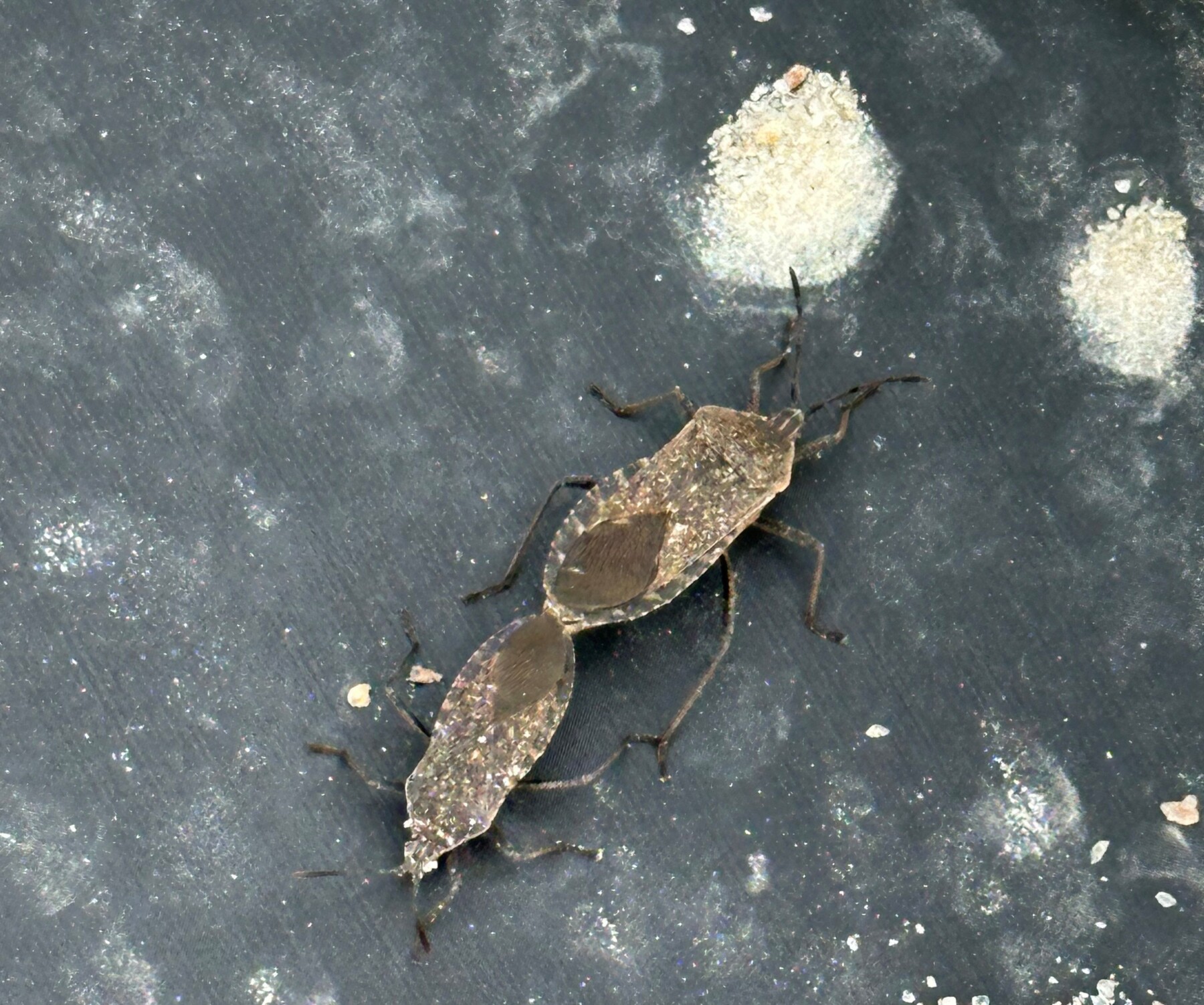
(Photo by Jonathan Smith – Tattnall County Extension)
Field Sanitation and Cleanup
Good sanitation is an important part of squash bug management. Squash bugs like protected, undisturbed places where they can hide, congregate, and overwinter. Old cucurbit vines, dead plant material, plastic mulch scraps, drip tape, discarded fruit, field trash, and debris along field borders can all provide shelter.
Cleaning up last year’s plant debris and plastic trash can help reduce the number of overwintering sites available to squash bugs. After harvest, remove or destroy old cucurbit vines and discarded fruit when practical. Field edges should also be kept mowed and free of unnecessary debris. This does not guarantee that squash bugs will not return, but it can reduce the places where they survive between crops.
This is especially important in fields with repeated cucurbit production or fields where squash bugs have been a consistent problem. If squash bugs are given a place to hide, they will use it.
Cardboard Trapping
Squash bugs are secretive insects. Adults and nymphs often hide under leaves, clods of soil, plastic, cardboard, or other sheltered areas when disturbed. Growers can use this behavior against them.
One simple method is to lay pieces of cardboard, old shingles, boards, or similar flat materials near the base of plants or along areas where squash bugs are active. Squash bugs may gather underneath these shelters overnight. The next morning, the cardboard can be lifted and the bugs can be collected and destroyed.
This method will not clean up a heavy infestation by itself, especially in a large commercial planting, but it can help reduce numbers in smaller fields, high tunnels, field edges, garden plots, or localized problem areas. It can also be a useful monitoring tool because it helps reveal whether squash bugs are present and active.
Cultural Management
Good crop management does not eliminate squash bugs, but it can help reduce damage and make fields less favorable for population buildup.
Start with healthy, vigorous plants. Proper fertilization, irrigation, soil preparation, and drainage can help plants tolerate insect feeding better. A healthy plant is not immune to squash bugs, but it is usually better able to withstand some pressure.
Where squash bugs are a recurring issue, growers should be cautious with heavy straw mulches or other materials that create protected hiding places. These materials can provide additional shelter for squash bugs, especially at night.
Chemical Control
Chemical control is very effective against small nymphs. Adults are harder to kill, and large nymphs are more difficult to manage than newly hatched ones. This is why scouting for egg masses is so important. Once eggs begin to hatch, growers have a better opportunity to target the most vulnerable stage.
Good spray coverage is also essential. Squash bugs often hide on the undersides of leaves, around the crown of the plant, and under the canopy. Poor spray coverage can lead to less effective control, especially in dense vine crops.
The following is UGA’s recommendations for squash bug’s control in commercial operations.

The Bottom Line
Squash bugs are much easier to manage when they are found early. Once adults are established and nymphs are scattered throughout the crop canopy, control becomes more difficult and less reliable.
The best approach is to scout regularly, look for egg masses, time treatments to target small nymphs, clean up old crop debris and plastic trash, and reduce protected hiding places around the field. Simple tools like cardboard or boards can also help trap and remove bugs in problem areas. In commercial cucurbit production, early detection and timely action are what separate a manageable squash bug issue from a serious field problem.