Hunt Sanders
Greater than 60% chances of rain for the Fitzgerald area this weekend and Monday. Rain chances back off to under 40% after Tuesday.
Insect Update
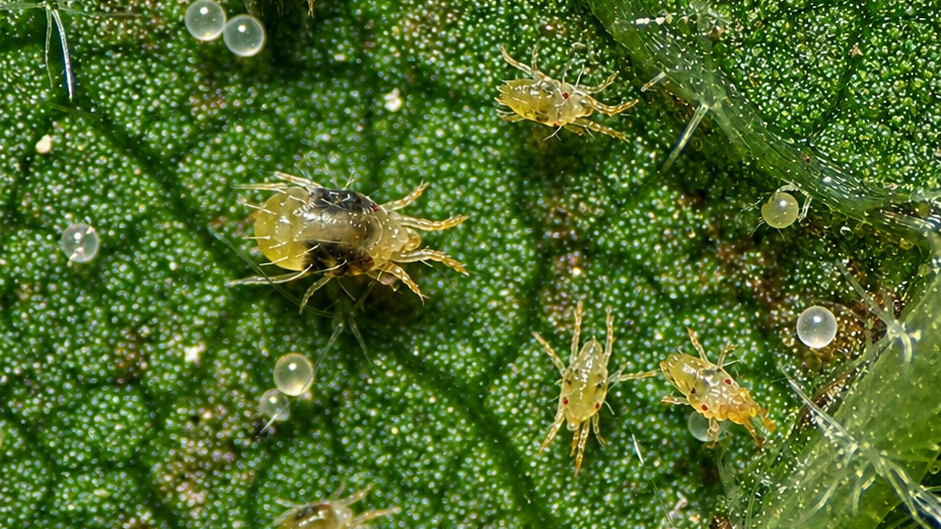
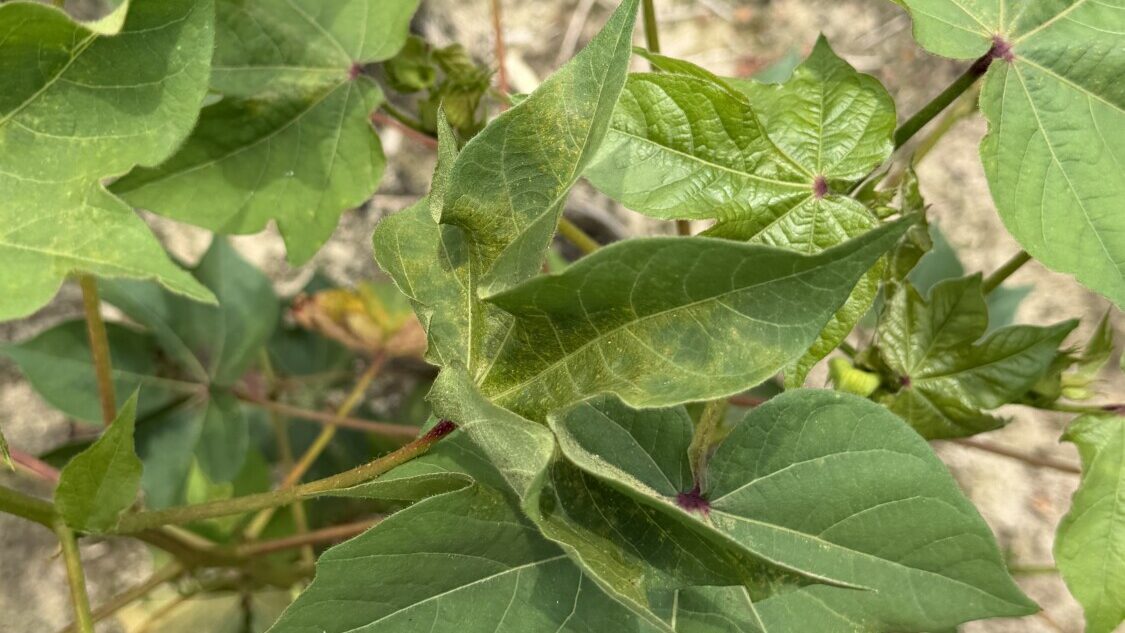
I have started to see increased insect activity across our row crop fields. Spider mites in cotton are beginning to show up. The photo shows adults, nymphs, and eggs present. The presence of all three life stages indicates that populations are actively developing, so growers should continue to monitor fields closely for increasing mite populations and associated plant damage.
The threshold for spider mites is 50% of plants have symptoms. Spray abamectin if fields reach threshold.
Kudzu Bugs in Soybeans
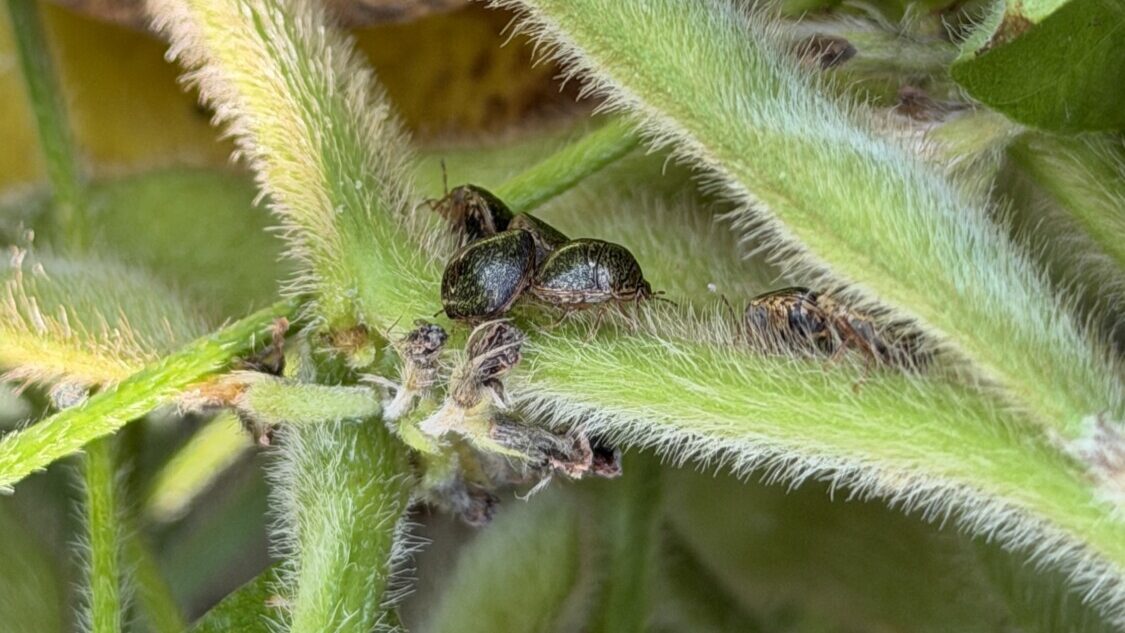
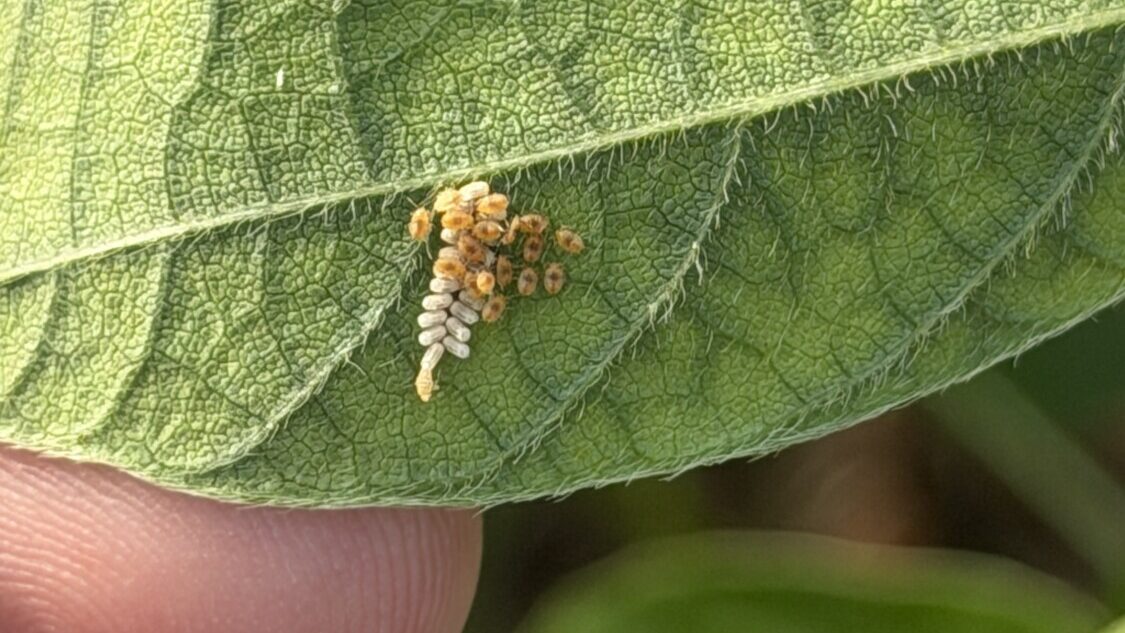
I have started seeing kudzu bugs in soybean fields. The established treatment threshold is approximately one kudzu bug per sweep. If adults are readily found during scouting and eggs are present, this indicates that populations are actively reproducing and are likely approaching or exceeding the treatment threshold.
In some years, naturally occurring fungal pathogens can significantly suppress kudzu bug populations, similar to the biological control that can occur with cotton aphids. However, fungal suppression of kudzu bugs is generally less consistent and unreliable. If populations are at or approaching threshold, a timely application of bifenthrin can provide effective control and help prevent populations from building throughout the remainder of the season.
Jassid Update:

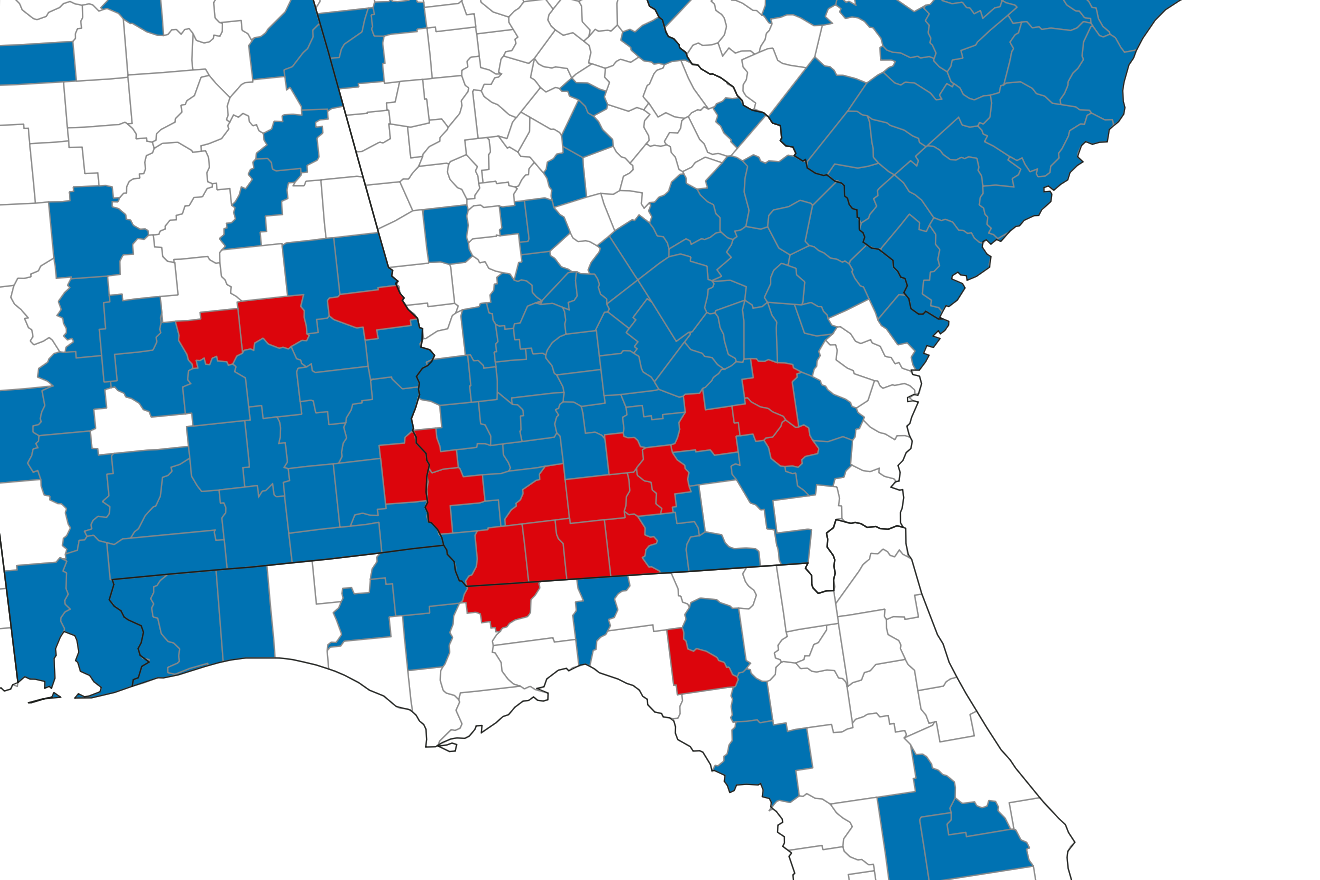
Red- Adult Jassids detected
Blue- Detected last year
White- No data
As of now, cotton jassids have been detected in 15 counties across Georgia. To my knowledge, no cotton fields in the state have required an insecticide application specifically for jassid management.
These detections have primarily been made through sweep-net scouting conducted for plant bugs and beneficial insects. Fortunately, jassid populations have remained very low, even in the Tifton area, where they were first detected approximately a month ago.
One important consideration when scouting for jassids is identification. We cannot reliably identify nymphs or immature jassids in the field because several species of leafhoppers look very similar during their immature stages. I have seen one particular green leafhopper in abundance in cotton that closely resembles a jassid; however, the adults lack the two characteristic black spots used to identify cotton jassids. For now, we have referred to these as “impostors” or “false jassids.”
Overall, this is a best-case scenario. The low jassid populations we are currently seeing may be partially attributable to the late-season deep freeze, which likely reduced or eliminated many of the overwintering populations. Cotton jassids do not overwinter in the soil or have a specialized overwintering life stage. Instead, they survive on suitable host plants, making them particularly vulnerable to prolonged periods of freezing temperatures.
For now, the message is simple: keep scouting, know what you are looking at, and do not mistake every green leafhopper for a cotton jassid. So far, populations remain low, which is encouraging.
White Fly Update


There have been reports of SLWF (silver leaf white flies) in cotton. The threshold for SLWF in cotton is if 50% of sampled leaves are infested with immatures.
When sampling for SLWF, sample at least 30 leaves. Sample the 5th leaf from the top of the plant. Turn it over and count the number of immature SLWF on that leaf. If there are 5 immatures of that leaf, count it as infested.
To prevent white fly infestations, avoid spraying bifenthrin or other insecticides that can disrupt beneficial insects that feed on SLWF. Hot and Dry condition favor SLWF development.
Stink Bug Update in Cotton:
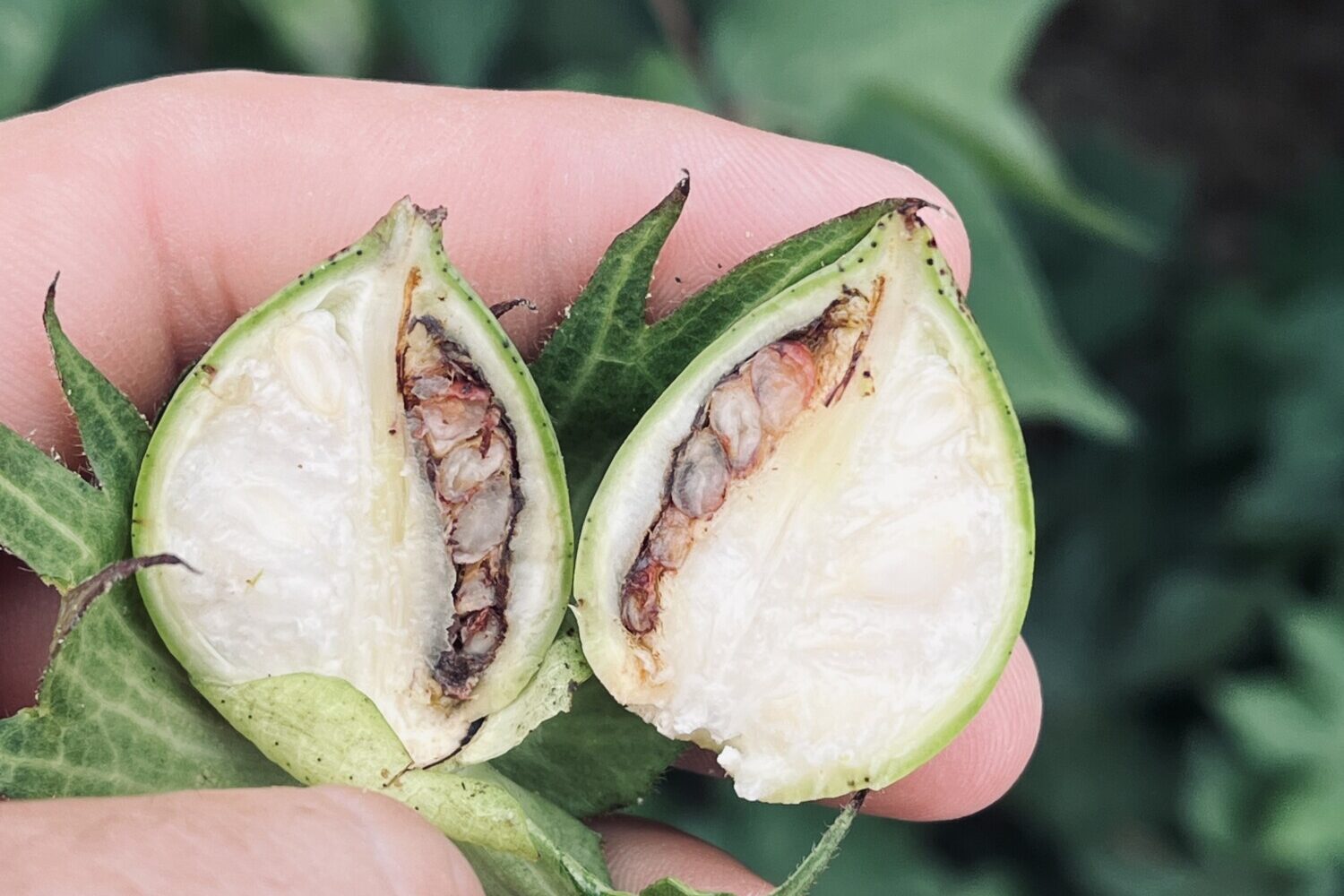
There have been reports of some fields reaching threshold for stink bugs in cotton in Ben Hill County. When scouting for Stink bugs, pull random quarter sized bolls, avoid field edges.
Crack the bolls and inspect the lint for stains and the walls for warts. If the threshold is not met for that week, do not spray. Only treat if the threshold is met for that week.
Thresholds:
2nd week of bloom, 20% internal boll damage
3-5th weeks of bloom, 10-15% internal boll damge
6th week of bloom, 20% internal boll damge
7th week of bloom, 30% internal boll damge