Hunt Sanders
Recent Extension Blogs:
Finalizing Corn Irrigation | Extension Precision Ag and Irrigation

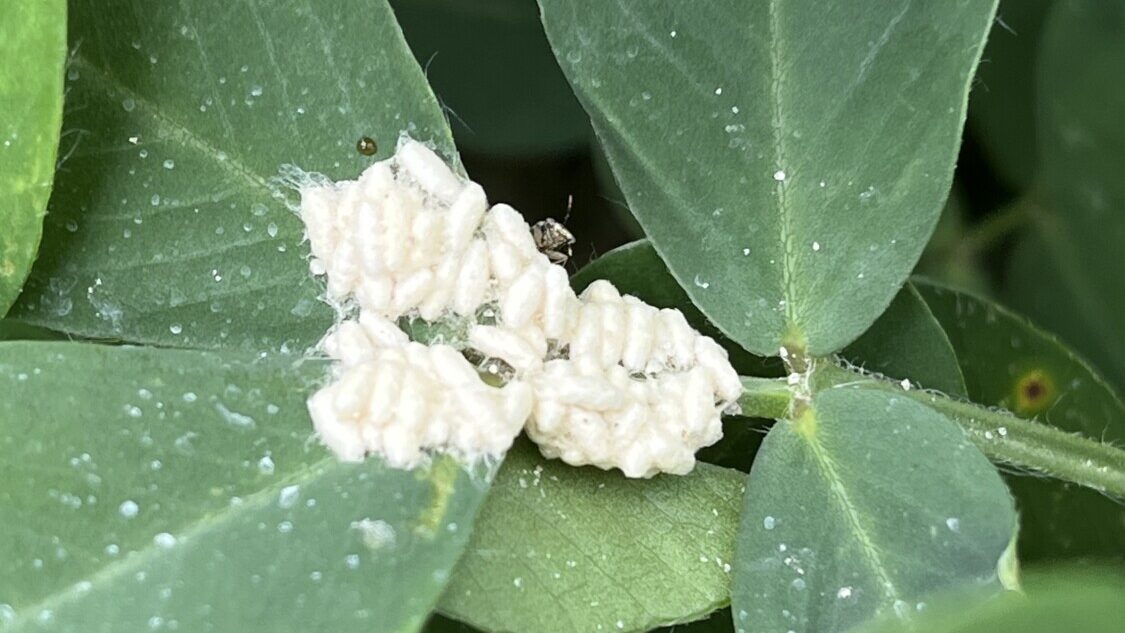
I have received several calls regarding worms in peanuts. While I have observed some “windowpanes” and feeding damage, in many cases, when I look more closely for the worms responsible, I find that parasitoid wasps have already taken care of them for the most part.
This does not mean that fields with economically significant worm populations are not out there; however, I personally have not encountered a peanut field that has reached the treatment threshold for worms so far this year.
Continue scouting your fields closely. If you suspect you have a worm problem or would like assistance evaluating your fields, give me a call.

As we are starting to harvest corn, consider cleaning up the dense morning-glory patches in fields. Consider a harvest aid such as carfentrazone (Aim 2EC) at 1.6-1.9 oz/A. Add a COC at 1% v/v.
Do not apply withing 3 days of harvesting, do not graze corn stover until 14 days after application.
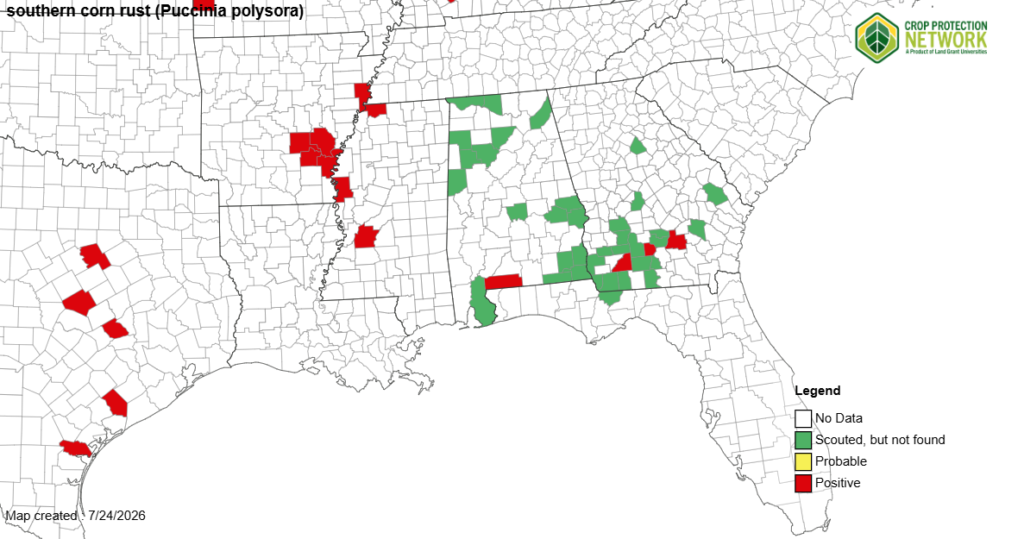
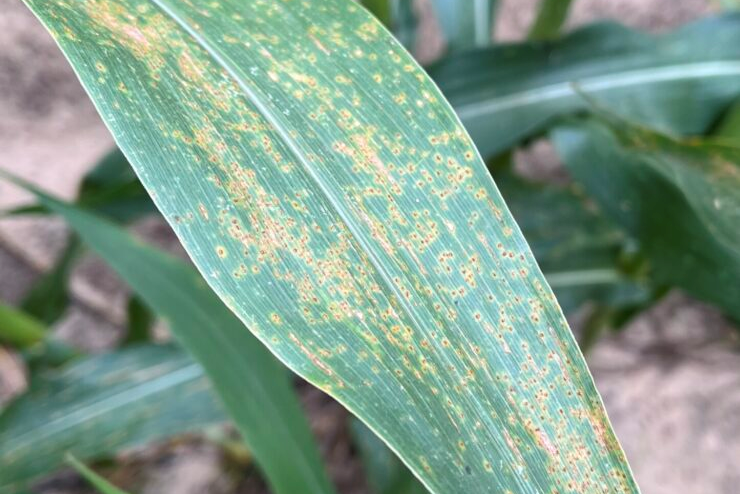
Southern Corn Rust has been identified in Coffee, Tift, and Mitchell Counties


I have received many calls about Stem Maggots.
For effective control, BSM applications are recommended approximately five days after cutting, followed by a second application 7–10 days later. Apply a pyrethroid, such as lambda-cyhalothrin, in the morning while dew is still present on the foliage. Following application, ensure that at least six hours of dry conditions are available before rainfall.


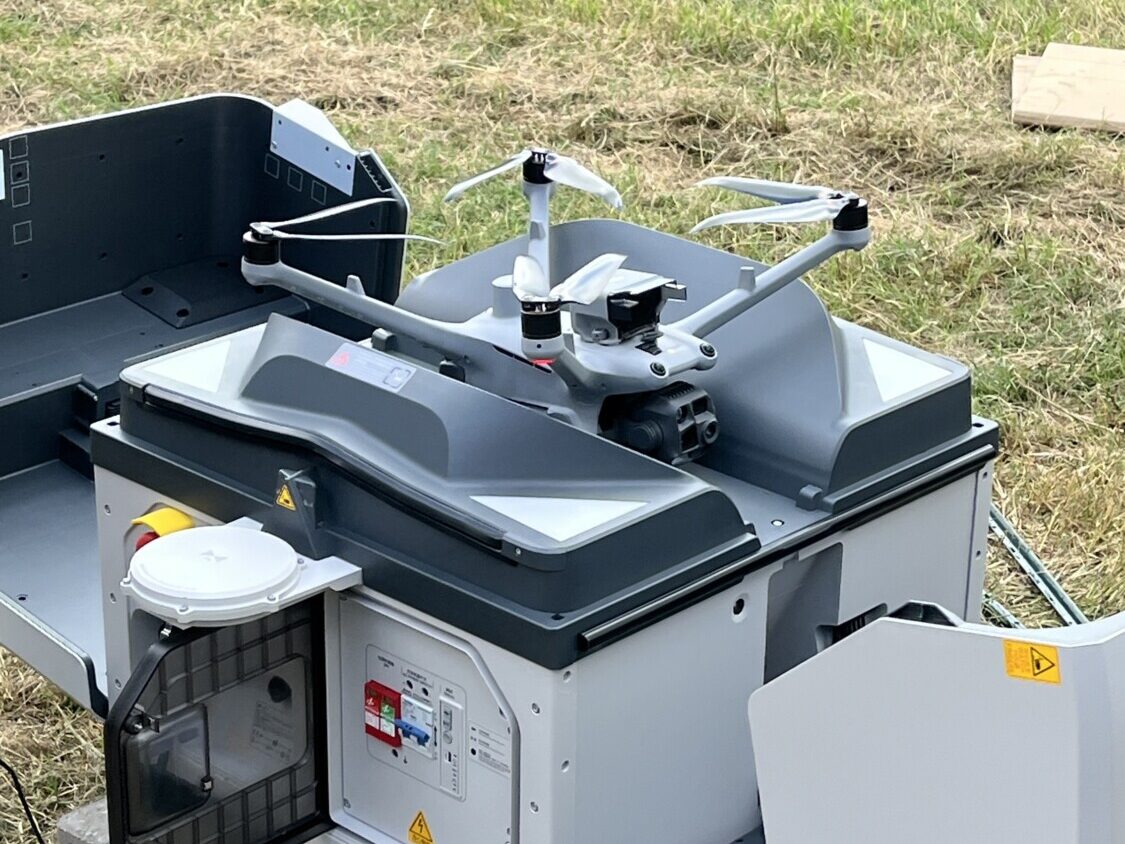
Airwyse offers a wildlife detection system that utilizes a thermal drone, like the one pictured. The drone is connected to a base station and is programmed to take flight over the property at 20-minute intervals. During each flight, the drone scans the field using thermal imaging to detect deer and feral hogs. Images and detection data are then transmitted directly to the user’s phone.
This technology could be a valuable tool for wildlife and deer management. Landowners and managers can better understand animal numbers, movement patterns, and field use. This information can be used to improve feral hog control efforts and help landowners pattern deer for hunting and permit-based harvest management. By understanding where animals are located and how they are using the property, managers can make more informed decisions and potentially maximize harvest opportunities while improving overall wildlife management.
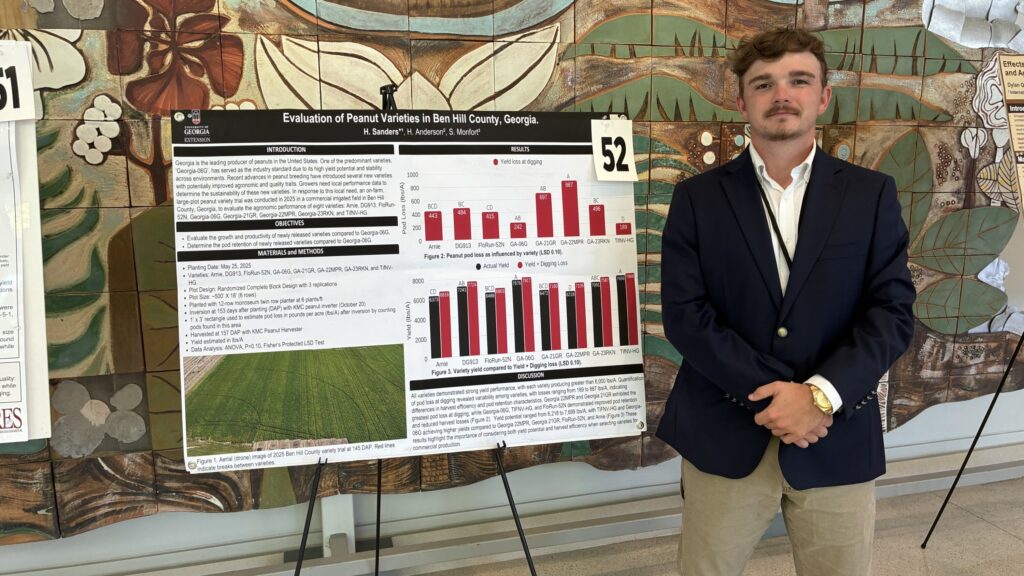
I had the opportunity to attend the American Peanut Research and Education Society meeting in San Juan Puerto Rico last week, where I present a poster with data from our peanut variety trial.
There are several resources your county agent has access to for assisting the public:
- SpotOn Digital Sprayer Calibrator & nozzle cleaner tool – Accurate flow rate checking of individual sprayer nozzles.
- Fertilizer Spinner-Disc Spreader Calibration – spread pattern testing of fertilizer spreaders.
- Hay Moisture Tester – Evaluation and assessment of hay to bale at optimum moisture content – decrease mold growth and increase feed value. Test baled or unbaled (in field)
- Forced Motor Planter Calibration – at-plant insecticide hopper box calibrations. Potential benefits: increase insecticide application efficacy with the appropriate and effective application of product label and recommended control rate. Decrease
- Mobile Irrigation Lab – Pivot efficiency evaluation/Irrigation audits to support water conservation and decrease irrigation costs.
- Harvest Moisture Testing – Corn and soybean moisture testing to decrease drying time and fuel costs.
- Enviroscape Watershed Model – Environmental education programming tool. Interactive demonstration of the sources and effects of water pollution. Present and illustrate watershed/stormwater concept.
- Rainfall Simulator Tabletop Educational Program tool –
- Digital wind meter educational tool – Anemometer measures wind speed to support safe pesticide applications and reduce drift.
- Pivot Calibrations
- Drone imagery/scouting