Shuck Decline!
I have received multiple reports of shuck decline this harvest season. The dry weather is the main cause of this but we are mainly seeing this disorder in orchards that have a heavy crop load. Below is an section from the “Nutritional, Environmental and Cultural Disorders of Pecan” publication by Dr. Lenny Wells that explains Shuck Decline.
Shuck Decline
Shuck decline is not uncommon in pecan. It can be a confusing problem and may be serious under certain environmental conditions. When shuck decline occurs, the shuck deteriorates and may open prematurely (Figure 13). Fruit affected by this problem often appear black and may fall from the tree or remain in the cluster (Figure 14). Most affected nuts will be of poor quality.
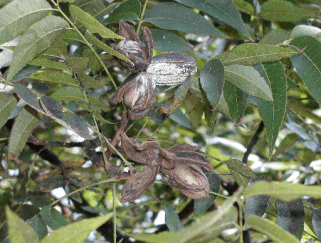
Figure 13. Shuck decline of pecan. The white fungi growing on the outside of the shuck is secondary and is not the cause of the shuck decline problem.
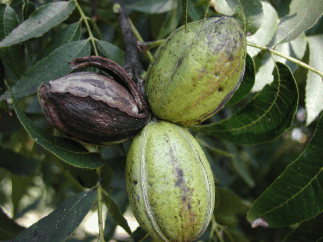
Figure 14. Nuts suffering from shuck decline may undergo shuck dehiscence prematurely. Nuts often remain in the shuck.
Most evidence points to fruiting stress as the primary trigger of shuck decline. Shuck decline normally occurs on trees bearing heavy fruit loads, which over-stresses pecan trees. Although apparent on many cultivars, shuck decline normally affects Stuart, Cape Fear, Moneymaker, and other prolific cultivars.
When shuck decline occurs, the problem is often hastened by dry soil during the kernel filling stage. This leaves pecan trees bearing heavy crop loads with insufficient water during the months of September and October when water is so very critical to the crop and to tree health. In such situations, many drip-irrigated orchards cannot keep up with the trees’ water demand. Drip-irrigated orchards may have sufficient soil moisture to develop large nut size; however, this makes the nuts more difficult to fill. As a result, drip-irrigated orchards can suffer as much or more from shuck decline as do dry-land orchards. Late season mite and aphid damage on an already heavily loaded and moisture stressed tree can create further stress.
Discussions of shuck decline can become somewhat confusing because of the similarity of symptoms caused by stress-induced shuck decline and those caused by other factors. An example of this is stem end blight, characterized by a grey-brown to black spot appearing near the proximal end of the immature shuck. The spot may enlarge and engulf the entire shuck. Fungicides have been shown to reduce the incidence of stem end blight, but have no effect on stress-induced shuck decline.
Many times disease pathogens are initially suspected as the primary problem when shuck decline occurs. However, multiple attempts have been made to isolate pathogens from shuck decline samples. Phomopsis sp. have been isolated from samples of shuck decline and from leaves with dieback. Phomopsis and other fungi such as Glomerella cingulata have been mentioned in literature associated with shuck decline in the past. These fungi appear to be opportunistic pathogens that are a problem on trees that are stressed. As with most opportunistic pathogens, Phomopsis and Glomerella are extremely difficult to control with fungicide applications.
In a Nutshell the Pecan Podcast
Be sure to give the new pecan podcast a listen. The most recent episode is on Precision Ag in Pecans with Dr. Luan Oliviera.
Will Browns tips for October
- Continue irrigating at 50-60% of full capacity until you are a week or so away form shaking trees for harvest.
- Stop irrigating 1-3 year old trees.
- Make nickel applications to severely deficient trees if you have not already.
- Prepare sites for new plantings… Here is a link to the UGA Extension Publication Establishing a Pecan Orchard