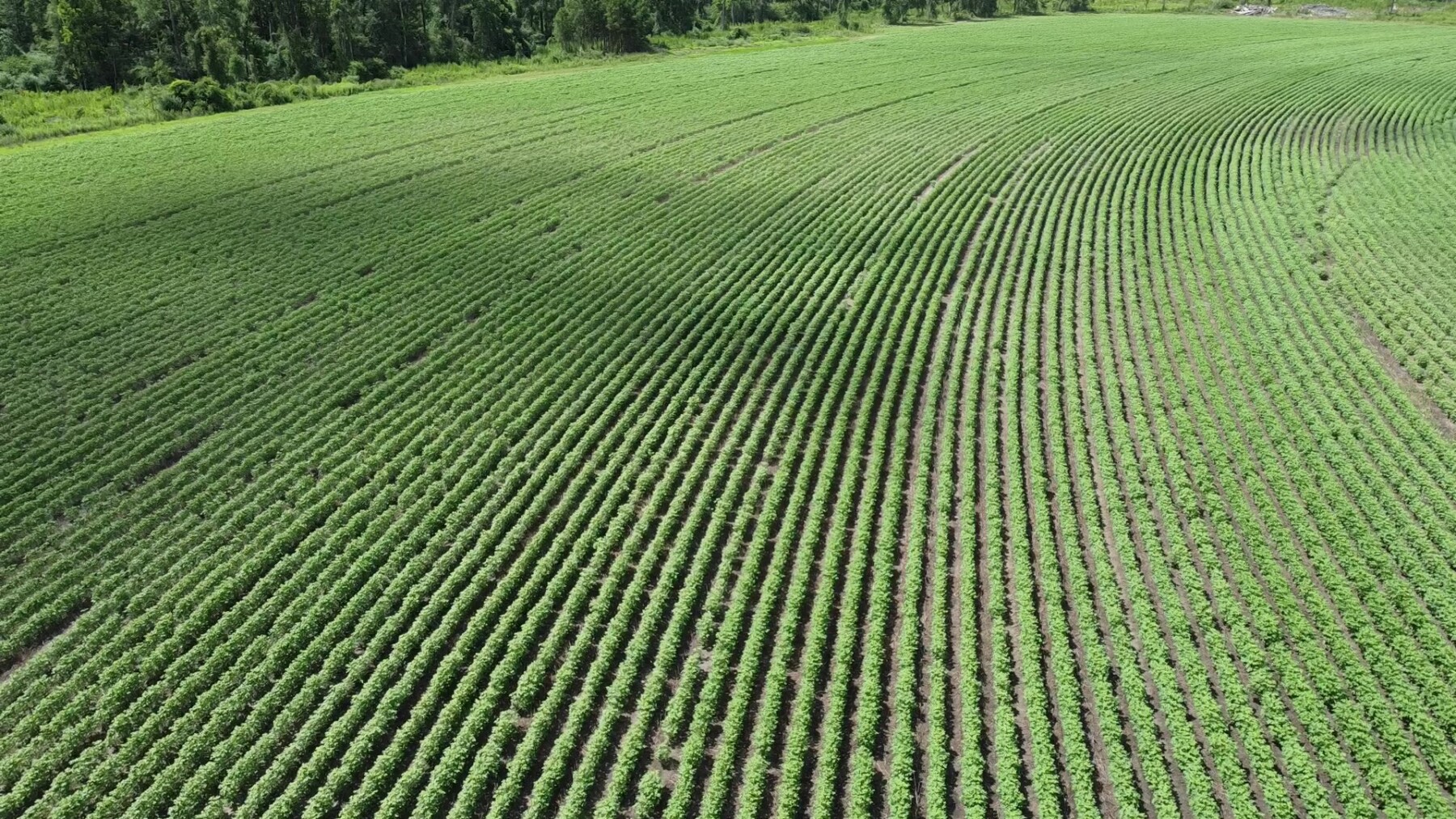
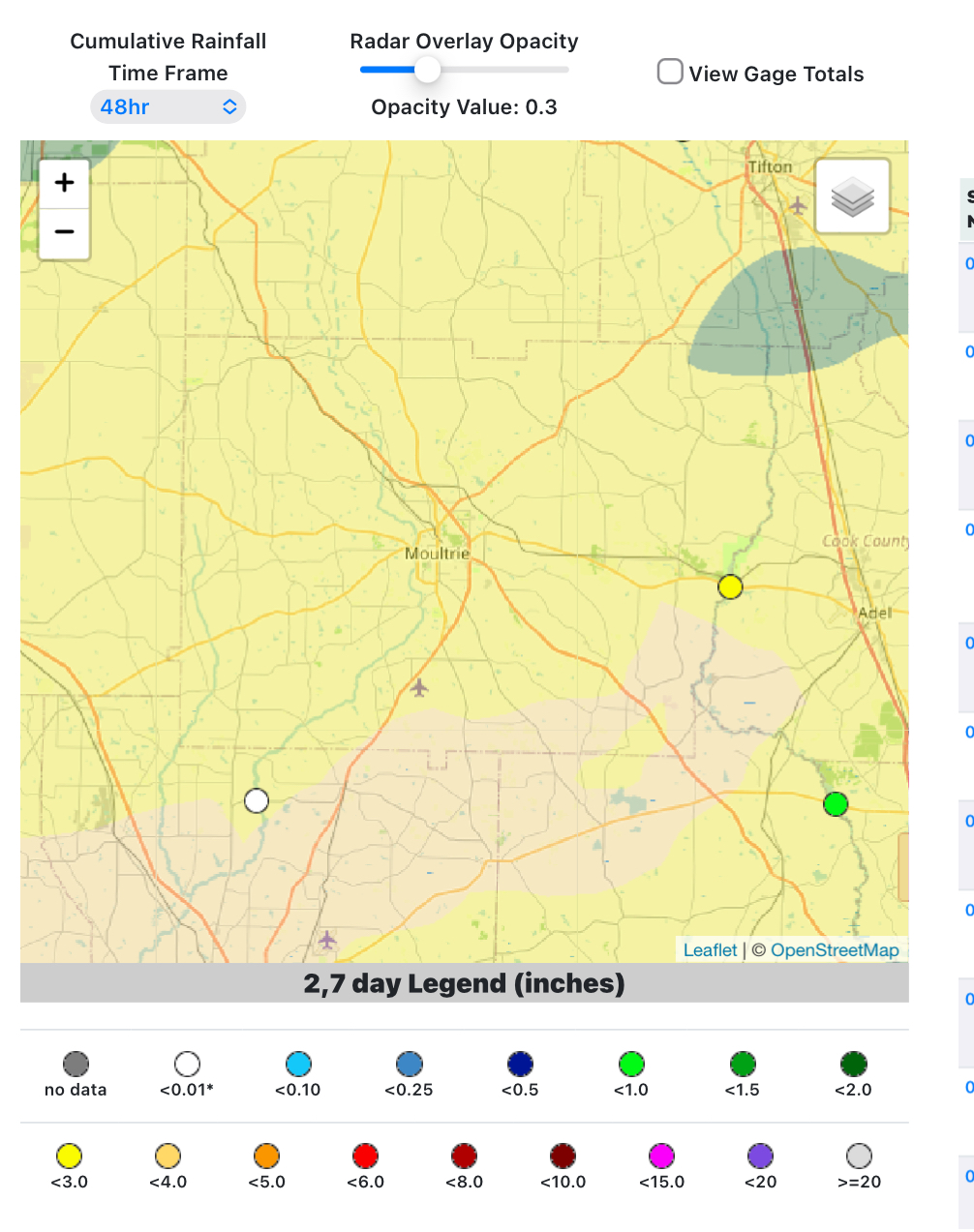
The Colquitt County area received much-needed rainfall over the early part of the past weekend. Rainfall totals ranged from The precipitation should help improve soil moisture levels enough for many local producers to begin planting cotton and peanuts this week. The illistration below shows rainfall totals from this past weekend. According to the USDA Crop Progress report released April 26, 6 percent of Georgia’s cotton and peanut crops have been planted statewide.
Below are the latest editions of All About the Pod and the Talking Cotton Podcast.

https://www.podbean.com/eas/pb-frgv5-1aa8bf3
All About The Pod – Episode 8, Season 4

Talking Cotton Podcast
https://www.buzzsprout.com/2350262/episodes/19102955-georgia-cotton-drought-playbook
Peanuts:
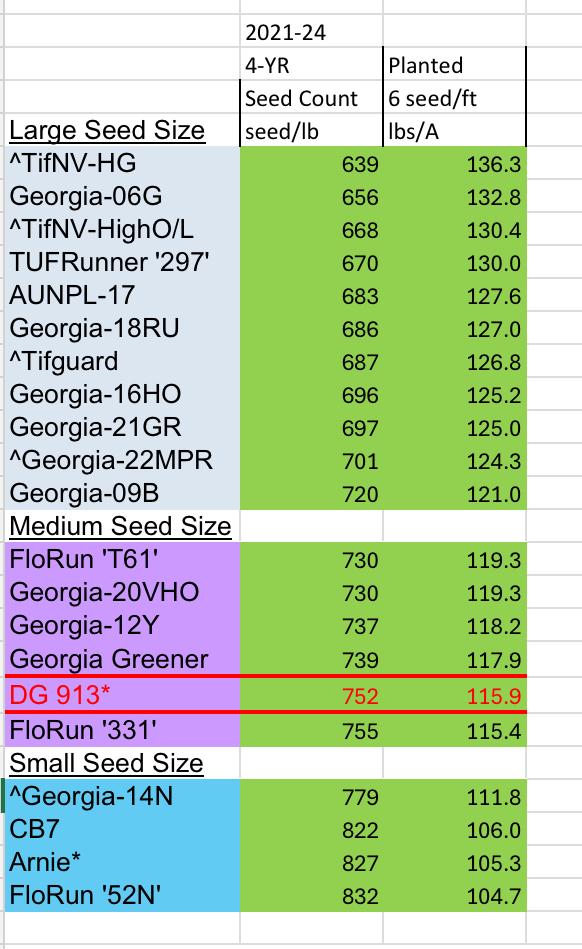
How many pounds of peanut seed do I need? To reduce the impact of TSWV, growers need to plant enough seed to provide at least 4 plants/ft of row. Therefore, seeding rates of 6 seed/ft on singles and 6 to 7 combined seed/ft on twins (3 to 3.5 seed/ft per twin furrow) are recommended. Seeding rates also need to be adjusted for % germ of the seed being planted to ensure you have the desired plant population.
Dr. Tubbs has provided the average seed size for common runner peanut cultivars and the lbs of seed needed to plant 6 seed per foot of row. The seed size is based on average values from the UGA Statewide Variety Testing Program for 2021-2024 at 3 locations in 2021, and 2 locations in 2022-2024
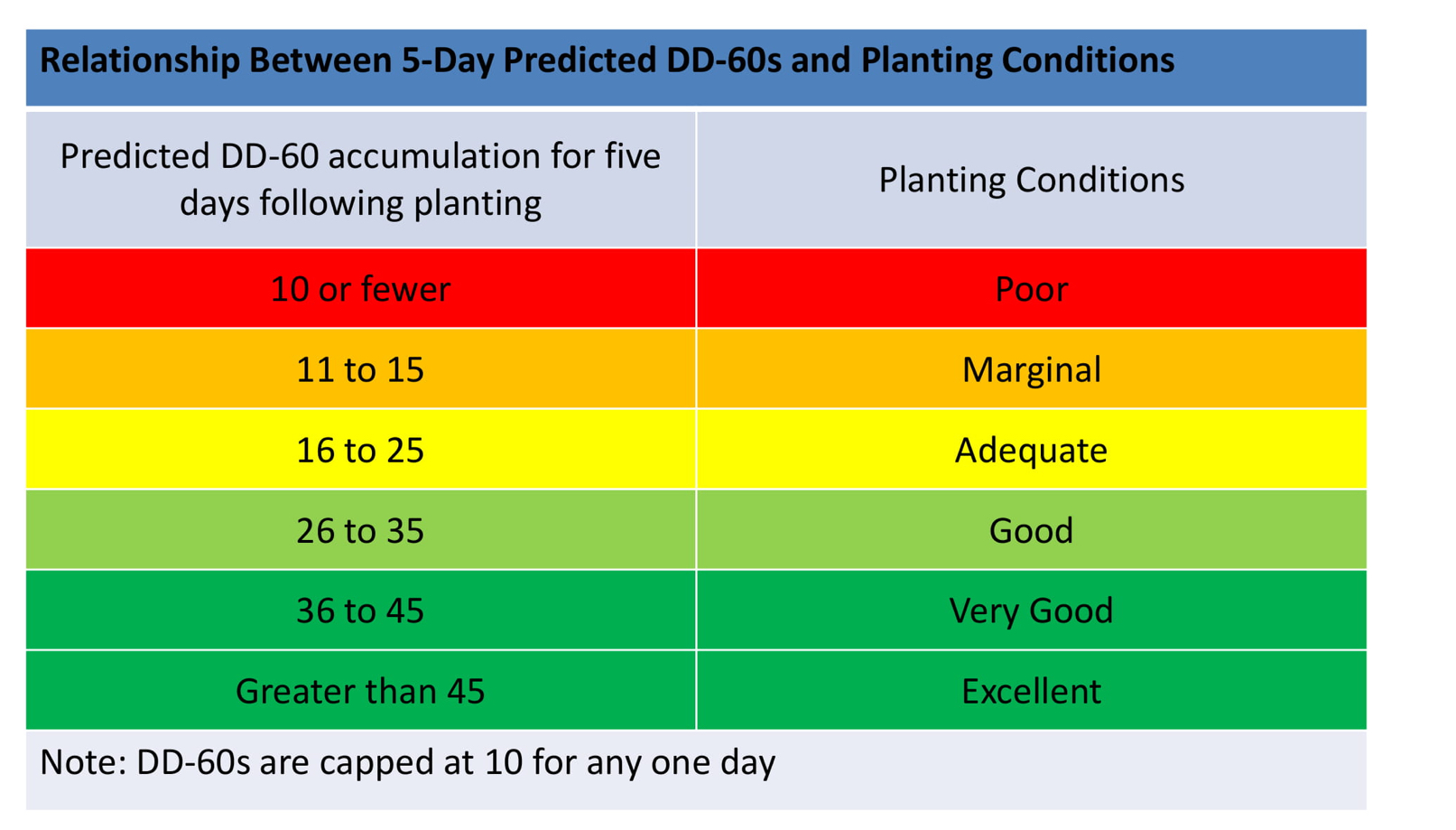
Cotton: The first two mornings this week is going to be on the chilly side. According to the NC State Cotton planting conditions calculator, we will accumulate 47 DD60’s this week if planting on May 4th. If you are interested in the NC State Cotton planting calculator it is available here.
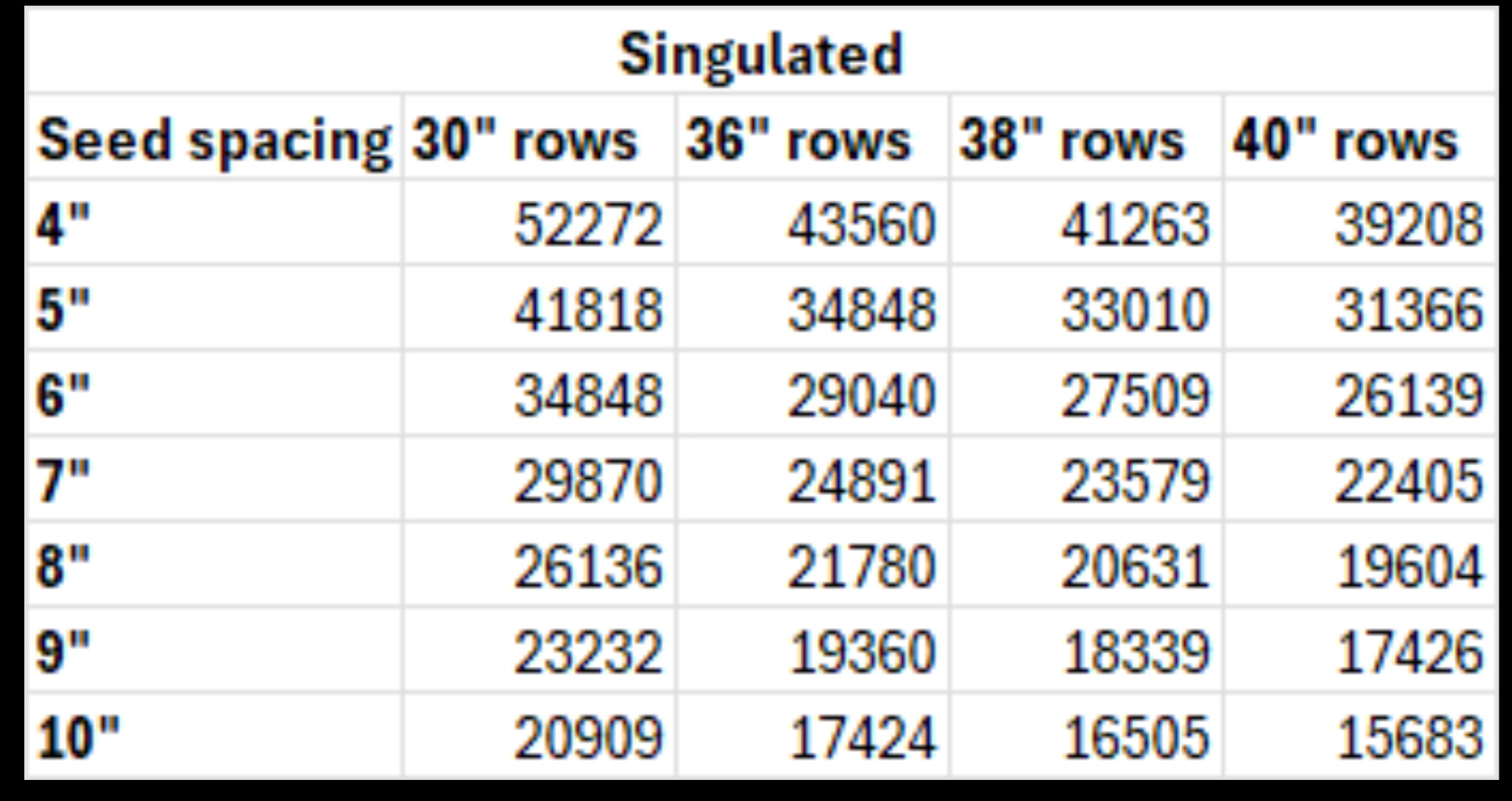
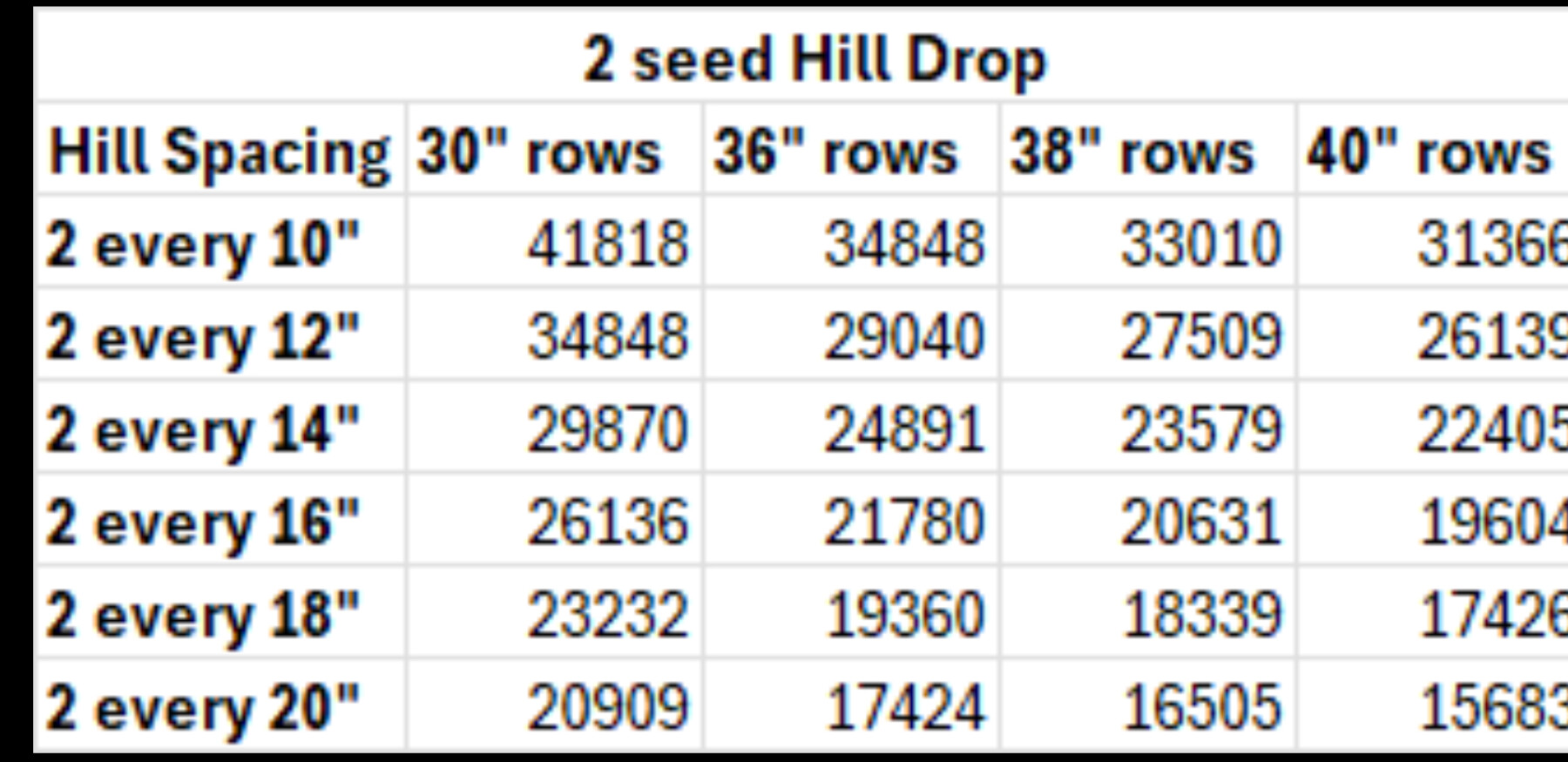
Dr. Hand provided a couple of charts that show plant populations based on seed spacing (inches) in the row and four different row spacings for singulated and hill drop.
Grasshoppers: I have been getting a report or two of elevated grasshopper populations in strip till fields.. According to Dr. Phillip Roberts, UGA Cotton Entomologist, control of grasshoppers is recommended when plant damage is occurring, grasshoppers are present, and plant stands are threatened. Nymph (wingless) grasshoppers are relatively easy to control with insecticides. However, control of adult (winged) grasshoppers is more difficult. High rates of labeled pyrethroids have performed fair to good on adults (control of adults or “flyers” is difficult). Dimilin, which is an insect growth regulator, provides good control of nymphal grasshoppers and has provided good residual activity in field demos, but it takes a few days to cause mortality. Dimilin will not control adult grasshoppers. According to Dr Phillip Roberts, acephate applied at higher rates would be an option for control (0.75 lb).
What about controlling volunteer peanuts? This has been the topic of the week. Lets discuss some tactics for controlling this pest in cotton.
Dr. Culpepper says that we have three options for controlling volunteer peanut in cotton.
1. Roundup + Liberty or Roundup + dicamba are effective; peanut must be larger than a saucer plate for consistent control by Liberty alone.
2. Sequential Roundup applications are almost always needed with the continual emergence of peanut.
3. For residual control, Cotoran + Staple is currently the best option with only fair control.
Forages: New Identifying Toxic Weeds in Georgia Pastures and Hayfields! Hot off the press! We will likely see many of these species jump up or bloom after this weekend’s rain. Review this all new publication and then go scout those fields!
Corn: The local crop ranges from V3 to pre tassel. The rainfall over the weekend was much needed as irrigation requirements are increasing as the corn crop proceeds. I had a few questions about foliar burn from urea applications. Dr. Erik Larson, MSU Small Grains Agronomist, suggests that in order to minimize leaf burn from top-dress application, we generally suggest applying no more than 150 lbs/a of urea per application on corn taller than three feet. For broadcast AN or urea, apply when corn leaves are DRY during mid to late morning and afternoon. Dr. Larson had a blog post about this a while back.
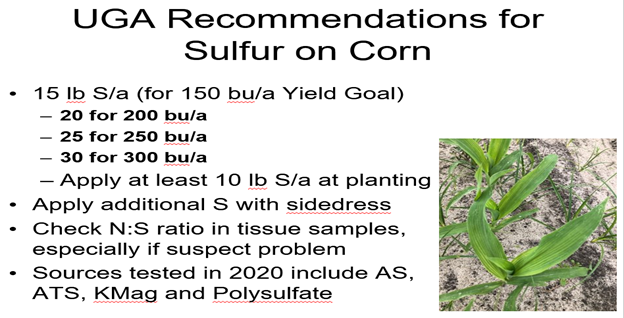
How much sulfur do I need for corn? Corn requires a relatively large amount of sulfur, generally 20 to 30 pounds per acre. On deep sands, apply sulfur in split applications. All sulfur should be applied in the sulfate (SO4) form. Applications with nitrogen may prove efficient.
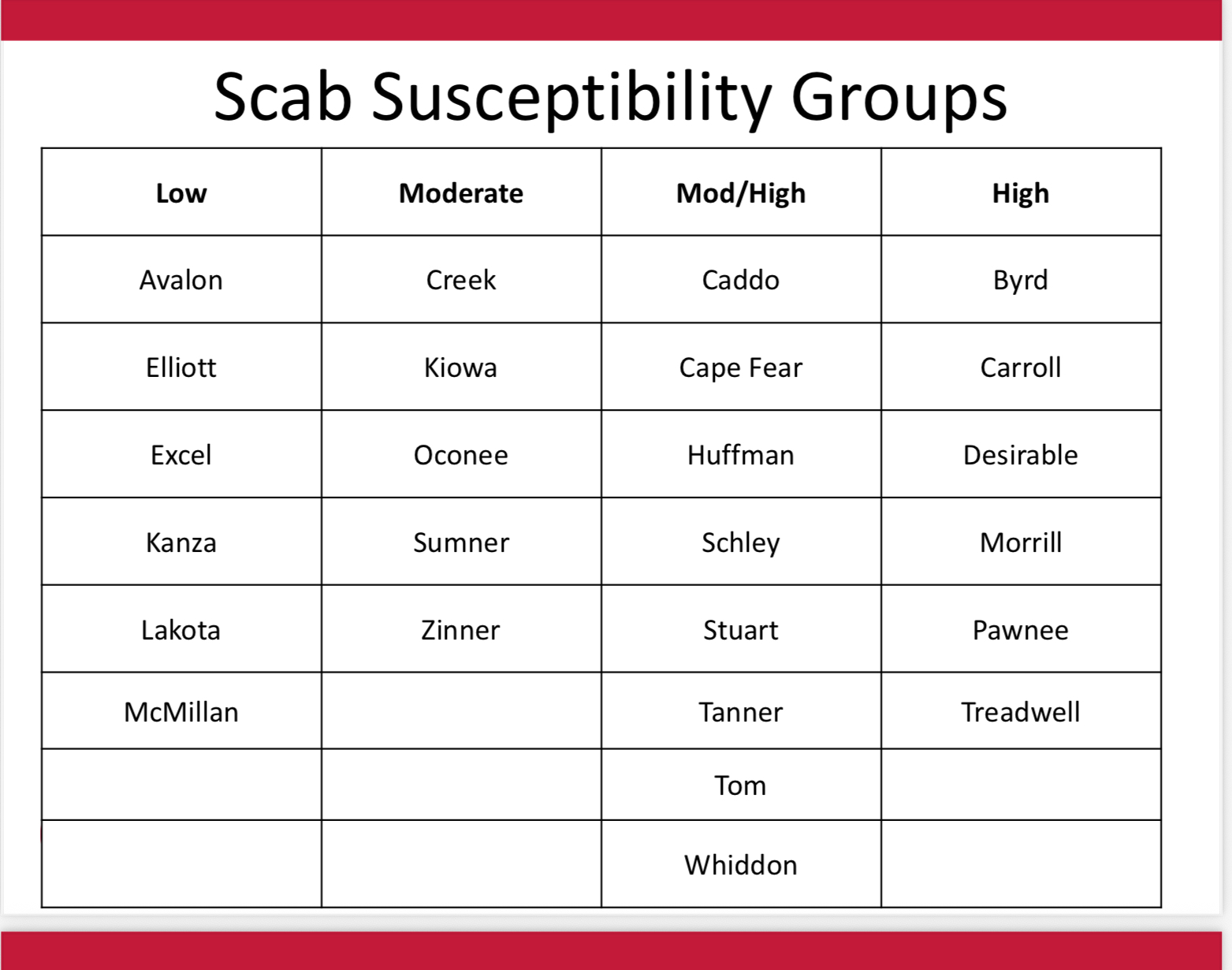
Pecans: I had a question about the pecan update that was in last week’s blog post. Fungicide programs were discussed for low, moderate and high scab potential orchards. Below is the scab susceptibility groups for those programs discussed.
Have a great week,
Jeremy M. Kichler
Colquitt County Extension Coordinator
The University of Georgia Cooperative Extension does not endorse or guarantee the performance any products mentioned in this update.