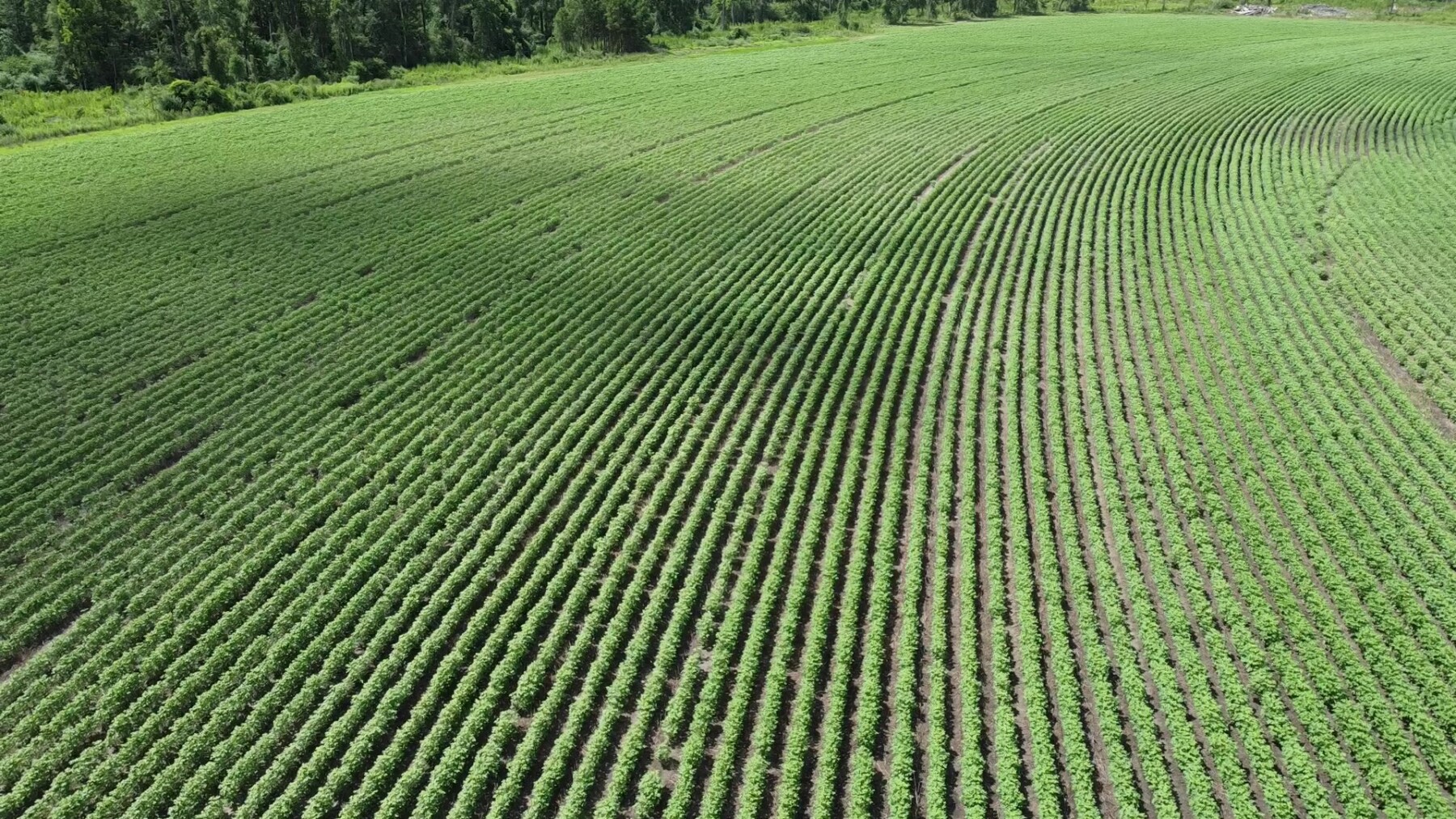
It is going to be hot this week, with high temperatures forecast to reach the upper 90s. Dr. Wes Porter suggests several key points for managing irrigation during the upcoming week.
Key Points for the Coming Heat
- Cotton and peanuts in many fields are at or near peak water demand, making moisture stress particularly concerning for yield.
- Crop water use could exceed 0.30 inch per day during extreme heat.
- Fields with depleted soil moisture profiles are particularly vulnerable.
- Do not wait for visible crop stress before irrigating.
- Where appropriate, consider 0.5–0.75 inch applications as frequently as system capacity and field conditions allow.
- Account for irrigation system efficiency and actual pumping capacity.
- If participating in an electric load-management program, account for periods when the system may be shut down and verify that equipment restarts after power is restored.
- Monitor soil moisture and current weather/ET information whenever possible.
- Recognize that some irrigation systems simply may not have enough capacity to completely meet crop demand during prolonged extreme heat.
- There is a difference between heat stress and moisture stress, plants will experience heat stress even if there is adequate moisture in the soil, so monitor for these conditions too.
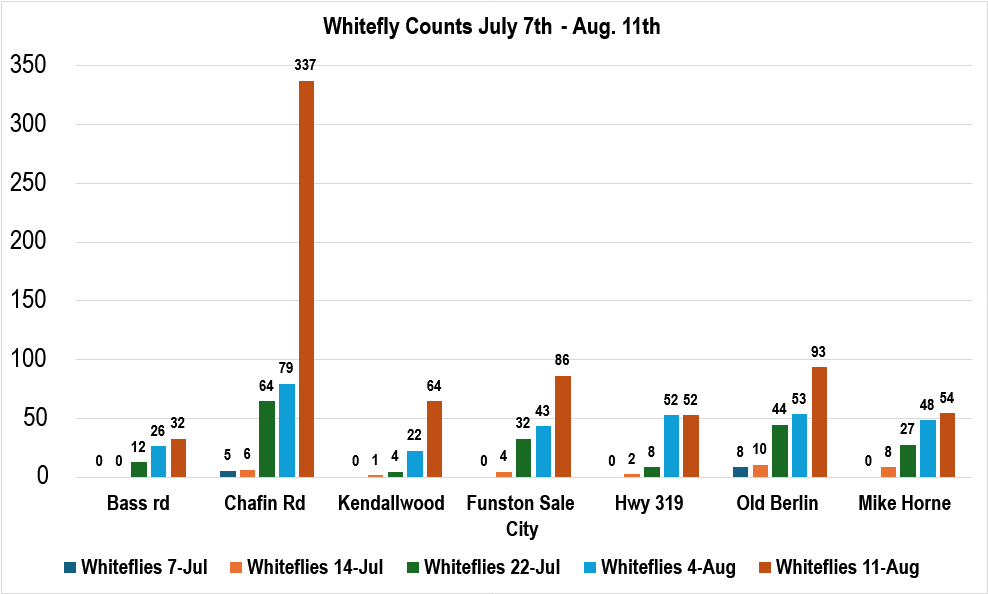
Cotton: Whitefly populations continue to increase in local cotton fields this week. Tanner Wilson, Colquitt County ANR Educator, has been monitoring sticky traps weekly. The table below shows that whitefly populations have steadily increased over the past several weeks at seven locations across the county.
Spider mites has been a topic of discussion for cotton producers. Apply when 50% of plants are symptomatic and populations are increasing.Spot treatment maybe adequate.Thorough coverage is essential; a second application may be necessary.
In fields where mites are observed, conservation of beneficial insects
should be a priority; insecticides prone to flare mites should be
avoided when targeting other pests. Treatment options include abamectin, Zeal, Portal and Oberron.
What about the mildew? In the past, azoxystrobin provided effective control of areolate mildew. However, fungicide resistance has now been confirmed. According to local on farm research, Priaxor and Miravis Top provided effective control of areolate mildew. The best timing for fungicide applications is during the third week of bloom or later and when the disease is detected during scouting. If cotton has reached the third week of bloom and fields have not been scouted, growers should consider current disease-favorable conditions when making treatment decisions.
Dr. Kemerait believes cotton remains at risk from areolate mildew until approximately four weeks prior to defoliation.
Peanuts: I started getting questions about white mold last week. Dr. Bob says that timely irrigation and/or rainfall is essential for maximum efficacy of a white mold fungicide. Without rainfall or irrigation, the fungicide tends to get trapped in the dense leaf canopy, and away from the crown of the plant and lower limbs where it is needed for white mold control. Timely rain and irrigation help to distribute the fungicide from the leaves to additional targets.
Key points to remember:
1. Depending on the fungicide, you need between 90 minutes and 8 hours of drying time PRIOR to rain or irrigation to ensure good leaf spot control.
2. If leaves are still wet from morning dew when you spray, you need even longer time to ensure adequate leaf spot control.
3. If using a center pivot, I would likely start the pivot by about 6 hours after application; amounts needed to move the fungicide are anywhere from 0.1 to 0.25 inches. This does not have to be “irrigation”.
4. The sooner the better (after appropriate drying time) for irrigation or rainfall to get a white mold benefit. The benefit diminishes quickly with time. After 48 hours there is no benefit.
5. Non-irrigated fields without rainfall can make white mold control tough. My advice- spray at night when leaves are closed or spray when dew is on the plants (recognizing this could negatively impact leaf spot control.)
The peanut insect situation has been hit or miss in the area. I started to pick up a few foliage feeding caterpillars in the area and they were well below threshold.
According to Dr. Mark Abney, UGA Peanut Enomologist, “It is time for velvetbean caterpillars (VBC) to arrive in Georgia peanut fields. In fact, it is past time for them to arrive, but I have only just started to get reports of these foliage feeders. VBC is readily managed with the insect growth regulator Dimilin, and many growers will apply this product as a preventive measure against VBC. Fields that have not been treated should be scouted every week for VBC…this pest can arrive in large numbers and quickly defoliate peanuts. Fields that have not been treated should be scouted every week for any of the other caterpillars that can infest peanut that are not effectively managed by Dimilin.”
Corn: The corn crop is reaching black layer in numerous fields across the county. I have received a question or two about harvest aid applications for corn. Dr. Eric Prostko, a UGA Weed scientist, says that his usual recommendation is to apply a combination of Roundup and Aim. The PHI for glyphosate and Aim is 7 and 3 days, respectively, according to the Pest Control Handbook. This treatment will not miraculously remove the running morningglory plants, but it will desiccate them enough to facilitate harvesting (i.e., make the vines more brittle and less likely to wrap). For more specifics, please go to the 2025 UGA Pest Control Handbook.
I need a pesticide credit!

The Colquitt County Extension Office will offer an opportunity to earn 1 hour of pesticide recertification credit for private applicators and commercial applicators in categories 21, 22, 23, 24, 25, 26, 27, and 31.
The program will be held on August 19, 2026, at the Colquitt County Extension Office in Moultrie and will begin at 12:00 noon. A one-hour video presentation on pesticide classification and pest management will be shown. Participants are encouraged to bring their own lunch and enjoy the program.
If you have questions about this opportunity, contact the Colquitt County Extension Office at (229) 616-7455 and ask for Tanner Wilson.
Have a safe week and if you have questions please call the office,
Jeremy M. Kichler
Colquitt County Extension Coordinator
The University of Georgia Cooperative Extension does not endorse or guarantee the performance of any products mentioned in this update.