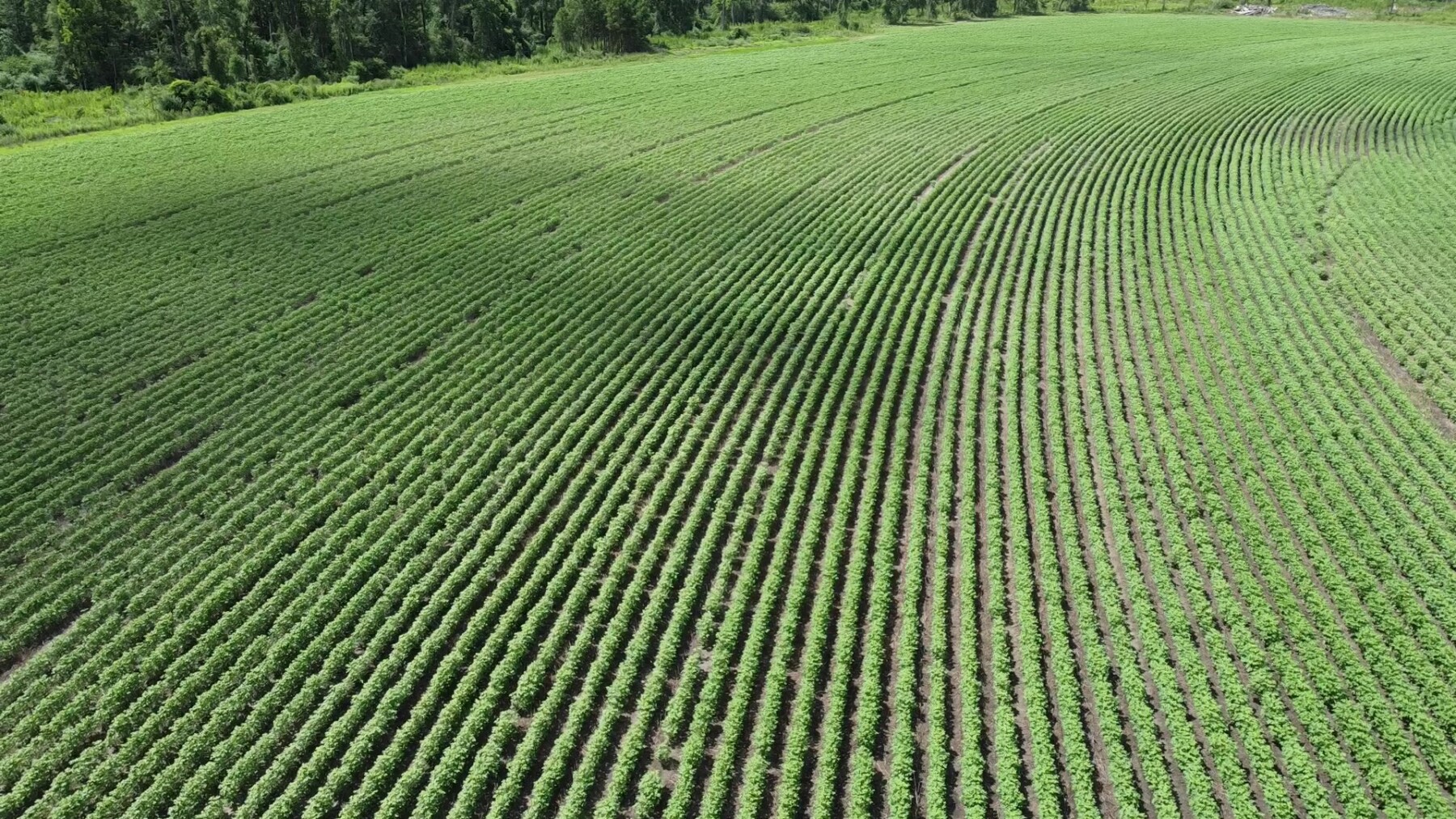
This was another interesting week in Colquitt County agriculture. Rain has been spotty this past week making insecticide applications in cotton a challenge. Caterpillar pressure in peanut has been low. Corn harvest is here.
Cotton: It has been an interesting week in cotton production. Areolate mildew was identified in Colquitt County last week. Dr. Bob Kemerait believes that current conditions, including high humidity, a dense leaf canopy, and sporadic rainfall, are highly favorable for disease development. As a result, this disease could increase rapidly over the coming weeks. Fungicide applications are recommended to protect yield potential where disease is present.
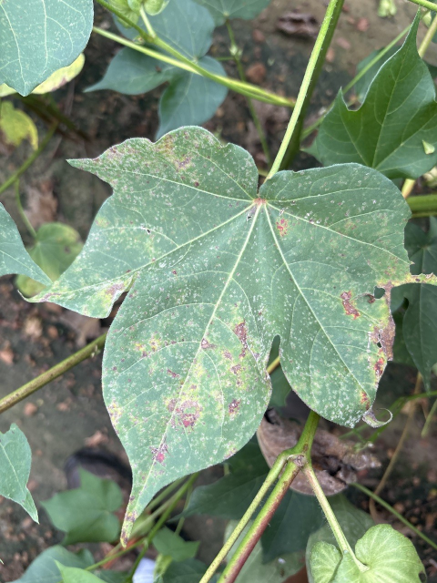
In the past, azoxystrobin provided effective control of areolate mildew. However, fungicide resistance has now been confirmed. According to local on farm research, Priaxor and Miravis Top provided effective control of areolate mildew. The best timing for fungicide applications is during the third week of bloom or later and when the disease is detected during scouting. If cotton has reached the third week of bloom and fields have not been scouted, growers should consider current disease-favorable conditions when making treatment decisions.
Dr. Kemerait believes cotton remains at risk from areolate mildew until approximately four weeks prior to defoliation. For growers concerned about target spot, the risk period generally extends through the sixth week of bloom.
What About Jassids?
A few adult cotton jassids were observed in one or two fields last week; however, none of the fields surveyed exceeded treatment thresholds. Scouts, consultants, growers and county agents need to be monitoring fields closely for jassids.
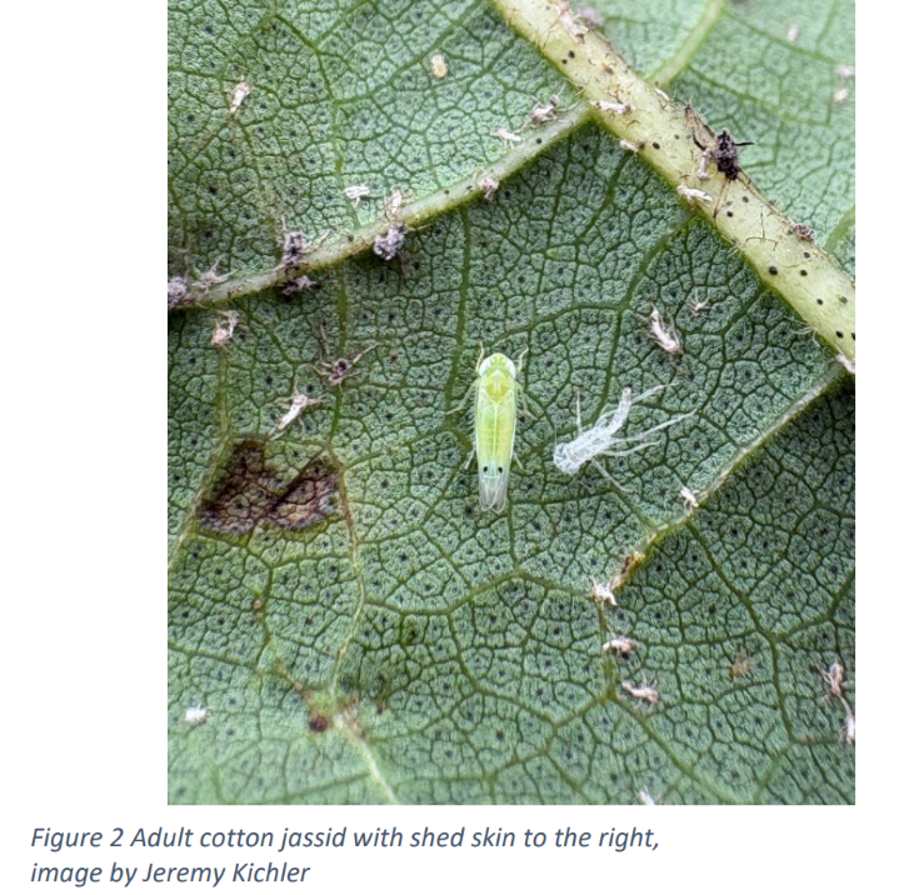
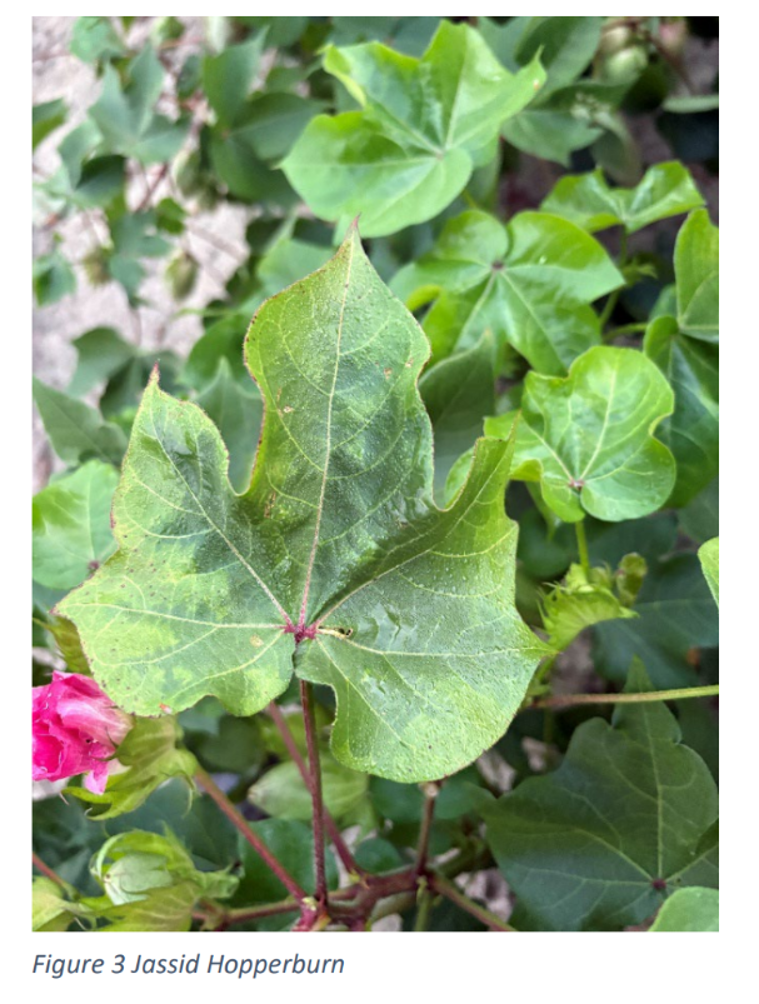
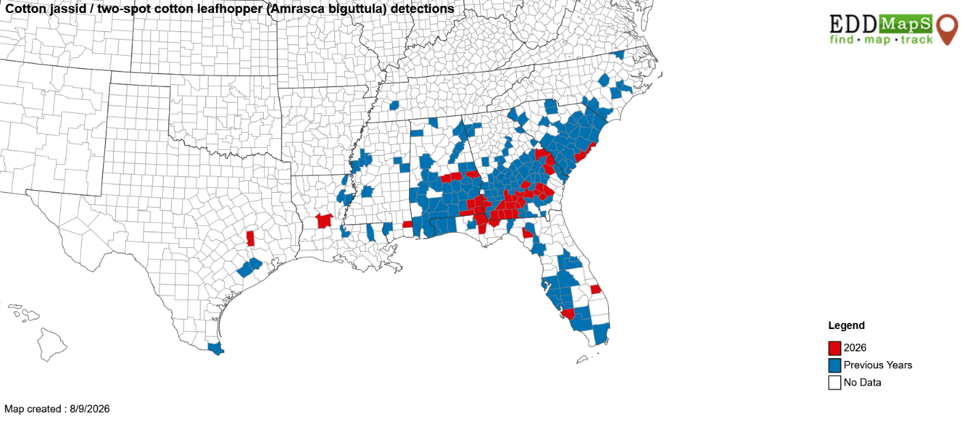
The latest Cotton Jassid Distribution Map indicates that cotton jassids have been reported in Louisiana (July 24, 2026) and Texas (August 5, 2026). While only a few adult jassids have been observed in isolated fields locally, populations remain below treatment thresholds in the fields that have been surveyed.
Growers and consultants who would like to monitor the spread of this pest can view the latest reports and distribution map : Cotton Jassid Distribution Map.
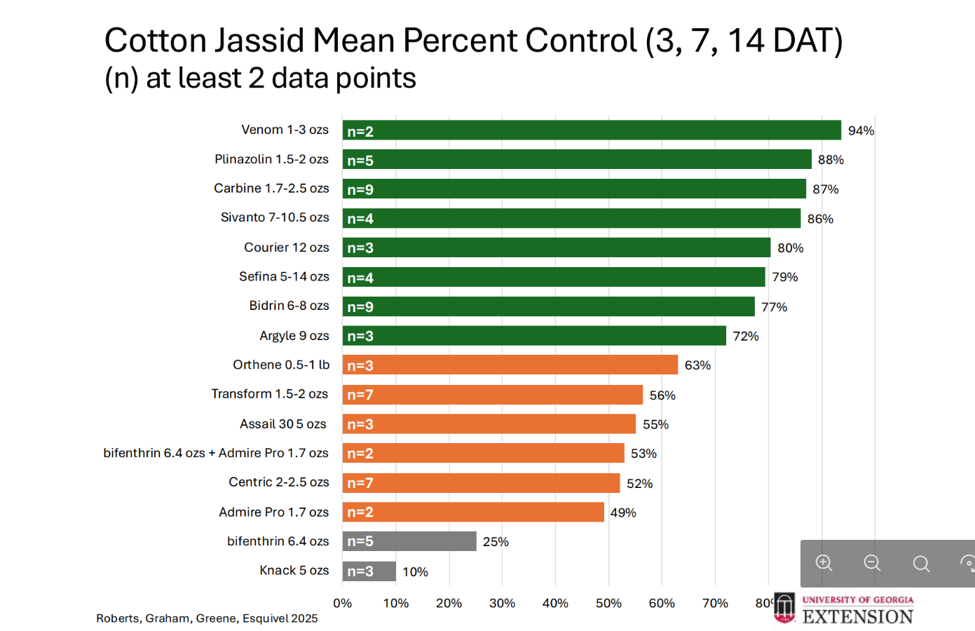
According to Dr. Roberts, when scouting for jassids examine the 4th expanded main stem leaf below the terminal. Sample this leaf on a minimum of 25 plants per field (sampling more leaves is better). If jassids reach a mean of 1 jassid per leaf treatment is recommended. Once the threshold is triggered it will be important to make a timely application. As we learned in 2025, jassid numbers and plant injury can progress quickly. If a grower struggles to be timely with an application, you may need to be more aggressive if populations are building. The chart below is a general guide of expected efficacy of insecticides we tested in the southeast during 2025. Some insecticides were tested more than others (i.e. Carbine has 9 data points, Venom only has 2 data points) so we cannot make direct comparisons. But this chart does have some value. I interpret this chart that insecticides highlighted in green would be used if jassids triggered threshold. Products in orange provide suppression but may be of value if a grower cannot come back and make a timely application based on scouting. It is also important to note that bifenthrin will not provide control of jassids. Don’t overreact when you detect jassids, scout and use thresholds, and watch trends of how fast populations are building. All this will allow you to make a good decision. As in 2025 we will provide updates of the most current information to county agents.
White fly populations are increased alot in area fields. It is critically important that initial insecticide applications are well timed. If you are late with the initial application control will be very difficult and expensive in the long run. It is nearly impossible to
regain control once the population reaches outbreak levels.
- SLWF Threshold: Treat when 50 percent of sampled leaves (sample 5th expanded leaf below the terminal) are infested with multiple immatures (≥5 per leaf).
- Insect Growth Regulators (Knack and Courier): use of IGRs are the backbone of SLWF management programs in cotton. Effects on SLWF populations are generally slow due to the life stages targeted by IGRs, however these products have long residual activity and perform very well when applied on a timely basis.
- Use of other insecticide options (non-IGRs) which have quicker effects on SLWF infestations would be preferred if you are late with the initial spray. These quick knockdown sprays will allow you to “catch up” and can be followed by an IGR.
- SLWF is an areawide cross commodity problem. When everyone uses an effective management program (regardless of crop) all will benefit.
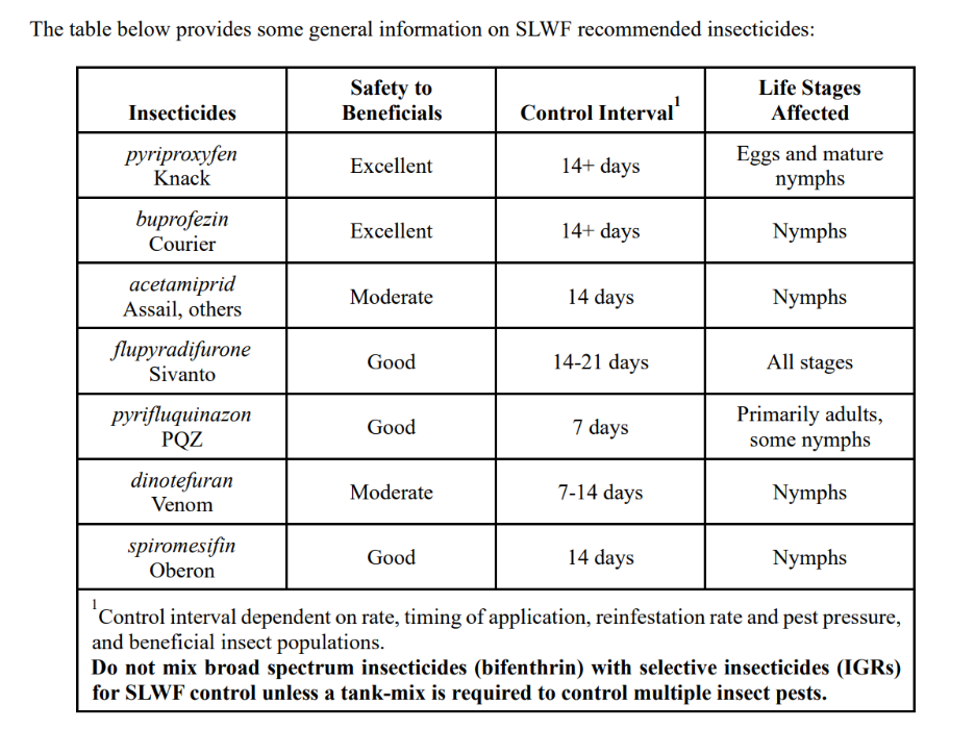
The table below provides some general information on SLWF recommended insecticides:
I Need Pesticide Credit!
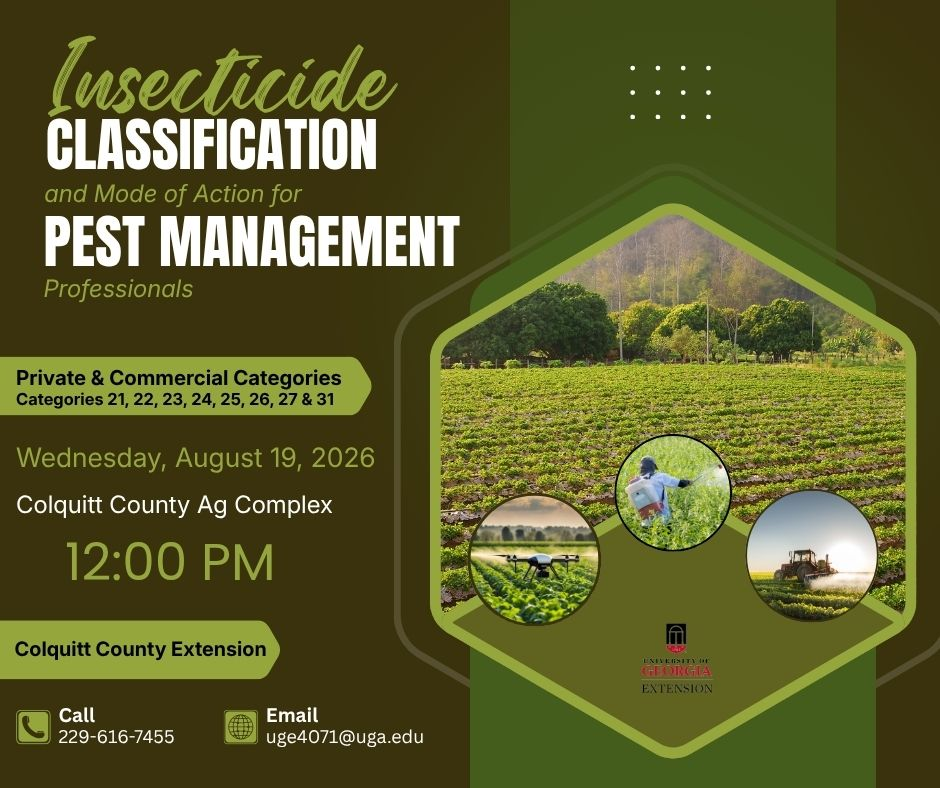
The Colquitt County Extension Office will offer an opportunity to earn 1 hour of pesticide recertification credit for private applicators and commercial applicators in categories 21, 22, 23, 24, 25, 26, 27, and 31.
The program will be held on August 19, 2026, at the Colquitt County Extension Office in Moultrie and will begin at 12:00 noon. A one-hour video presentation on pesticide classification and pest management will be shown. Participants are encouraged to bring their own lunch and enjoy the program.
If you have questions about this opportunity, contact the Colquitt County Extension Office at (229) 616-7455 and ask for Tanner Wilson.
If you have questions, please contact your local County Extension agent.
Have a great week,
Jeremy M. Kichler
Colquitt County Extension Coordinator
The University of Georgia Cooperative Extension does not endorse or guarantee the performance any products mentioned in this update.