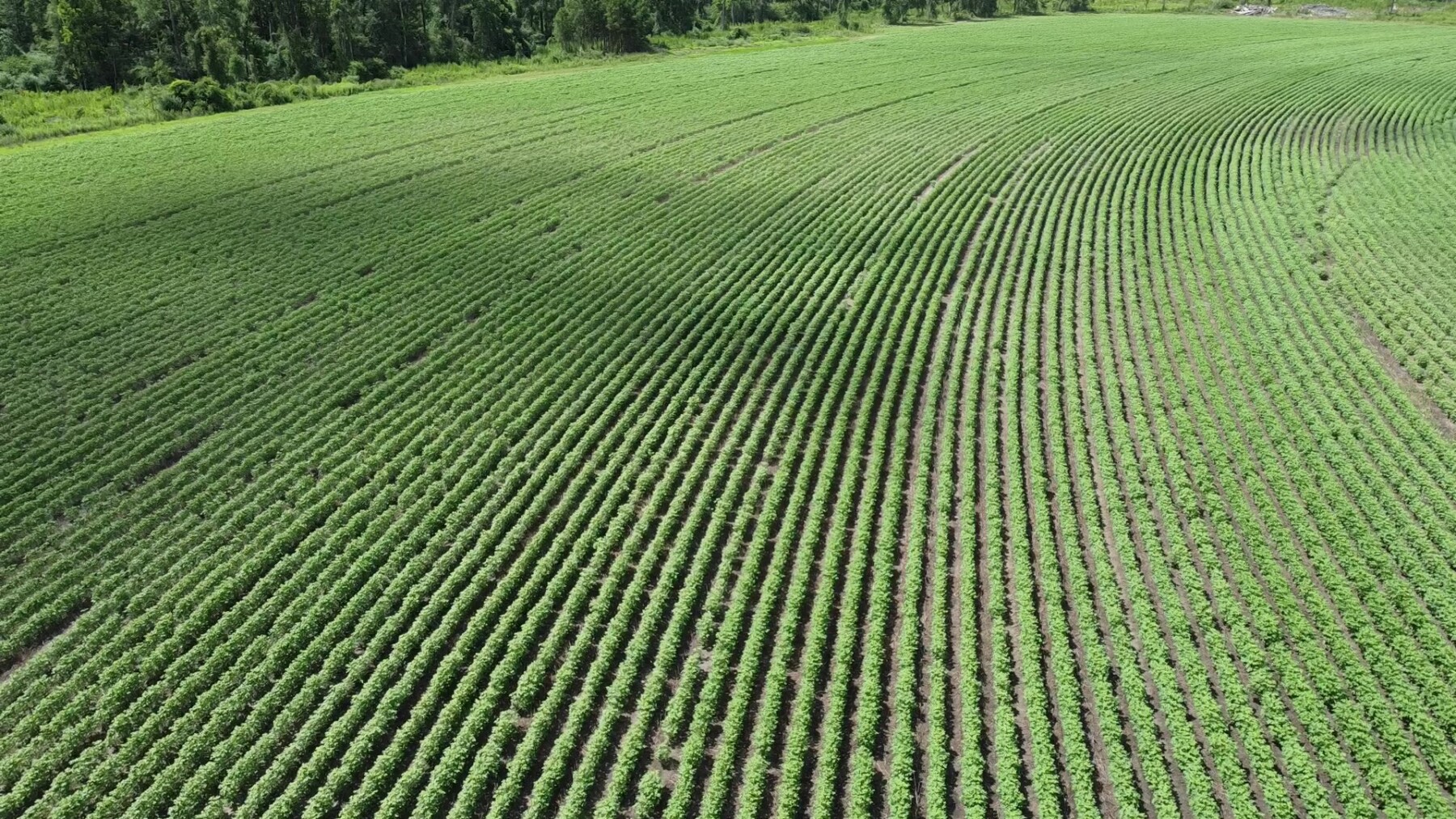
I have been getting numerous calls about herbicides and the dry weather conditions we have been experiencing over the last few months. Dr. Prostko has some “words of wisdom” about this subject and discusses “naked” herbicide programs.
No doubt the current drought conditions are on everyone’s mind. Thus, I have been getting tons of inquiries on how to manage herbicides in this situation, especially dryland fields. I don’t have all the answers but here are a few thoughts:
1) Residual herbicides must have moisture to be “activated”. Activation simply means the movement of the herbicide into the upper 1″-2″ of soil. This is the depth where most annual weeds emerge from. Moisture is also needed to keep the herbicide in the soil solution so that it can be absorbed into germinating weed roots and shoots.
2) In dry conditions, mechanical incorporation will improve the chances for success of some residual herbicides but is not a 100% guarantee under extreme drought conditions. In a drought, herbicides such as Prowl or Sonalan can be more tightly adsorbed onto soil colloids which makes them less available for plant uptake. If a grower is mechanically incorporating a herbicide and he cannot see the implement behind him because of the dust cloud, its very doubtful that incorporation will matter.
3) Since most residual herbicides only last on the ground for about 7-10 days (~14-17 days for Valor) before they must be moisture activated, it might be a good idea in dryland fields to go “naked” (no PRE) at planting. Wishing/hoping that more reliable rainfall is in the future? It costs roughly $20-23/A for the UGA standard PRE program of either Prowl or Sonalan (32 oz/A) + Strongarm (0.225 oz/A) + Valor (3 oz/A). So if it does not rain and these fail to perform, that’s good money lost!
4) A strong “naked” weed control program would include an “AT-CRACKING/EPOST” application of Gramoxone + Storm (brand name or home-made) + a Group 15 herbicide (Anthem Flex, Dual Magnum, Enversa, Outlook, Warrant, or Zidua: FYI, I have no preference here) followed by a timely “POST” application of Cadre + Cobra + 2,4-DB + Group 15. But, a grower must be ready to pull the trigger in these fields that have no PRE. There can be no delay!!

Figure 1. “Naked” (no PRE) program for dryland peanuts. Group 15 herbicides that can be used here include Anthem Flex, Dual Magnum, Enversa, Outlook, Warrant, and Zidua.
5) I do believe that since Valor does last a little longer without moisture activation and is super cheap (~$1/oz), that it might be worth the risk (cheap insurance)?