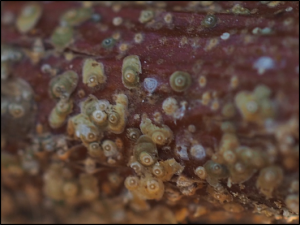
I can’t believe it is already March, but with the cooler temperature this spring, the scale insects have been slow to develop as well. However, with the warmer temperatures on the way, the scale will begin to develop, so if you haven’t gotten out your delayed-dormant spray yet, and you aren’t to pink stage yet, there might still time.
For delayed dormant timing, apply dormant horticultural oil at a rate of 1.5-2% oil to water. It is recommended to apply the oil:water mixture at high gallonage in order to maximize coverage. As you have probably heard me say over and over again, if you are applying the delayed-dormant application to pre-pruned trees, then it is important to aim for 150-200 gal/acre to get effective coverage, especially in areas with a history of scale pressure. If the trees have already been pruned, then lowering the rate down to 100 gal/acre seems to be effective. Increasing the rate to 3% oil at 100 gal/acre may also achieve effective coverage, but becomes more risky for phytotoxicity as the flower buds near bloom.
Additionally, combining an insect grower regulator, such as Centaur or Esteem with the oil can enhance the control of the scale. Similarly, combining Venerate with the delayed-dormant oil application has also shown to significantly suppress scale numbers compared to oil alone.
Also, chlorpyrifos tolerances are now in effect and thus can be used again in accordance to the registered labels (more info here and here). As used in the past, chlorpyrifos may help suppress both scale insects and borers when applied with oil at bud swell.
Also note, do not apply oil sprays within 2 weeks of (before or after) making a spray that contains sulfur.
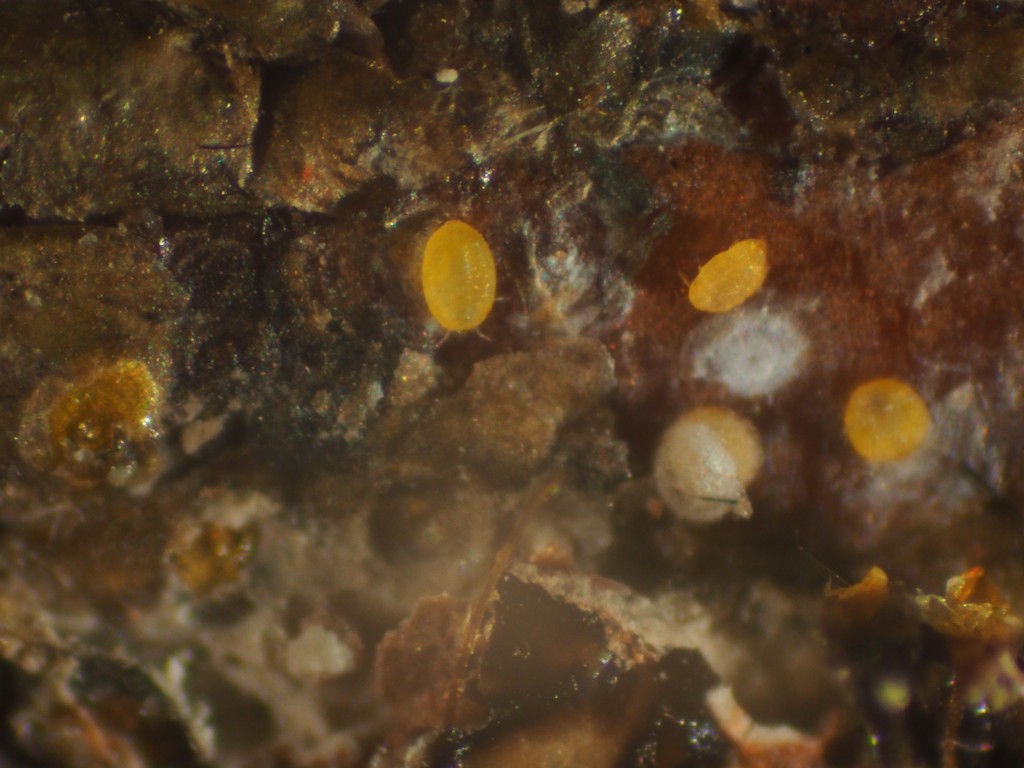
Also note, if you miss the delayed dormant management for SJS, then there are still within season options.
Once crawler activity begins to increase, consider management insect grower regulators, such as Esteem (6 oz/acre) or Centaur (34.5 oz/acre). Alternatively, when targeting the scale crawlers, Venerate XC (2 qt/acre applied twice over 7 day period; 4 qt total) or diatomaceous earth (i.e. Celite 610 @ 10 lb/acre) have both showed efficacy at suppressing San Jose scale. I have also seen decent management of crawlers using Brigade 2EC (bifenthrin) when applied to target other pests, such as plum curculio or OFM.
If management occurs later, once the crawlers have already settled and/or you cannot find active crawlers in a block with a history of scale, it may be best to treat with Movento (check label rate). Note that Movento should be applied once the trees have substantial leaf area, flushing new growth, and should be tank mixed with an adjuvant that has spreading and penetrating properties. Anecdotally, I have applied Movento late April and have had really good success.
For more information and additional management options, please see the peach management guides:
Please note that the 2026 version has now been released online.

Here’s to a great 2026 season!!
