

Ambrosia beetles are tiny insects that can cause big problems in Georgia landscapes. These bark-boring beetles attack more than 100 species of trees and shrubs, including many common ornamentals. While Georgia is home to over 170 species of bark and ambrosia beetles, most damage in nurseries and landscapes is caused by one invasive species: the granulate ambrosia beetle (Xylosandrus crassiusculus).
The good news is that ambrosia beetles don’t typically attack healthy trees. Instead, they target plants that are already stressed — from drought, flooding, root damage, or other pests. Understanding this behavior is key to preventing problems in the landscape.
When and why they attack
Ambrosia beetles become active in late winter or early spring, often when temperatures reach about 68 degrees Fahrenheit for a few days in a row. The adult females emerge from trees where they’ve overwintered and begin searching for new host trees.
What are they looking for? Stressed trees. These trees release chemical signals, like ethanol, that act like beacons to ambrosia beetles. They’re also drawn to wood containing some moisture, attacking stressed or dying trees, rather than those that are already dead.
Once a female finds a suitable host, she bores into the trunk or branches, creating tunnels called galleries. As she drills, she pushes out compacted sawdust, forming the telltale “toothpicks” or “noodles” sticking out of the bark. These are often the first and most noticeable sign of an infestation.
Fungus farmers
What makes ambrosia beetles especially unique is that they don’t actually eat the wood they tunnel through. Instead, they farm fungi.
Female beetles carry spores of “ambrosia” fungi in specialized structures on their bodies. Once inside the tree, they introduce this fungus into their galleries and carefully tend it like a garden. The fungus grows along the tunnel walls, and both adult beetles and their larvae feed on it.
This relationship benefits the beetles, but it’s bad news for the tree. As the fungus spreads, it can clog the tree’s water- and nutrient-conducting tissues, leading to wilting, dieback and eventually death. Smaller or already stressed trees are more likely to suffer worse fates.
What to look for
Because ambrosia beetles are tiny (2-4 mm) and spend most of their lives hidden inside trees, you’re unlikely to see the insects themselves. Instead, keep an eye out for signs of their activity.
The most distinctive clue is the presence of those small, toothpick-like strands of sawdust sticking out from the bark. You might also notice fine sawdust collecting at the base of the tree or in bark crevices.
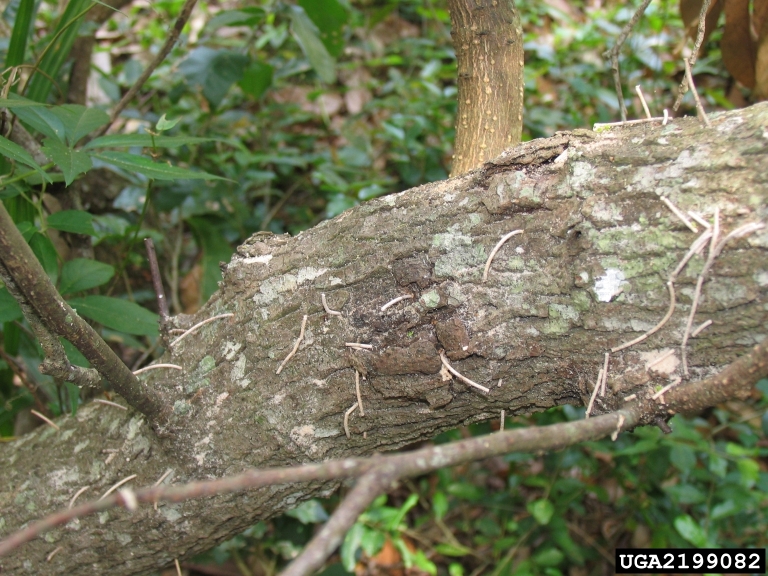
As infestations progress, trees may show more general symptoms of decline, such as delayed leaf-out in spring, wilting or early leaf drop. In severe cases, branches or entire trees may die.
Ambrosia beetles attack a wide range of plants, including crape myrtle, dogwood, redbud, oak, magnolia, peach and pecan, among others. While most species focus on stressed plants, one exception is the redbay ambrosia beetle (Xyleborus glabratus), which can attack healthy trees and has caused widespread losses of redbay, sassafras and avocado in the Southeast.
Prevention is the best protection
Because ambrosia beetles are attracted to stressed trees, the best defense is keeping your plants as healthy as possible. Start by choosing the right plant for the right place, and be mindful of site conditions like soil type, drainage and sunlight. The conditions at the planting site should match your plant’s preferences and tolerances.
During dry periods, irrigate as needed, especially for newly planted trees. Avoid injuring trunks and roots with lawn equipment, as wounds can increase stress and make trees more attractive to beetles.
