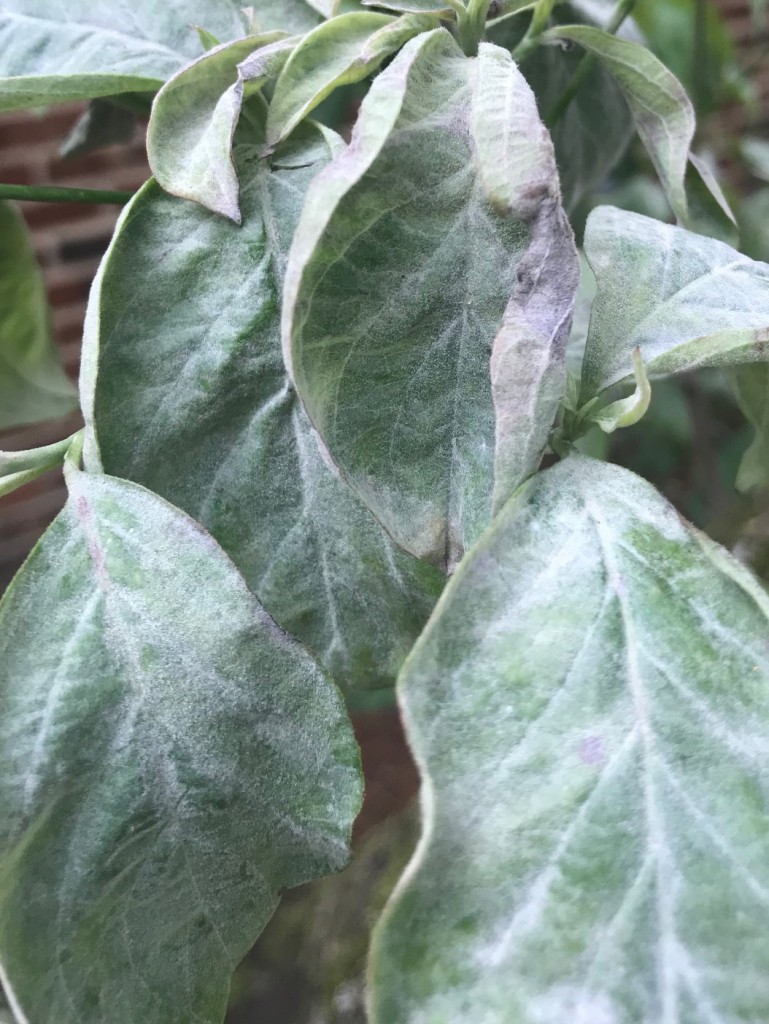
Powdery mildew is a common fungal disease that affects numerous ornamental plants including dogwood, rose, phlox and many bedding plants. We also see it very often on vegetable crops, like yellow squash. Cut flowers, particularly my zinnias, get it every single year.
“The powdery mildew fungus grows over the surface of tender leaf and stem and gives them a white to gray appearance. Young leaves are typically infected first. The fungus then sends structures into the epidermal cells of the leaf to act as anchors to absorb water and nutrients from the plant. The plant slowly declines as a result of the fungus.”
Frank M. Watson, Rains May Bring Powdery Mildew to Dogwoods
UGA CAES Field Report
Given our warm days and wet weather, the fungus causing powdery mildew proliferates in our Georgia summers. What can you do? Growing powdery mildew-resistant varieties and pruning to improve airflow are your best bets.
Help UGA Researchers
We need your help! Dr. Bikash Ghimire, our UGA specialist in ornamental plant pathology, is working with other researchers to develop a plant disease-detecting app. He is looking for hydrangeas and dogwoods with powdery mildew symptoms.
We’re likely to start seeing signs of powdery mildew on our plants in July and August. If YOU have hydrangeas or dogwoods with signs of powdery mildew, contact your county agent to let Dr. Ghimire know. He and his graduate students will come take photos to help hone the app.
If you ever have a question about a disease affecting your plants, don’t hesitate to reach out to your county Extension office.
