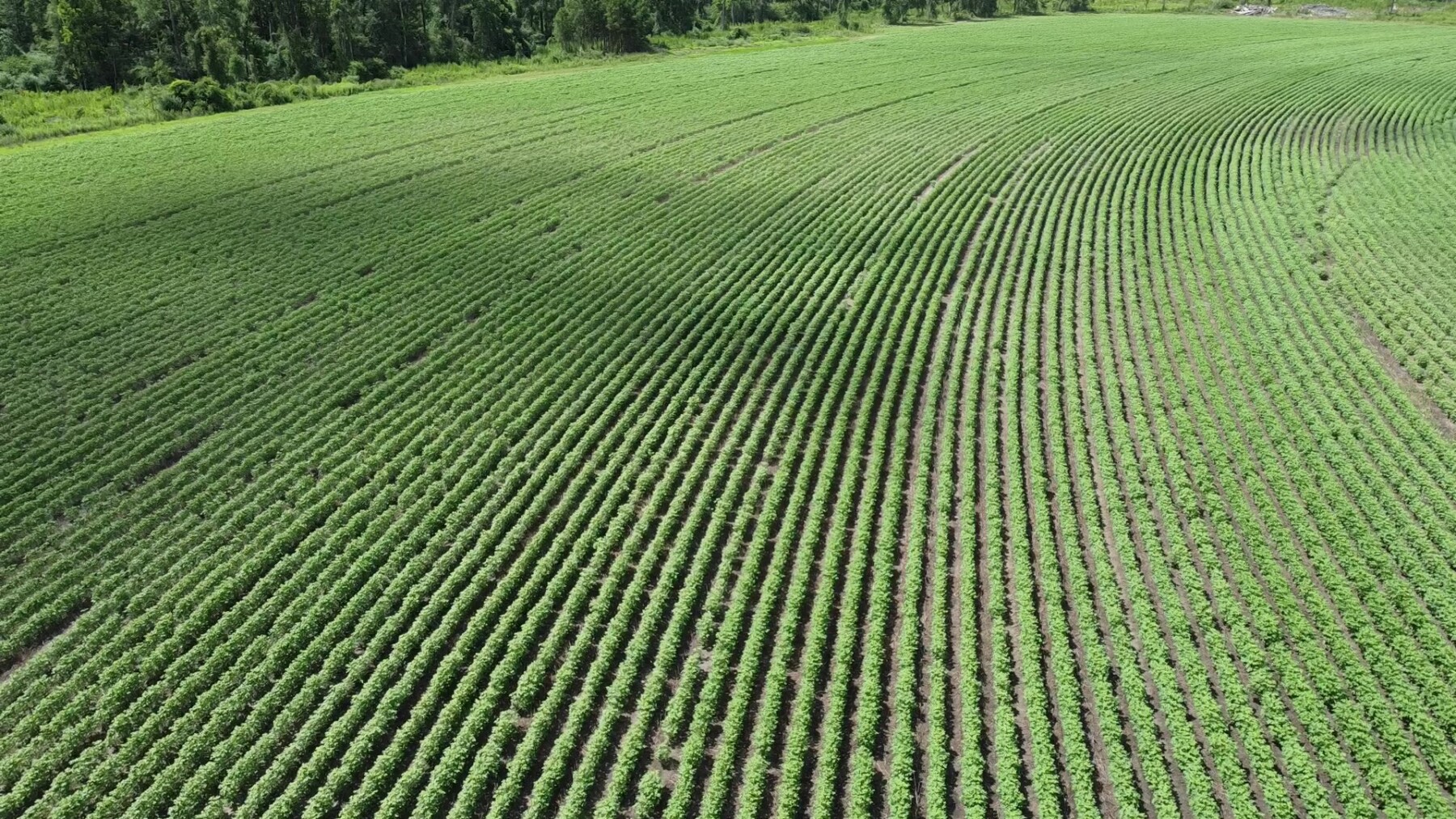
Topics in this newsletter includes: peanut maturity checks, pasture mealybug, peanut fungicide tips from Bob, and winter annual forage varieties.
This has been another interesting week in Colquitt County agriculture. Rainfall was hit or miss across the county last week, with some areas receiving 4 to 5 inches over the past seven days. Insect activity in peanuts has been relatively quiet. However, white mold and leaf spot have been common topics of discussion among peanut growers this week. Areolate mildew and whiteflies have been the primary concerns for cotton producers. Meanwhile, corn harvest is beginning to get into the short rows.

When Are My Peanuts Going to Be Ready?
Peanut maturity clinics will begin on Tuesday, September 8, 2026, at the Colquitt County Extension Office.
Clinics will be offered every Tuesday, Wednesday, and Thursday through the end of September from 8:30 a.m. to 10:00 a.m. If you need peanuts checked this week then call me.
Taking a good sample is crucial for accurately determining the proper digging date. A peanut hull scrape maturity profile is only as accurate as the sample collected. Please follow these guidelines when pulling a sample:
- Pull or dig at least 5 to 6 adjacent plants from three representative areas of a field that can be dug on the same day.
- Keep samples from each area of the field separate.
- Remove all pods from the plants until you have approximately 200 peanuts. A good sample should contain 180 to 220 pods.
- Pick the vines clean to ensure the sample is representative.
- If there will be a delay before bringing the sample to the clinic, remove the pods from the plants and keep them in a bucket of water to maintain freshness.
For more information, please contact the Colquitt County Extension Office at 229-616-7455.
The pasture mealybug! The pasture mealybug (Heliococcus summervillei; PMB) has been officially reported in Decatur County in SW Georgia.
The official press release from the Georgia Department of Agriculture can be found here: https://www.agr.georgia.gov/pr/georgia-agriculture-commissioner-tyler-j-harper-announces-first-confirmed-detection-pasture. We know very little about the PMB at this time.
We have created a PMB hub for the best available resources and most current map here: https://georgiaforages.caes.uga.edu/pasture-mealybug-resources.html
Here are answers to some of the most common questions:
Q: What crops could be impacted?
A: All warm season grasses could potentially be impacted. This may potentially include all pasture, hay, cover crops, turfgrasses, corn, sugar cane, and other small grains.
Q: Can I spray something to keep the PMB out?
A: Unfortunately, no. There are no reliable pesticides to prevent or control the PMB. Currently, Sefina is labeled for suppression but resulted are mixed. Biosecurity is the best option we have right now.
Q: Where can I report?
A: Producers need to contact their county Extension agent.
Q: Should I be worried?
A: No, but we should be scouting and taking proactive measures to keep our farm safe. Biosecurity is the best option we have right now to slow the spread of the PMB.
Peanuts: Below is a refresher about late season peanut fungicide applications from Dr. Bob Kemerait.
1. When considering “pre-harvest” intervals for peanuts, some define harvest as “digging date”. I define it as “picking date”. Why does it matter? It may give a grower more options on what can be used.
Scenario 1- two weeks or less until projected digging? The die is cast. You are done. A fungicide now is either too little, too late, or not needed. Or not enough time left to matter. This goes for leaf spot and white mold.
Scenario 2– three weeks until projected digging and all looks good. Little to no leaf spot or white mold? Good job! You are done. Stick a fork in it.
Scenario 3– three weeks until projected digging. White mold is not an issue, but you have been facing leaf spot. It’s under control, but you are concerned. Use some combination of chlorothalonil + something else with systemic activity. That could be something like Tetraconazole (Domark) or thiophanate methyl (Topsin). Alto (cyproconazole) is an effective measure when you have 40 or more days until picking.
Scenario 4– three weeks until projected digging and losing leaves right and left to leaf spot. Honestly, at this point, it is likely too late for any fungicide to help, even to “buy me some time”. The die is cast. If you insist on spraying, look at scenario 3. But are you wasting money? In scenario 4, you may need to dig early to avoid excessive harvest losses. When defoliation gets beyond 50%, the pods start to abandon ship.
Scenario 5- three weeks to go until projected digging. White mold is present, but suppressed. I would put something out to keep it quiet. That may be some teb with chlorothalonil. It may be some azoxy with chlorothalonil. It may be some Prothio. Something. Cheaper.
Scenario 6- three weeks to go and white mold is off the chain. It is a tough situation. Will the cost of a better fungicide pay for itself? How much time is left? Answer- with three weeks to go, I would not, could not, invest in top-tier white mold products, but I would use some combination that includes prothioconazole. If my budget is shot, put out full rates of teb or azoxy.
Scenario 7-. Three weeks to go and leaf spot and white mold control are good but there is beaucoup mater wilt virus. Stay the course. Do not dig early for tomato spotted wilt.
Scenario 8– four weeks or so to go: no disease problem? Something like Chlorothalonil or teb-chlorothalonil to keep the disease honest
Scenario 9- four weeks or so to go and leaf spot and/or white mold is a threat – consider use of any fungicides. Even top-tier, based on threat vs yield potential vs cost
Scenario 10- four or so weeks to go and disease has gone wild? Take a deep breath, consider digging dates, don’t throw money at a problem money won’t fix.
Please note- these are examples of situations and products, not an exhaustive list of ALL appropriate products.
Winter annual forages: It the time of year to plan your winter annual forage program. Cool season annual grasses can offer temporary winter grazing during the late fall until spring depending on chosen species. These species are listed below in the order in which they tend to provide grazing and mature.
Cool season annual forages are typically overseeded into dormant warm season grass pastures to maximize productivity per acre. Much like summer annuals, forage yields are highly dependent on planting date and moisture. The recommended variety list is updated annually based on the UGA Statewide Variety Testing results.
Rye
Rye (Secale cereale L.) is the most drought tolerant and winter hardy small grain grown in Georgia. Rye generally matures by middle to late February, earlier than other small grains. Unfortunately, forage quality declines rapidly in the spring, but timely grazing and harvest management can negate these concerns.
Recommended varieties for Piedmont and Coastal Plains the 2026-2027 growing season include:
- Florida 405 (earlier maturing)
- Wrens Abruzzi (later maturing)
Kelly Grazer III, Bates RS4, Elbon, and FL 401 have performed well in the past, but have not been recently evaluated. No varieties have been recently tested in Limestone Valley.
Other varieties may provide satisfactory yields but were not submitted to the Statewide Variety Trial program.
Rye may be a host for Hessian fly but is much less susceptible than wheat.
Triticale
Triticale ([Secale or Triticum] × Triticosecale Wittm. ex A. Camus) is a hybrid of wheat and rye. It grows tall like rye and matures later in the season like wheat. Triticale was originally bred for grain production, so forage quality will decline rapidly after seedhead development. Newer varieties can produce high-quality baleage or silage if harvested on time.
Recommended varieties for the 2026-2027 growing season include:
- FL 1143
- Good early season production in Piedmont and Coastal Plains
- TriCal 344
- Good early season production in Coastal Plains
- Good season long production in lower Coastal Plains
- Not tested outside Coastal Plains
- Good resistance to Hessian fly
- TriCal Sprinter
- Good season long production in Piedmont and Coastal Plains
- Not tested outside Coastal Plains
- Most resistant option to Hessian fly
- TriCal Surge
- Good season long production in Piedmont and Coastal Plains
- Not tested outside Coastal Plains
Other varieties listed here may be susceptible to Hessian fly.
TriCal Merlin Max, TriCal HTF, TriCal HTS, and NCPT01-1433 have performed well in the past but not been recently evaluated. Other varieties may provide satisfactory yields but were not submitted to the Statewide Variety Trial program.
Oats
Oats (Avena sativa L.) are later maturing and can provide more spring growth than rye when grown in South and Central Georgia. Oats are not as winter-hardy as rye and can winter-kill in some years. Although it is difficult to quantify, the leaves of oats are “softer” than those of rye or other small grains.
Recommended varieties for the 2026-2027 growing season include:
- Gladiator
- Good late season production in Piedmont and Coastal Plains
- Horizon 214
- Good early season production in Coastal Plains
- Good late season production in Piedmont and Coastal Plains
- Good season long production in Coastal Plains
- Horizon 306
- Good early season production in Piedmont and Coastal Plains
- Horizon 578
- Good late season production in Piedmont and Coastal Plains
- Good season long production in Piedmont
- Horizon 720
- Good early season production in Piedmont and Coastal Plains
- Maximus
- Good season long production in Coastal Plains
TriCal Cadillac, Legend 567, and LA99016 have performed well in the past but not been recently evaluated. No varieties have been recently tested in Limestone Valley.
Other varieties may provide satisfactory yields but were not submitted to the Statewide Variety Trial program.
All these varieties may be susceptible to prevalent strains of crown rust, scout routinely. Avoid planting earlier than recommended for your region.
Wheat
Wheat (Triticum aestivum L.) can be grown across the state, but it is not tolerant of acidic soils. This winter-hardy small grain can provide forage from winter to spring and makes a good grazing, silage, or baleage crop. Overall, wheat is the lowest yielding species in this list and should not be used except for cover or when low production is acceptable.
Recommended varieties for the 2026-2027 growing season include:
- SSI 30-06
- Good late season production in Piedmont and Coastal Plains
- Susceptible to Hessian fly
These varieties were not submitted for testing but were included on last year’s recommended list:
- SSI 30-06
- Good late season production in Piedmont and Coastal Plains
- AGS 2024
- Good early season production in Piedmont and Coastal Plains
- Good season long production in the Coastal Plains
- AGS 4023
- Good early season production in Piedmont and Coastal Plains
- AGS 4043
- Good late season production in Piedmont and Coastal Plains
- Good season long production in Piedmont and Coastal Plains
- Johnson
- Good late season production in Piedmont
- Good season long production in Piedmont
Dyna-Gro Plantation, Pioneer 26R10 and Pioneer 26R41 have performed well in the past but have not been recently evaluated. No varieties have been recently tested in Limestone Valley. Other varieties may provide satisfactory yields but were not submitted to the Statewide Variety Trial program.
Annual ryegrass
Annual ryegrass (Lolium multiflorum Lam.) is one of the most productive forages we can grow. There are several varieties recommended for each region in Georgia that are early maturing, late maturing, or capable of providing growth throughout winter and spring. Overall, ryegrass is still later maturing than small grains so many producers will plant ryegrass in mixtures with a small grain to provide season long grazing. Ryegrass is an excellent choice for grazing, baleage, or silage. The biggest limitation of ryegrass is the rapid increase in herbicide resistance, specifically in the southern portions of the state.
- Centurion
- Good early season production in Piedmont
- Good late season production in Coastal Plains
- Good season long production in Coastal Plains
- Jackson
- Good late season production in Piedmont
- Lonestar
- Good season long production in Piedmont and Coastal Plains
- More
- Good early season production in Coastal Plains
- Nelson
- Good season long production in Piedmont and Coastal Plains
- Tetrastar
- Good season long production in Piedmont and Coastal Plains
- Wax Marshall
- Good season long production in Piedmont and Coastal Plains
- WMWL
- Good late season production in Piedmont and Upper Coastal Plains
- WMWL-2
- Good late season production in Piedmont and Upper Coastal Plains
- Good season long production in Piedmont and Upper Coastal Plains
Other varieties may provide satisfactory yields but were not submitted to the Statewide Variety program.
Have a safe week and if you have questions please call the office,
Jeremy M. Kichler
Colquitt County Extension Coordinator
The University of Georgia Cooperative Extension does not endorse or guarantee the performance of any products mentioned in this update.