Pam Knox

-
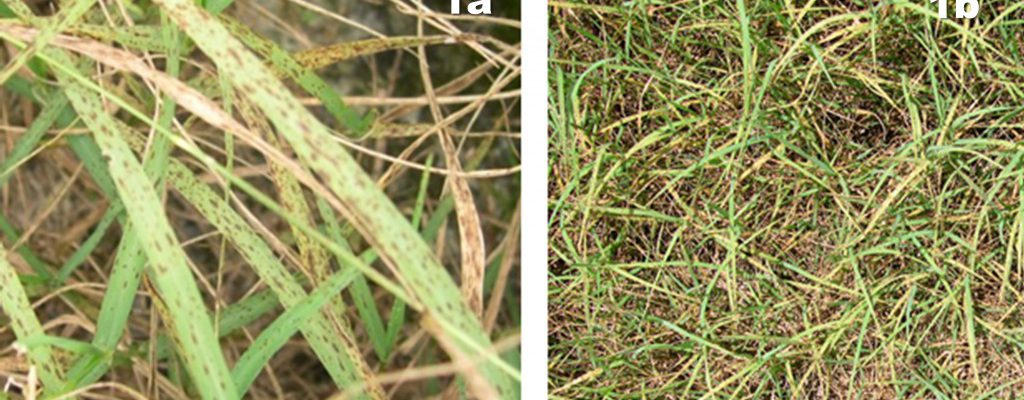
According to the Panhandle Ag e-Newsletter published on Friday, the wet conditions and warm weather have made this prime season for the development of diseases in forages, especially fungal diseases. You can read more about what kind of diseases to expect and see pictures of what they look like as you scout your fields at https://nwdistrict.ifas.ufl.edu/phag/2018/06/22/summer-is-the-time-to-scout-for-forage-diseases/.
-
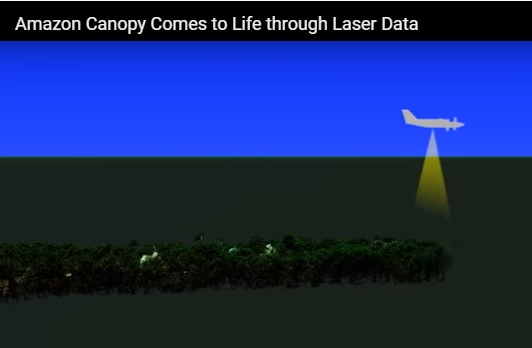
EarthSky posted an interesting article this week describing some new research using laser images of a Brazilian rainforest canopy to see how El Niño-induced drought changed the composition of the forest. There is an excellent video of the process with the article. You can see the article and video here.
-
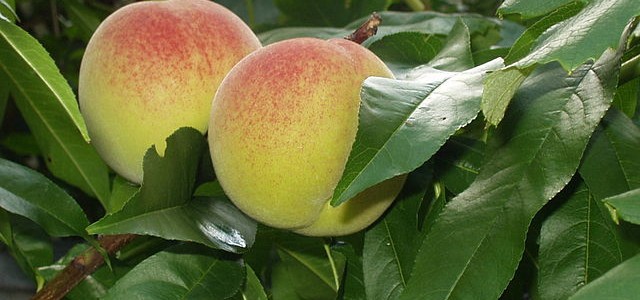
Fruit Growers News published an article by UGA’s Clint Thompson this week about the peach crop in Georgia this year. While there have been some issues to the peaches due to a frost in March and some bacterial blight, overall the cold winter conditions provided plenty of chill hours and yields are up quite a…
-

The latest 7-day QPF map shows that there is a chance of rain every day this coming week, although Sunday will probably be fairly dry for more areas. As long as we have wet soils, the chance of daily rains will continue. The longer-range forecasts do show a chance of drying in weeks 3-4, but…
Posted in: Climate outlooks -
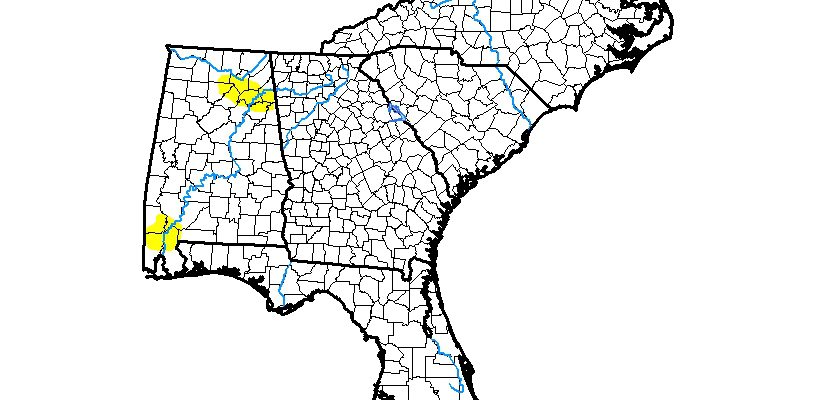
The latest Drought Monitor, released earlier this week, shows a slight expansion of two abnormally dry areas in Alabama from last week. The rest of the region remains free of dry conditions. No changes are expected for next week.
Posted in: Drought -
The latest Water Resources Outlook video from the NWS Southeast River Forecast Center is now available on YouTube. You can reach it through https://www.youtube.com/watch?v=cdBOXWv6HUM&feature=youtu.be.
Posted in: Climate outlooks -
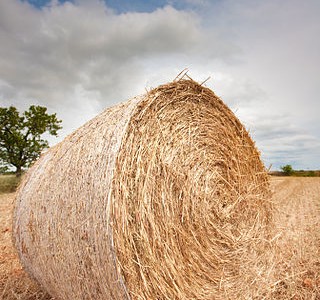
With all the rain we have been having in the Southeast, some of the hay that is being produced has higher moisture levels than farmers would like. If moisture levels are too high, the hay is more likely to mold, reducing quality and potentially making the animals that eat it sick. You can read more…