Hunt Sanders
Podcasts:
Peanut Podcast “all about the pod”
Update on Peanut Variety Trial: 30 Days After Palnting (DAP)
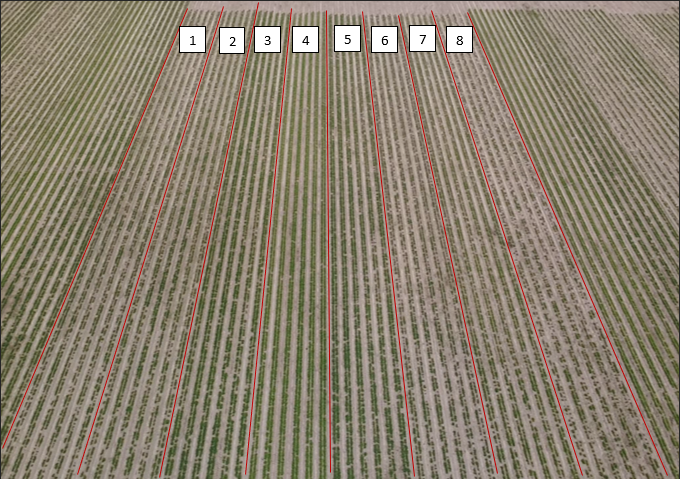
| 1 | Georgia-23RKN | 5 | Tif NV-HG |
| 2 | Georgia-06G | 6 | Georgia-24NHO |
| 3 | DG913 | 7 | FloRun-52N |
| 4 | FloRun 725 | 8 | Arnie |
- Notice the varieties with skippy stands are Georgia-23RKN, Georgia-24NHO
- FloRun725 has good vigor and stand, but the peanut is a true lime green. This doesn’t mean it has deficiency; it is just a lime green peanut.
- After planted on May 6th, heavy rainfall occurred soon after. It is interesting to see the difference in emergence and vigor between varieties.
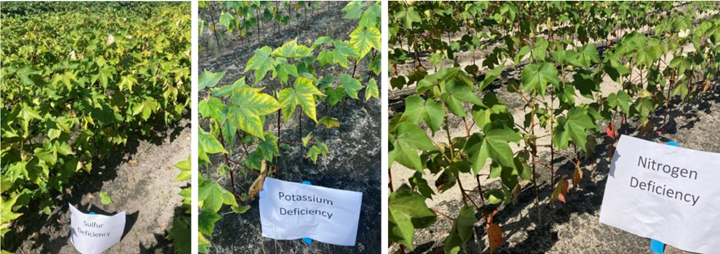
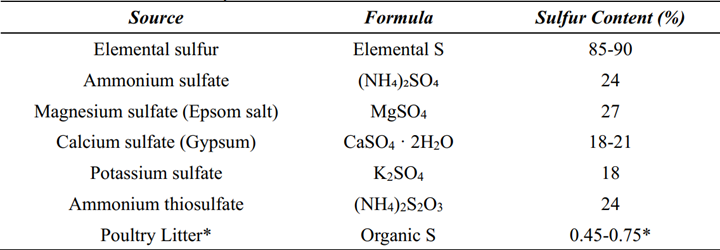
Lists of commercially available sulfur sources
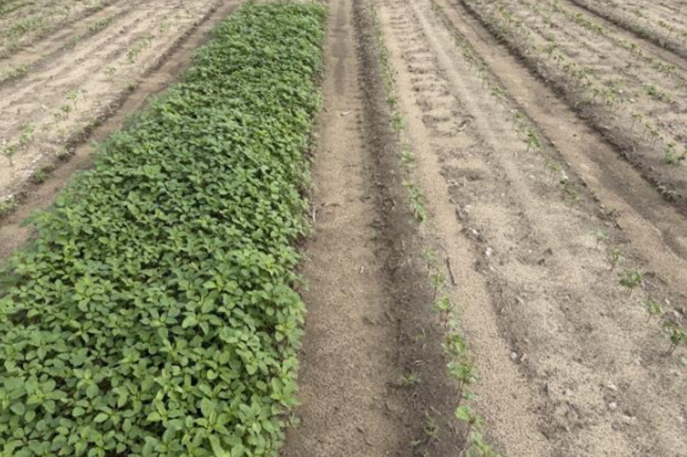
Keep in mind that if excessive rainfall has occurred since applying at-plant residual herbicides, postemergence herbicide applications may need to be applied more quickly than normal as the length of residual control can be shortened by excessive rains. At least for 2026, the dicamba program is thankfully back to help, but applicators must ensure these products are stewarded appropriately.
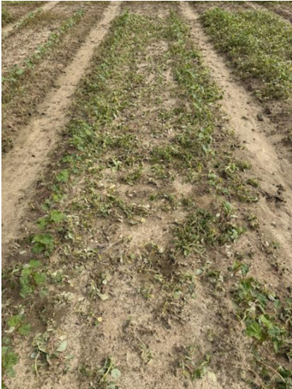
Influence of Roundup on Dicamba controlling Glyphosate-resistant Palmer amaranth at 4 days
Watermelon Update:
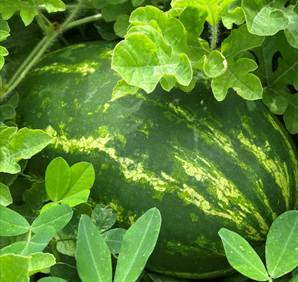
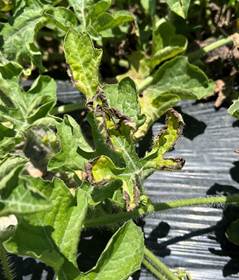
The first watermelon harvest is just around the corner. Disease is spreading like wildfire.
Gummy Stem blight, Anthracnose, Phytophthora (pcap), and downy mildew are diseases we should be managing for
What can we spray to cover all the bases?
| Pcap and Downy Mildew | Gummy Stem Blight and Anthracnose |
| Presidio (pcap only) | Miravis Prime |
| Orondis Ultra | Aprovia Top |
| Elumin | Proline or Luna flex if sprayed Proline 3X |
| Cabrio (Anthracnose only) |
If you do not wish to mix chemistries, space the Pcap/Downy mildew sprays and the gummy stem blight/Anthracnose sprays by 3-5 days. There are many other products that have efficacy on these diseases, these are just a few that I know growers are using.
Important Dates:
Georgia Cotton Commission Mid-Year Meeting – Statesboro, GA – July 29, 2026
Attapulgus Research and Education Center Field Day – Attapulgus, GA – July 30, 2026
Southwest Research and Education Center Field Day – Plains, GA – August 5, 2026
Southeast Research and Education Center Field Day – Midville, GA – August 12, 2026
Cotton and Peanut Research Field Day – Tifton, GA – September 2, 2026
Georgia Cotton Commission Annual Meeting and UGA Cotton Production Workshop – Tifton, GA – January 27,
There are several resources your county agent has access to for assisting the public:
- SpotOn Digital Sprayer Calibrator & nozzle cleaner tool – Accurate flow rate checking of individual sprayer nozzles.
- Fertilizer Spinner-Disc Spreader Calibration – spread pattern testing of fertilizer spreaders.
- Hay Moisture Tester – Evaluation and assessment of hay to bale at optimum moisture content – decrease mold growth and increase feed value. Test baled or unbaled (in field)
- Forced Motor Planter Calibration – at-plant insecticide hopper box calibrations. Potential benefits: increase insecticide application efficacy with the appropriate and effective application of product label and recommended control rate. Decrease
- Mobile Irrigation Lab – Pivot efficiency evaluation/Irrigation audits to support water conservation and decrease irrigation costs.
- Harvest Moisture Testing – Corn and soybean moisture testing to decrease drying time and fuel costs.
- Enviroscape Watershed Model – Environmental education programming tool. Interactive demonstration of the sources and effects of water pollution. Present and illustrate watershed/stormwater concept.
- Rainfall Simulator Tabletop Educational Program tool –
- Digital wind meter educational tool – Anemometer measures wind speed to support safe pesticide applications and reduce drift.
- Pivot Calibrations
- Drone imagery/scouting