The following is some information to answer the most common types of questions we receive at the Glynn and McIntosh Extension Offices. A lot of these concerns come from newcomers to our area! Don’t forget, Coastal Georgia is much more tropical than the rest of the state. We have intensely hot summers and mild winters. We aren’t classified as “tropical” because we aren’t in the right latitude for it, but we are Subtropical. We do still experience temperatures below 20°F on occasion that will kill tropical plants without protection.

1. If you see symptoms of disease in the leaves of your trees and shrubs, check the roots out first!
Crown symptoms often come from a pathogen or pest affecting the roots. If you see poor growth, off-color foliage, yellowing and dropping of lower leaves, or wilting, check out the roots. If they are brown, squishy, and decaying, then you have identified the probable culprit. Pull the plant or cut some of the roots off and UGA Extension can help to identify the pathogen. There may be a cost of around $15 if your sample needs to be analyzed from the Plant Pathology Lab.
For more information, check out Common Landscape Diseases in Georgia, Bulletin 1238
2. You probably overwater your plants.
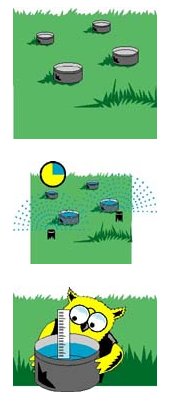
Overwatering = watering too often; NOT giving it too much water in one sitting. Long, deep waterings ensure the whole root system is receiving water. Frequent, quick waterings may not saturate enough of the soil for deeper roots to get any water.
For the majority of our landscape and house plants, the soil needs to dry out in between waterings. Check with a moisture meter or your finger tip before watering. After establishing your trees and shrubs, your main focus should be supplemental water during drought.
For lawns, we recommend 1inch of rain/water per week. Our sandy soils here along the coast do make it difficult for the water to stay available to the plants. You may need to spread this out over 2-3 water cycles per week. To measure the amount of water your plants are receiving, try out the tin can method.
For more information, check out Shade and Street Tree Care, B1031
3. The biggest contributors in pollinator decline are Habitat Loss, Climate Change, Pesticides, and Invasive Species
We will focus on the habitat loss and pesticides as we can easily remedy these impacts in our own landscape.
Everyone villainizes pesticides, but if they are used according to their label it should cause minimal issues. We encourage you to develop an Integrated Pest Management Plan (IPM) to control for pests. This method also focuses on other methods of pest prevention first with pesticide use as a final step in the pest control treatment process.
Some other helpful tips to prevent the need to use pesticides:
- Do not spray pesticides when plants are blooming; treat prior to bloom
- Mow your lawn to knock down any wildflowers that pollinators are attracted to before applying pesticides to the area. This prevents contact with the pesticide
- Be familiar with pest lifecycles during each season to determine the type of control used and the best window of time for treatment.
- Grow healthy plants! Research the needs of your plants and care for them in the best cultural methods for their needs. Healthy plants are stronger against pest damage.
- Set traps or scout the area in search of the pest. One or two insects do not constitute the need for a whole lawn treatment. A leaf with some spots on it doesn’t mean the whole shrub needs to be sprayed. Evaluate the impact and quantity of the pest to determine if treatment is needed. Drop insects in soapy water and prune diseased leaves and branches to remove the pest before they explode into a huge issue to control.
Habitat loss comes from human development, clear cutting land, removal of wildflowers deemed weeds, and agricultural intensification practices. You can help by building an intentional space for pollinators to use in your yard, then it will attract butterflies, bees, and more! It can be a challenge to figure out where to start. To help, here are some valuable resources.
- Butterfly host plants on the Georgia Butterflies brochure
- Recommendations for Wet and Normal to Dry Soils, Trees, Shrubs, Perennials, Ferns, Grasses, Sedges, Rushes, and Vines in the Landscaping & Gardening with Native Plants in Coastal Georgia brochure
- List of Native Plant Nurseries and online ordering maintained by the State Botanical Garden. We have local nurseries and plant sales in the coastal area.
- Start small with an Impactful Container Pollinator Garden and Homegrown National Park
- Bring a spark to your yard with Georgia Fireflies
- Copy UGA and shop off of our research list, Top Plant Species for Attracting Pollinators in The Eco-Friendly Garden: Attracting Pollinators, Beneficial Insects, and Other Natural Predators
***Words of encouragement, no one starts out with the perfect native garden. It will take time to establish a bountiful pollinator garden so give yourself patience and grace. Some non-native plants provide the same needs, so you do not need to be a native plant purist to provide a safe habitat. Just check to make sure it isn’t an invasive species first. ***
Weigh the value of plant damage to insect reproduction. One example, the Giant Swallowtail Butterfly feeds on citrus leaves as a caterpillar. When your citrus tree is new, it may not have enough leaves to support a population of these caterpillars. During this time, you may remove the ones you see so that you protect your tree. If the tree is more mature, it can thrive and support multiple feeders at a time. Any way that you make your decisions, know that the Giant Swallowtail Butterfly may not be seen in your landscape if you are removing them for pest control. Provide the host plants, nectar plants, and habitat plants that pollinators need to complete their lifecycle and your yard will be full of butterflies and bees again!


For more information, check out Threats to Pollinators, Georgia Invasive Species Task Force, Center for Invasive Species and Ecosystem Health (Bugwood)
4. If your tree is dying, a certified Arborist will be able to assess risk and provide recommendations for pruning or removal
Most UGA Extension Agents are not certified arborists. You can still call your local office to get a list of Arborists who serve your area. You can also search for an arborist on treesaregood.org
Check out our circular, Is My Tree Dying? for more information
5. UGA Extension soil testing is not the type of soil test you need for installing a septic tank or building a house
Our lab focuses on fertility and pH of the soil. We also have tests for cation exchange capacity, boron, soluble salts, organic matter, potting mix/greenhouse/nursery media, soil salinity, fecal coliform, and priority pollutants. Find the full list on the Agriculture and Environmental Services Lab Fee Schedule.
You will get your construction permit, perc test, or level III soil report from the County Health Department. Find soil classifiers who can help perform the test on the Environmental Health website. Contact your local Health Department with this handy PDF of offices, contact information, and staff names.
6. Not all fruits grown in Georgia are going to grow across the entire state
***Before we get too deep, it is important to do your research before purchasing fruit trees, bushes, vines, and brambles. While we may be able to grow certain fruits, we may not be able to successfully grow all varieties. To make sure that your plant has the best shot of producing the best quality and most amount of fruit will require research, but searching for Expert Resources on UGA’s Field Report gives you an excellent starting point. There may be fruits missing from this section that do grow well, so don’t feel like this section is limiting.***
Here in Coastal Georgia we can grow citrus like grapefruits, Meyer lemons, mandarins, tangerine hybrids, sweet oranges, kumquats, calamondin, and some limes with great success! We can also grow avocados, mangoes, and pineapples with careful watch. Other fruits we can grow include bananas, feijoa (pineapple guava), loquat, mayhaw, and pomegranate.
It is not cold enough for long enough on the coast to successfully grow most apple and peach varieties. Cherries, plums, and others also require chill hours that we don’t experience. Chill hours are defined as the amount of time the temperature is between 32-45°F and you can find local information on the UGA Weather Network Chilling Hours Calculator. Match local chill hours to the hours required by each fruit variety. Other fruits North Georgia claims which we cannot include raspberry, bunch grapes, gooseberry, and currant.
Some fruits just love Georgia and can be grown statewide. Figs, pears, blackberry, blueberry, strawberry, watermelon, muscadine grapes, mulberry, persimmon, elderberry, jujube, juneberry, kiwifruit, medlar, pawpaw, and quince to name a few.
7. Spanish Moss, Lichen, Resurrection Fern, Moss, and Other Air Plants are not killing your tree
They are only taking advantage of a surface to grow on. They are “epiphytes” – meaning they are plants that grow on other plants and that they get their moisture and nutrients from the air and rain.
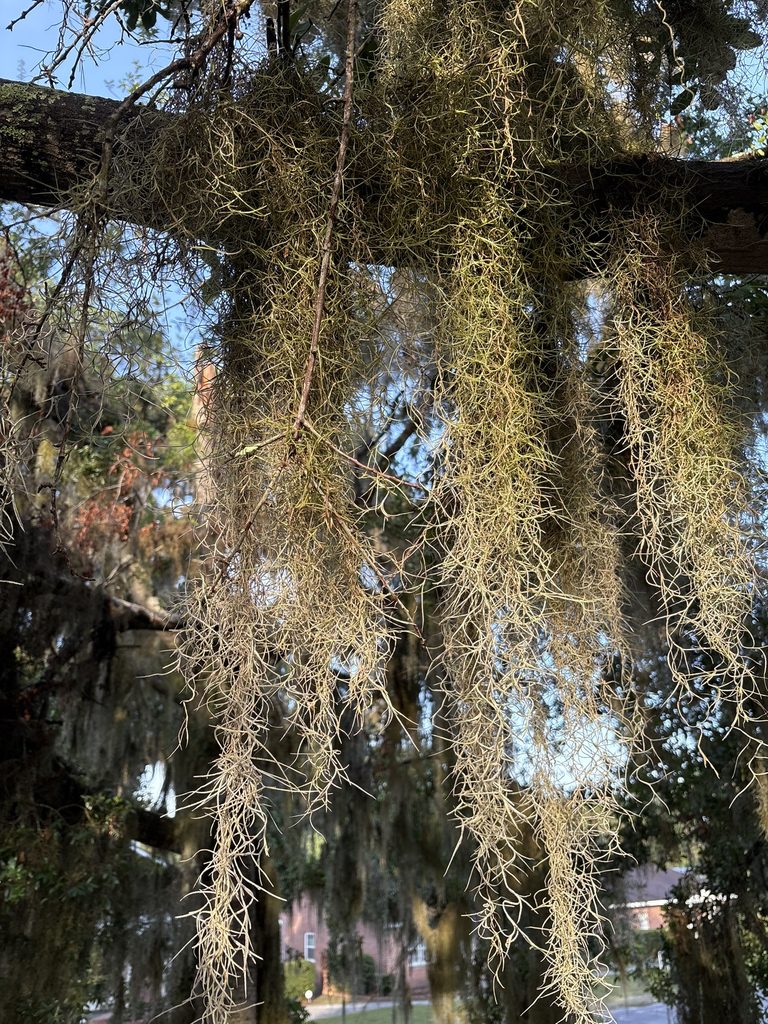
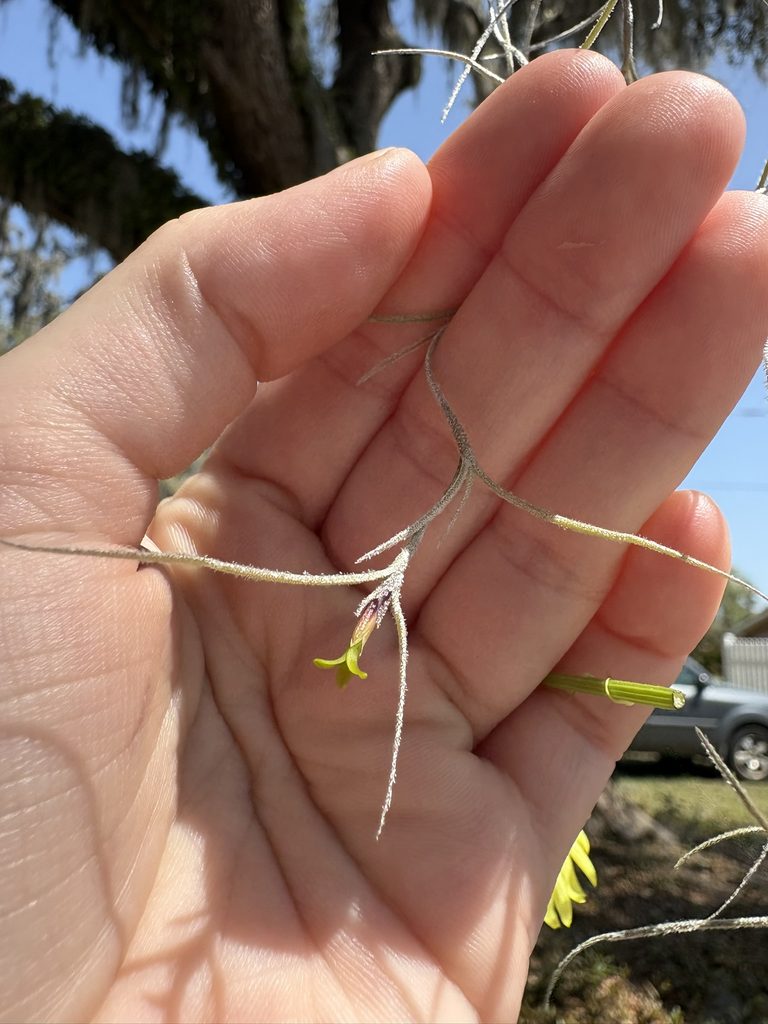
Spanish Moss is a native plant to our area. It is a Bromeliad and is classified as a flowering plant. It’s long stems wrap or drape around branches of trees. It can become harmful to a tree if there is too much growth in the tree canopy. It can inhibit leaf production and photosynthesis for the tree by outcompeting for space. Manually removing from trees can help lighten the load if it is needed.
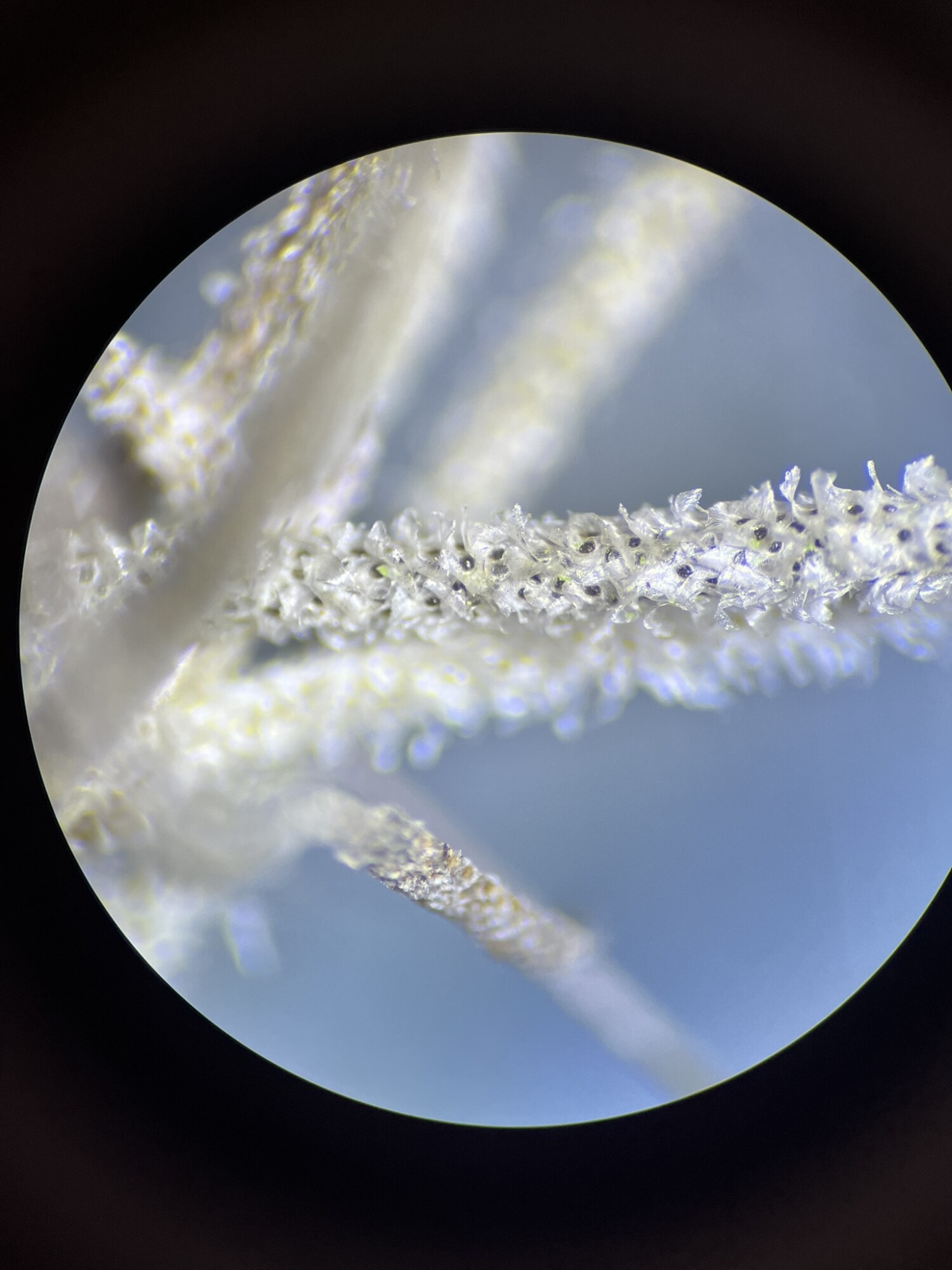
Lichen comes in all sorts of colors, shapes, sizes, and textures. These plants are actually more than just plants! They are a symbiotic organism made of the lichen fungi and algae or cyanobacteria. The fungus protects the algae/cyanobacteria from drying out by capturing water and minerals from the air. The algae/cyanobacteria photosynthesize and provide CO2 and carbohydrates to the fungus. Excessive lichen growth can be an indicator of poor tree health, but it is not the cause of the tree death.
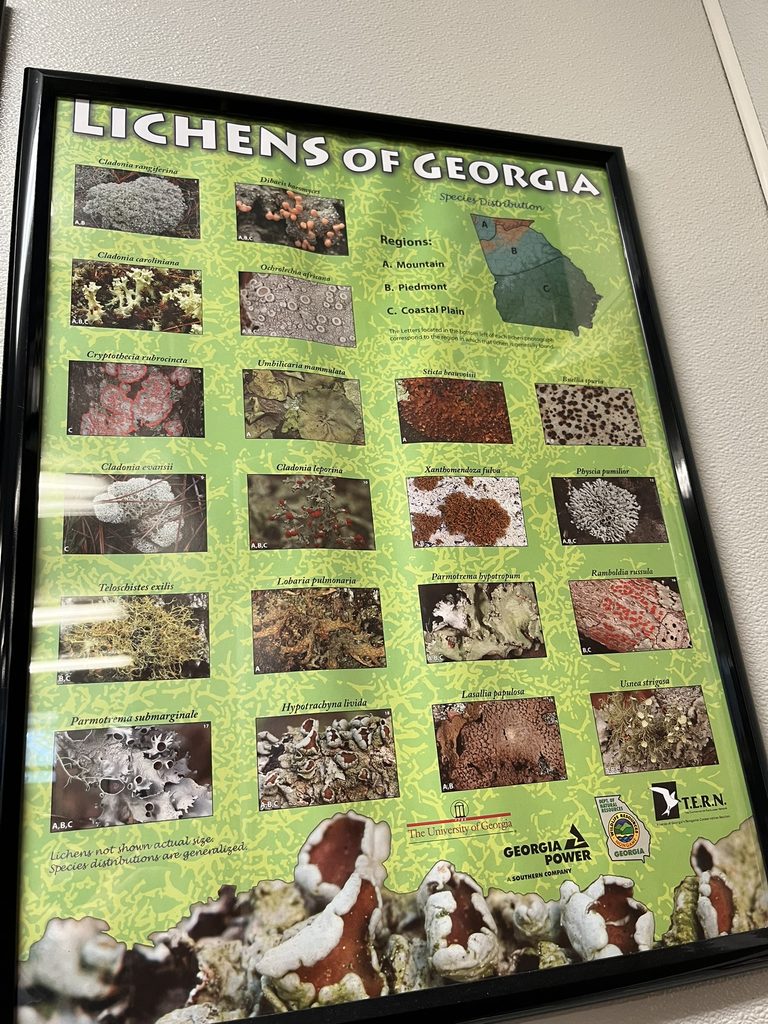
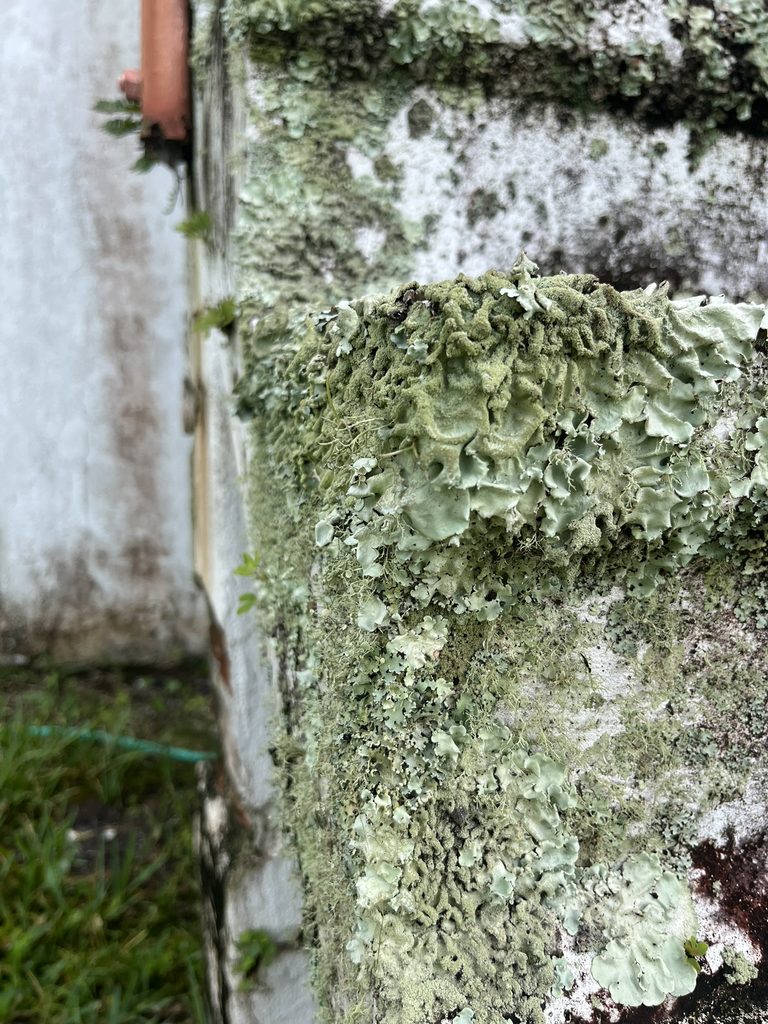
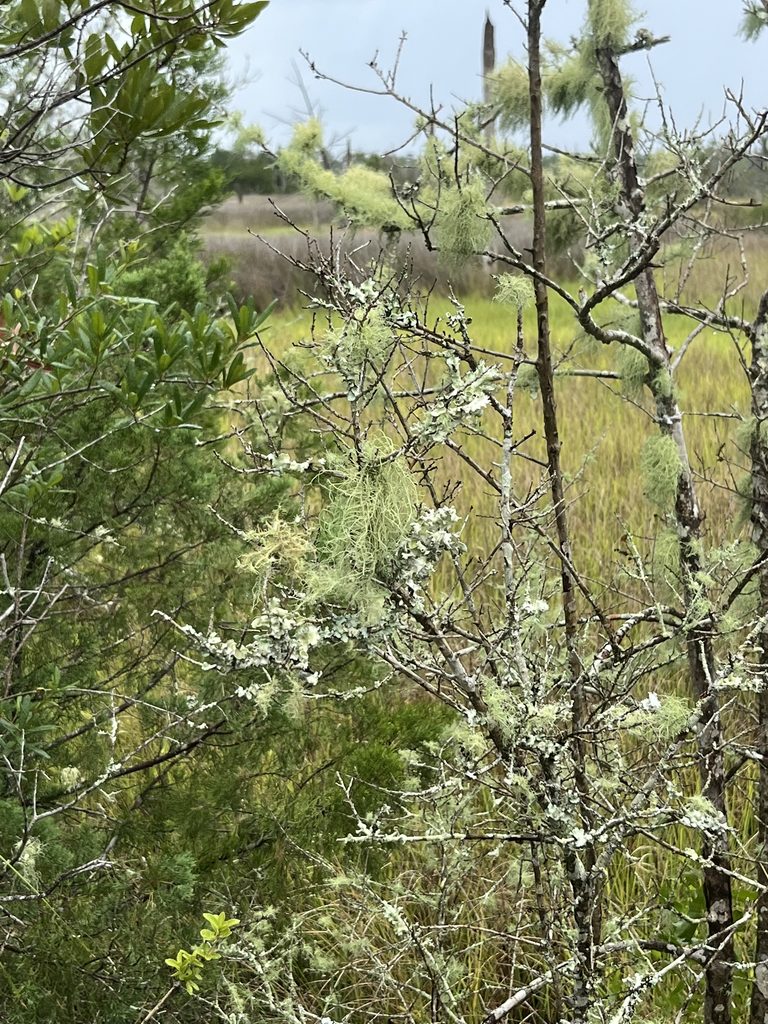
Resurrection Fern love oak trees, but they can be found on other plants or substrates. They are a native fern species that can withstand major drought conditions. Between rain events, the fern will dry out almost completely to preserve itself. When it rains again, they fill back up, unfurl, and gain back their lively green color and earning the title “resurrection” because it appears to come back from the dead. Their little roots are only meant for anchoring and don’t go any deeper into the tree than the outer bark.
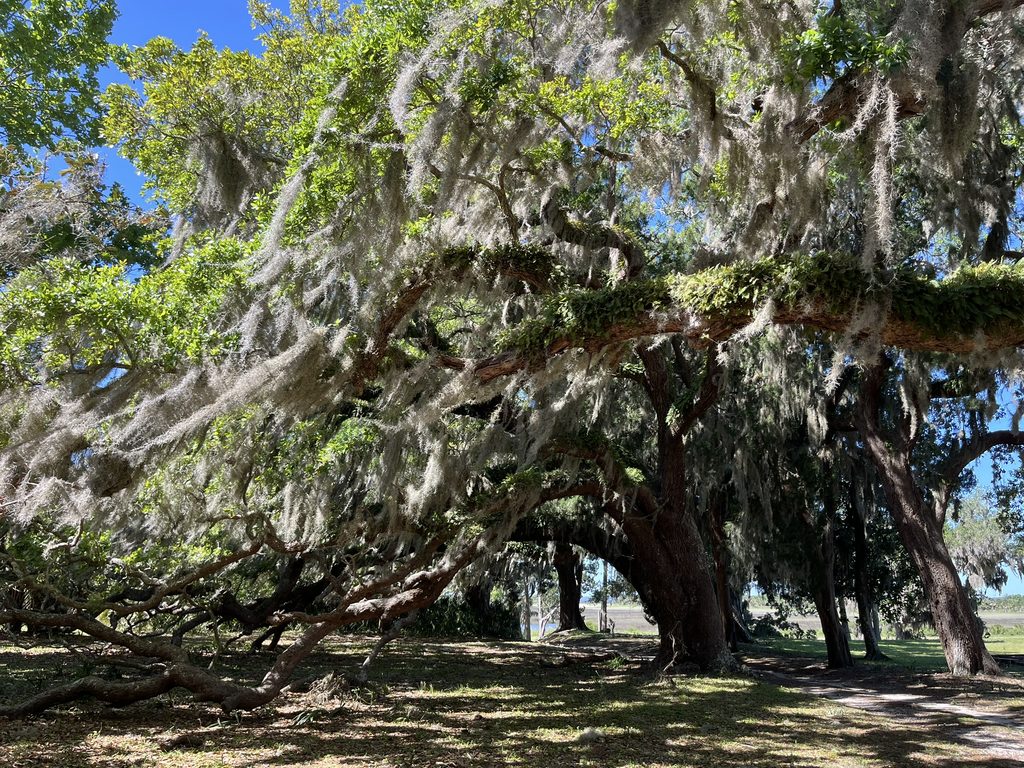
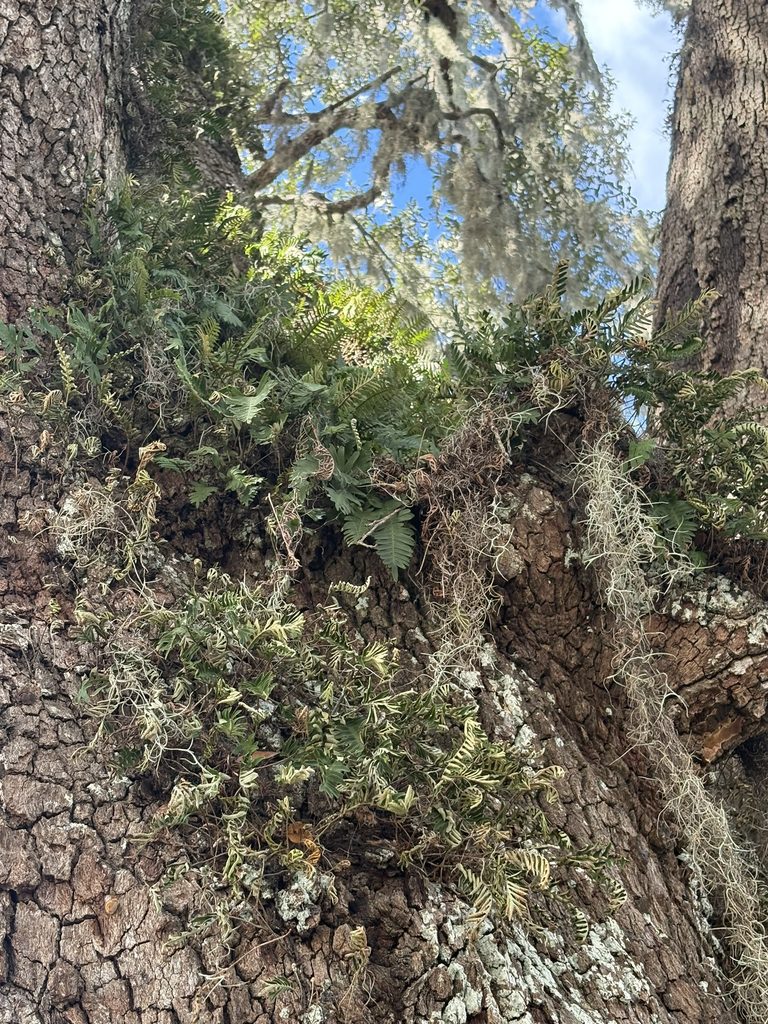
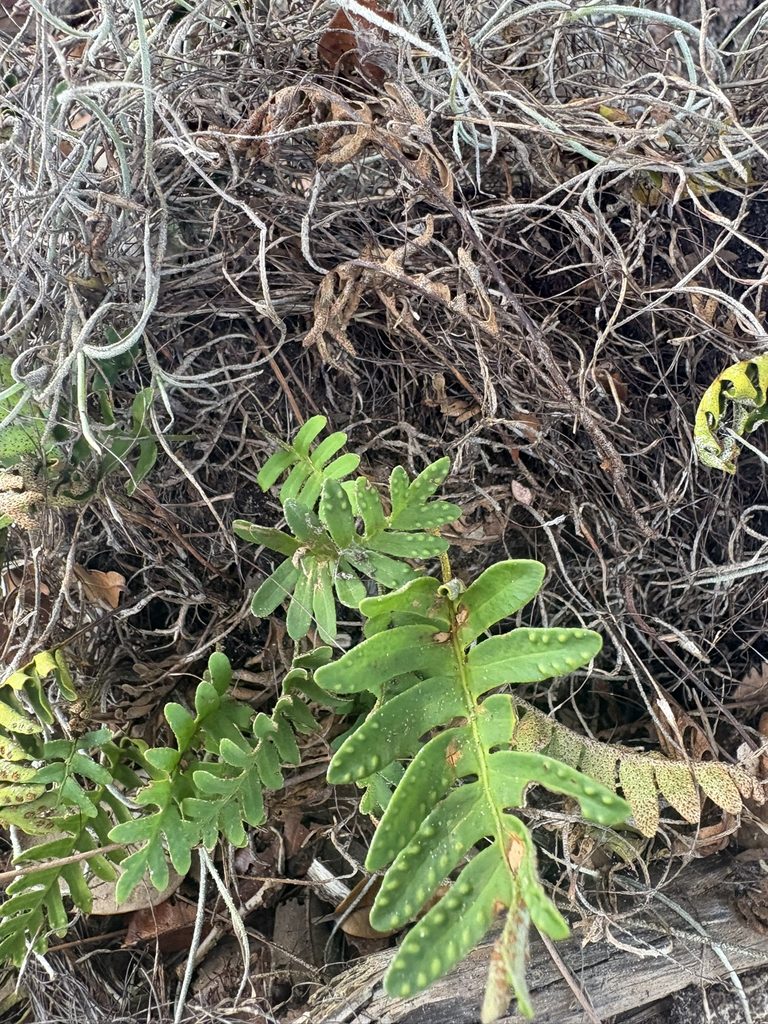
Moss and Spanish Moss are two totally different types of plants. Moss is a branching, threadlike plant that can form dense mats on the soil or other surfaces. They do not flower so they do not produce seeds. They spread via spores in the wind. We are familiar with peat and sphagnum moss from soil mixes in potted plants. These plants not only absorb insane amounts of water and CO2, they also filter out air pollution and other pathogens. We have even used mosses to pack wounds with its absorbency power! Deep ridges in tree bark provides protection for young moss plants to take hold so you will commonly see moss on rough textured trees.
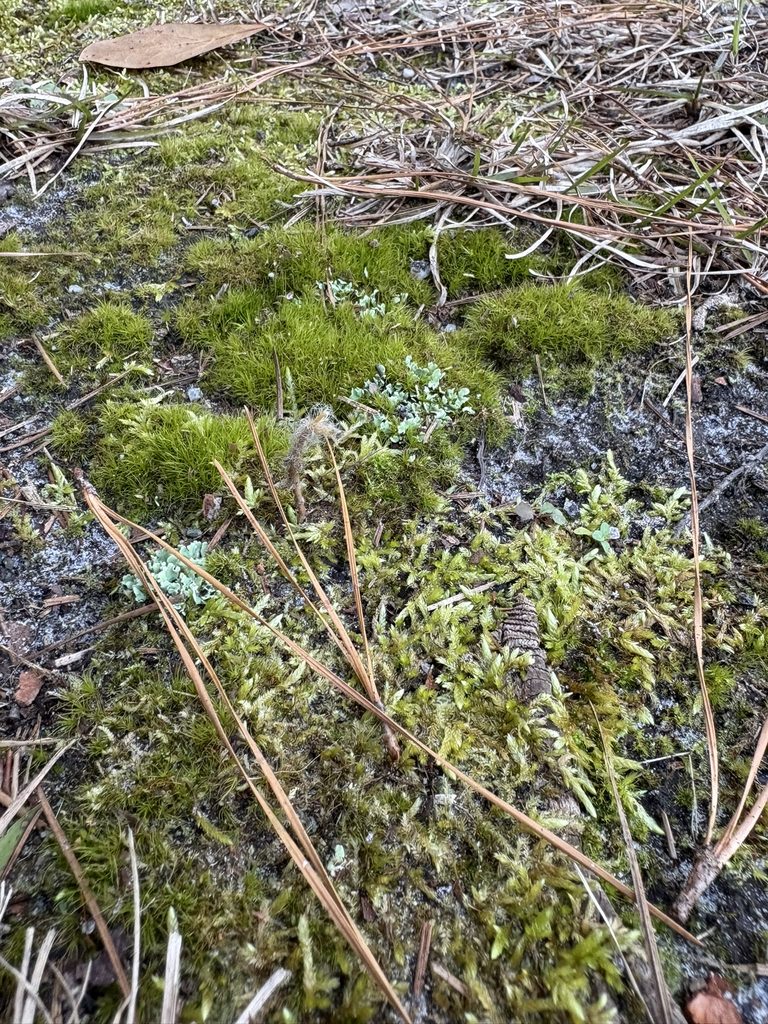

There are many species of air plants that take advantage of a safe, protected space to grow. Trees create a perfect habitat for these plants and fungi to thrive.
For more information, check out The Truth about Slime Molds, Spanish Moss, Lichens, and Mistletoe, Bromeliads Can Be Exotic Christmas Gifts, Lichens of Georgia, What’s not to Lichen?, Controlling Moss and Algae in Turf, What Side of the Tree Does Moss Grow On?
8. Citrus Greening is here and it does kill your trees…
Citrus Greening (Huanglongbing, HLB) is a bacterial infection in citrus trees spread by the insect Asian Citrus Psyllid (ACP). This has been a major reason for citrus production decline in Florida. Trapping efforts in 2008 found the ACP all along Georgia’s Coast. Almost twenty years later, this is a VERY common occurrence in citrus trees here. Symptoms include blotchy mottling on leaves, vein corking, lopsided fruit shape, uneven color distribution on fruit, aborted seeds, a curved central core of fruit, an off flavor described as salty, sparse foliation, thin canopy, and blooming at the wrong time.
The extra bad news, there is no treatment. It will kill your tree eventually.
Best practice is to remove infected trees to prevent further spread of this disease. Homeowners are more attached to individual trees than groves of trees. It is very difficult to willingly take down a tree that still produces! You will have to balance the pros and cons yourself. Testing for this disease is not commonly used, but contact your Extension office if you would like to have your tree tested.
For more information, check out Citrus Greening FAQ, Maintaining Commercial Citrus in Georgia, Impact of Citrus Greening on Citrus Operations in Florida
9. We do not have a one-size-fits-all type test for making sure your water is “safe to drink”
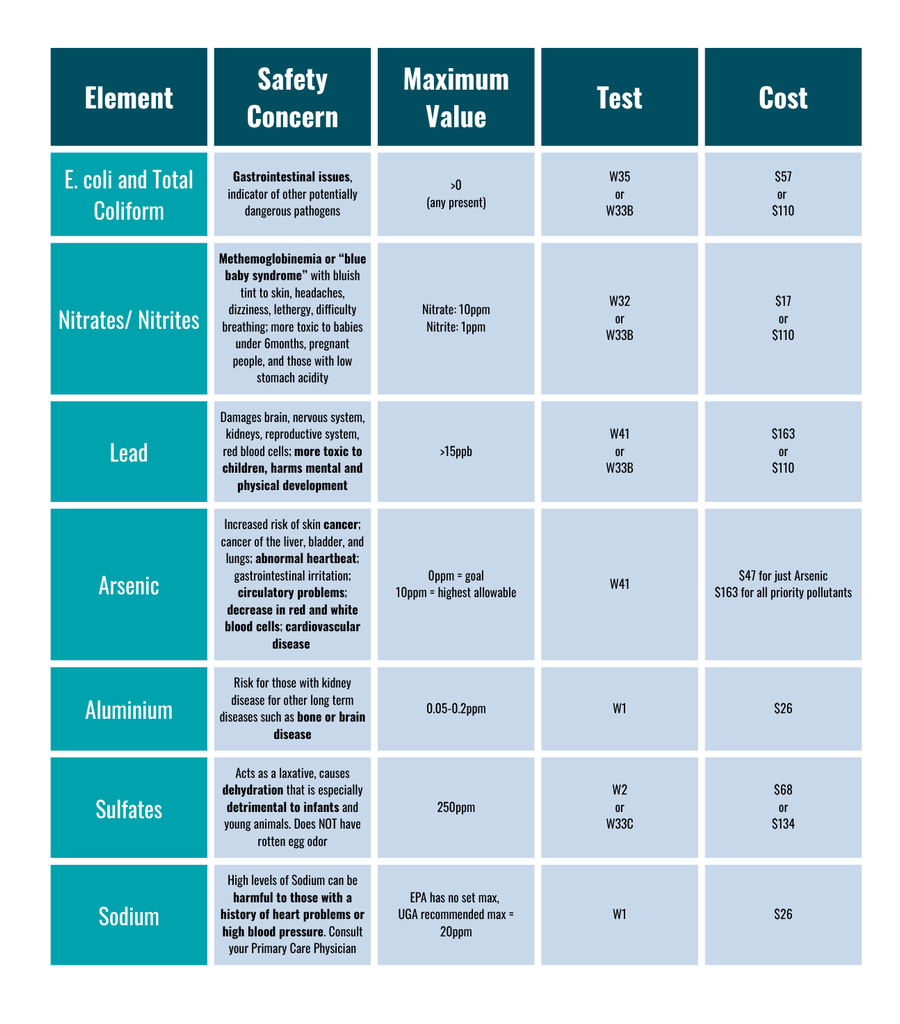
Some contaminates that you may be interested in testing for include E. coli and Total Coliform, Nitrates/Nitrites, Lead, Arsenic, Aluminum, Sulfates, and Sodium. This list may not be all inclusive. If there is something that you specifically want to test for, please check out aesl.caes.uga.edu for a full list of available testing.
Please note that the prices listed below represent Glynn and McIntosh pricing as of October 2026. Prices vary county-by-county based on shipping, contracts each office may have, and county funds administered by the County Commissioners. Call your local office for the most accurate price you should expect to pay. If you have trouble viewing the image below, please email mchalbrook@uga.edu
10. You are most likely wasting your money on turf bare patch seed mixes
When I go to the store and look at grass seeds that are for sale, I am disheartened to see so many bags with Fescue and Kentucky Bluegrass. These grasses simply do not grow in Coastal Georgia.
Grasses that do grow well here include Centipede, St. Augustine, Bermuda, Bahia, and Zoysia. Seashore paspalum will also grow with success, but this is usually on golf courses and sports turf instead of home lawns. If you want green grass in the winter, overseeding with Ryegrass is our only real recommendation for Coastal Georgia.
There are bare patch mixes that contain warm-season, South Georgia friendly varieties. They just may not be available in store. Always check the bag for specifically what type of grass is in the package before you spend any money.
For more information, check out Warm-season Turfgrass on the Georgia Turf website
Written by M.C. Halbrook, October 14, 2026
