
In this issue:
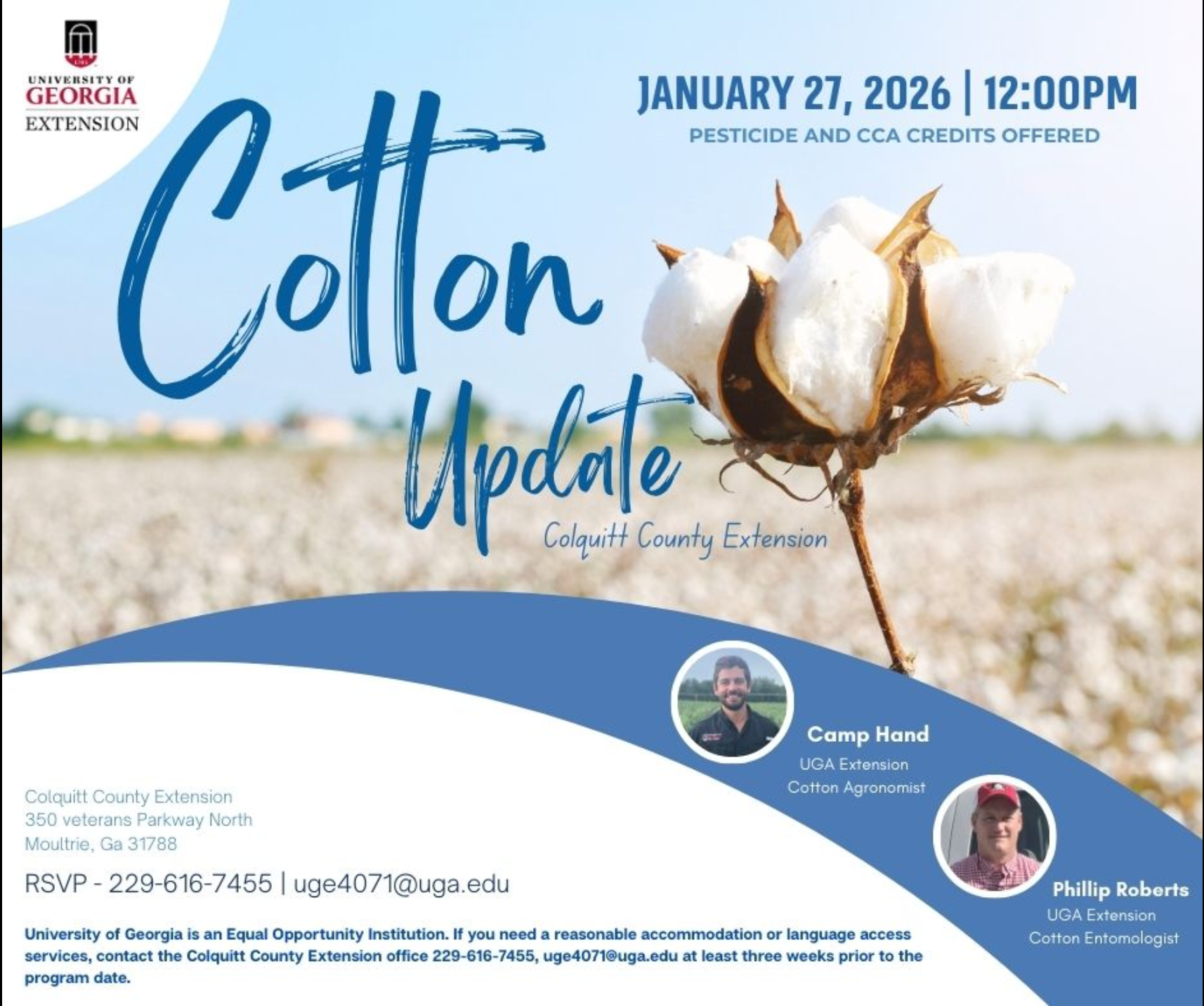
- Colquitt County Cotton Production Meeting
- UGA Crop Comparison Tool
- 2026 Georgia Cotton Commission Annual Meeting and UGA Cotton Production Workshop – January 28, 2026
- Cold Weather Advisory for Cattle Producers
- Are my winter forages going to be okay?
2026 UGA Crop Comparison Tool
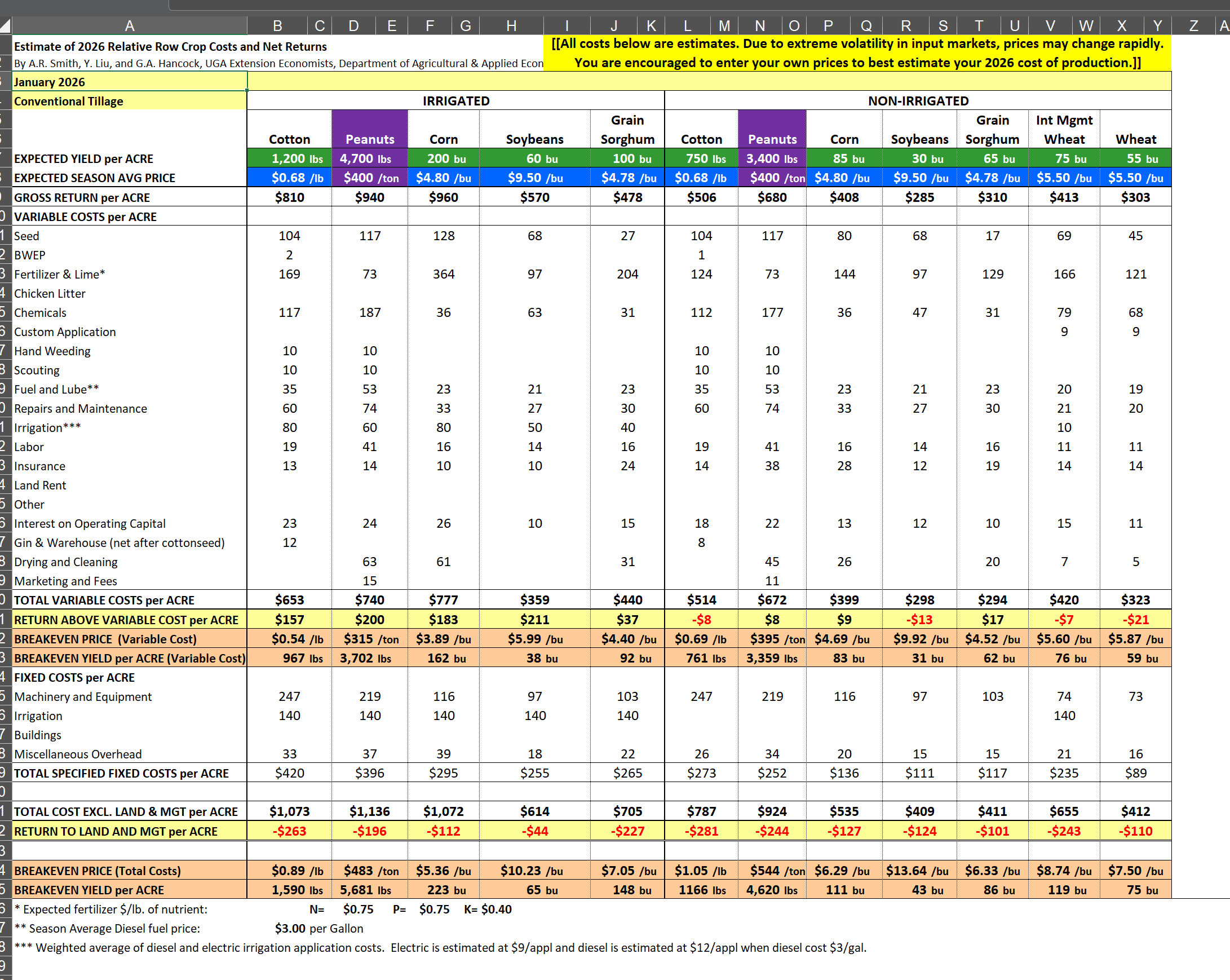
The 2026 UGA Crop Comparison Tool is available online at the link below. I know that, this year, row crop profitability is not optimistic. This year, it is assumed that N and P costs are $0.75 per unit, and that K has a cost of $0.40 per unit. Diesel is assumed to be $3.00 per gallon. Land rent is not included in the crop comparison tool or in any other row crop budgets. In addition to the Crop Comparison Tool, there are updated irrigated and dryland budgets for corn, grain sorghum, soybeans, and wheat.
https://agecon.uga.edu/extension/budgets.html
2026 Georgia Cotton Commission Annual Meeting and UGA Cotton Production Workshop – January 28, 2026
The 2026 Georgia Cotton Commission Annual Meeting and UGA Cotton Production Workshop is scheduled for Wednesday, January 28, 2026 at the UGA Tifton Campus Conference Center in Tifton, GA. Below is the agenda for the meeting.
2026 Georgia Cotton Commission Annual Meeting Agenda
If you plan to attend, please register ahead of time so the Commission can get an accurate head count for lunch. The registration link is below:
Cold Weather Advisory for Cattle Producers
We are expecting extreme cold conditions over the next several days. Below are management tips originally shared by Dr. Lawton Stewart that can help cattle through this stretch, especially herds that have begun calving.
1. Windbreaks
Wind protection may be the single most important factor in helping cattle cope with extreme wind chills. Cattle will often seek relief from wind before they seek food or water.
Effective windbreaks include:
- Tree lines or wooded areas
- Stacks of round bales
- Man‑made structures
Whenever possible, place windbreaks near feeding areas to ensure cattle both find shelter and consume adequate calories.
2. Bedding and Dry Conditions
Keeping cattle dry is the second most critical factor during cold weather. With the significant rainfall many areas have received since Thanksgiving, mud is a major concern.
- Move cattle to drier pastures or areas if available
- Provide bedding where possible to reduce cold stress and heat loss
3. Nutrition
Cattle require up to 30% more calories to maintain body temperature during extreme cold.
- Begin increasing energy intake 1–2 days before the cold event
- Offer higher-quality hay or provide 4–6 pounds of supplement per head per day
- If cattle are not already receiving corn, do not introduce straight corn at this time
Recommended supplements should be >70% TDN and ~15% CP. Suitable options include:
- Whole cottonseed
- Dried distillers grains
- Corn gluten feed
- 50:50 mix of corn gluten feed and soybean hulls
- 33:33:33 mix of corn gluten feed, corn, and soybean hulls
- Commercial beef supplements
4. Water Availability
Many water systems will freeze during this cold spell. In some areas of north Georgia, temperatures may remain below freezing for 48 hours or more.
- Check water sources daily
- Ensure cattle have continuous access to unfrozen water
For additional guidance on cold weather livestock management, contact your local Extension office at
1‑800‑ASK‑UGA‑1 (1‑800‑275‑8421) or visit extension.uga.edu.
Are my winter forages going to be okay?
Dr. Lisa Baxter, State Forage Extension Specialist, UGA- Tifton gives a few comments on how the cold weather will impact forages.
The extreme cold weather projected this weekend has many of us asking if our forages are going to be okay. Unfortunately, there isn’t a clear answer that we can offer to this question. Many cool season forages can handle subfreezing temps for short periods and the degree of damage depends on air temperature, soil temperature, topography, winter precipitation, stand health, stand age, and stage of growth.
Potential for recovery will depend on how much growth and what stage the plant was at before the cold snap. More advanced growth stages will be less susceptible to winter kill compared to tender young growth. Unfortunately, many producers planted late last fall because of late season drought so the plants may not be at the same stage of growth as in a “normal” year.
Cold tolerance will even depend on species and variety in many cases. Oats are generally less winter hardy than other small grains and can suffer substantial yield loss when temperatures dip below 20°F. Ryegrass is likely intermediate to oats and other small grains in terms of winter hardiness, but there is a wide range within varieties.
What happens to the plant during a cold snap?
When forages experience subfreezing temperatures, the plant cells can break or rupture which contributes to the darker color leaves you may be finding. Grasses can be more tolerant to this than legumes and this would be why many winter annual weeds (usually broadleaf) seem to be more affected than the grasses growing around them. Cell death can occur when ice forms within the plant cells. This is why we see so many pictures online of brown grass following cold snaps.
The impact of freezing weather on forage quality is mixed and highly variable. The damaged forage may have a lower quality than what you were anticipating. Watch your animals closely for loss of condition and supplement their diet as needed to accommodate this difference.
What should you do?
The best way to combat cold damage is prevention. Plants need good leaf area during the fall to synthesize carbohydrates and accumulate organic reserves before winter. High K:N ratios in soil will help ensure winter hardiness as well.
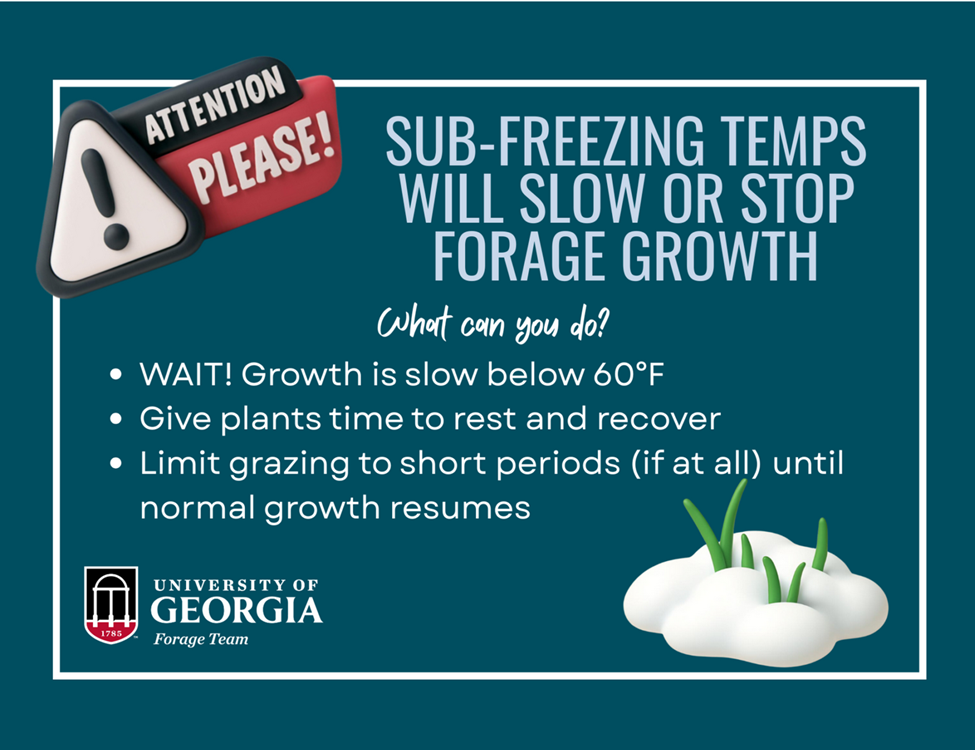
Once temperatures warm back up, growth of the forages will be slow. Optimum temperatures for winter annual forages are typically between 60-80°F. The forages will grow much more slowly outside of the temperature range, so you may not be seeing regrowth yet if the temperatures have remained below this range. Be careful grazing the vulnerable plant material. Graze carefully and give the plants time to rest.
Prussic acid shouldn’t be a concern unless you have old sorghums (including johnsongrass) hanging around the farm. If this is the case, delay grazing for at least 14 days to allow the compounds to dissipate.
If you are in North Georgia, the potential cold damage to tall fescue
Damaging frosts significantly reduce forage quality in most forage species. Tall fescue is unique because it has waxy layer which lessens the damage caused by colder temperatures and forage quality remains high in comparison to other species. The quality loss from leaf deterioration is lower compared to other cool-season forages. Another unique attribute of tall fescue is that after experiencing a freeze, sugar content increases. This makes tall fescue ideal for stockpiling and winter grazing use.
Potential cold damage to warm season perennials
These forages should all be good and asleep for winter at the time of publication, but it is impossible to predict the weather. Periods of undulating temperatures can lead to erratic spring green-up. It is important not to rush our warm season forages, especially following the extreme drought last season. Do not apply fertilizer until we are safely past our last frost/freeze for the year. That isn’t until at least April for much of the state. If you are looking for something to do before then, this can be a great time to test your soils and apply pre-emergent herbicides to your hayfields!
Short answer: only time will tell if the forages are going to regrow this season. It’s a waiting game and we need to be patient while our pastures try to recover!
Stay warm week,
Jeremy M. Kichler
Colquitt County Extension Coordinator
The University of Georgia Cooperative Extension does not endorse or guarantee the performance of any products mentioned in this update