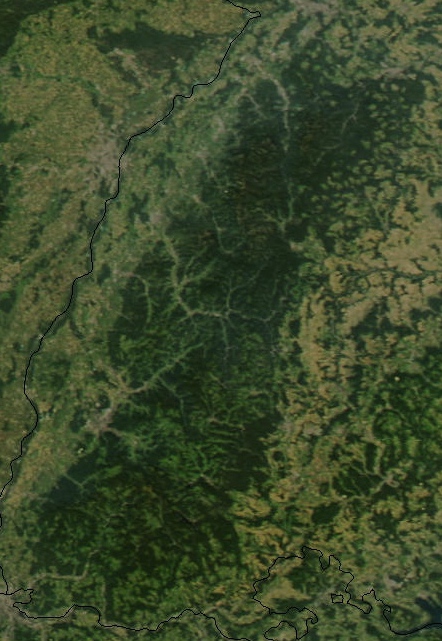
In the Southeast, changes in land use from bare ground croplands to forests are thought to be one of the contributing factors to the cooling that Georgia and other Southeastern states saw in the period from roughly the 1940’s to the 1970’s. Now a similar land use change in western Europe is leading to cooler temperatures of up to 1 degree C in the summer, according to an article in Phys.org last week. Trees provide cooler temperatures both through shading the ground and by increasing humidity from evapotranspiration. This may be providing a temporary reduction in greenhouse warming in that region. But once the change in land use is complete, temperatures are expected to rise again in concert with other parts of the world. You can read more about how much cropland has been converted to forest and how it has impacted the region here.