Have young scouts? Want a refresher on scouting techniques? Want updates on insect pests? Come to the Cotton, Peanut, and Soybean Insect Scout Schools
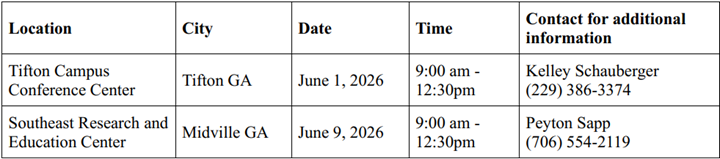
Figure 2: Insect scout school information
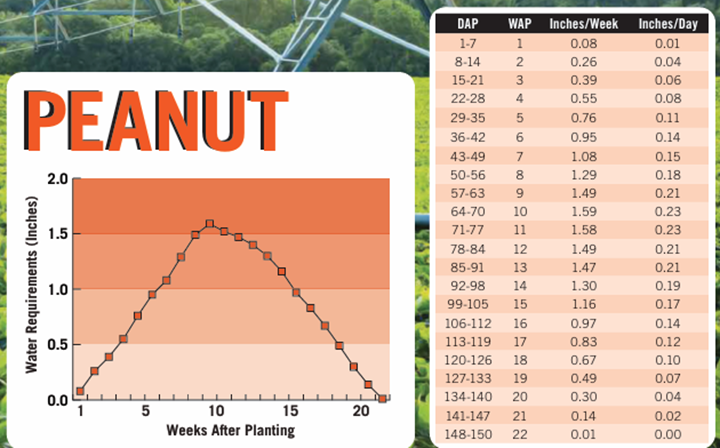
Figure 3 Peanut water use curve
A few Things to consider:
1.) Protect your seed by keeping it dry and out of harsh conditions
2.) Know the germination percentage of each variety/lot that you have. You can send samples to the GA Dept of AG seed lab if you want to check germ before you plant. It takes ~10 days to get a germ sample back.
3.) No fertilizers are recommended in-furrow on peanuts.
4.) Inoculants are a cheap and effective insurance practice to ensure you get good nodulation. Inoculant is strongly recommended if the field has not had peanuts planted in 4 or more years.
5.) Planting more than 7-8 seeds per foot tends not to provide a return on investment unless you know you have germination issues with a specific variety and you have to plant it. Even then, do not plant more than 7 seeds per foot on singles, as you will increase the risk for seed rot.
6.) Make sure to revisit each field in 7-14 days to ensure you have a good stand and do not need to replant or spot plant.
7.) There are a few cool nights predicted in the next week. This will slow down emergence some
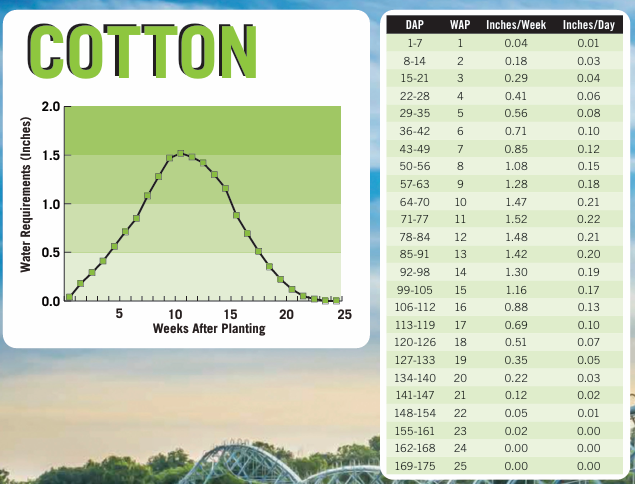
Figure 4 Cotton water use curve
Cotton Fertility
Maintaining pH around 6.0 is still one of the most cost-effective decisions a grower can make. When pH drops below that range, nutrient availability declines, meaning you get less return from every pound of fertilizer applied.
Move away from a “build” mindset and toward a “maintenance” approach. When fertilizer was cheaper, it made sense to build soil nutrient levels as a long-term investment. Under current economic conditions, it’s more practical to apply nutrients based on crop removal and immediate need.
Nitrogen management deserves special attention. Cotton is responsive to nitrogen, but it is also sensitive to overapplication. University recommendations across the Southeast consistently show that moderate, well-timed nitrogen applications are more efficient than heavy upfront rates. Splitting nitrogen, applying some at planting and the rest during early growth stages, can improve uptake and reduce losses. If you have a history of legumes such as peanuts or soybeans in rotation, or if you are using poultry litter, you can often credit 30 to 40 pounds of nitrogen per acre and reduce your commercial nitrogen accordingly
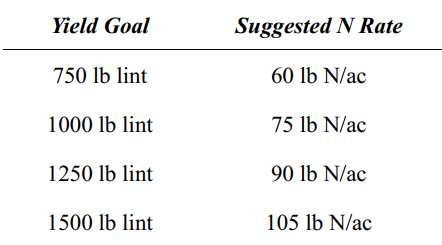
Figure 5: UGA nitrogen recommendations to maximize N use efficiency in cotton
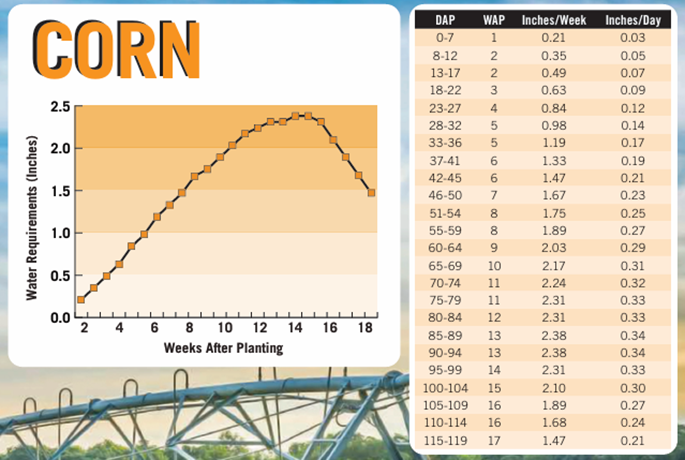
Figure 6 Corn water use curve
Growth Stage DAP Inches per day
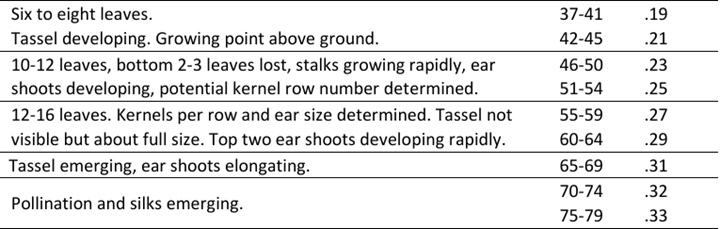
Figure 7: Estimated water use of corn in Georgia.