By Heather Kolich
County Extension Coordinator
Agriculture and Natural Resources Agent
When the carpet gets worn, the kitchen cabinets sag, or we just can’t take that old wallpaper anymore, it isn’t hard to justify making interior home renovations. But how often do we consider making renovations to our home’s setting, the landscape?
Reasons to renovate your landscape
We may primarily picture plants when we think about a landscape, but there are several other aspects, such as soil stability, stormwater runoff, energy conservation, views, and wildlife habitat. Landscape renovations can improve overall aesthetics, economic value, ecosystem function, and reduce management inputs. As with home interior renovations, landscape upgrades can be small adjustments or large overhauls.
Reasons for renovating your landscape – or at least making some changes – could include:

Dead or declining trees and shrubs
Trees and shrubs are foundational plantings for a residential landscape, and while they live for a long time, they eventually decline and die. Factors in plant death include age, disease, pests, and weather. The tree in my dad’s yard that was damaged in a summer storm three years ago is now showing symptoms of decline. In other landscapes, the Leyland cypress privacy plantings are on the far side of maturity and dying all at once. Diseases, such as boxwood blight, rose rosette, and Entomosporium leaf spot, can also wipe out entire plantings of popular plants, such as boxwoods, roses, and redtip photinias, respectively.
Changes as plants mature and grow
Over years of establishment, healthy plants continuously grow. While we can mow grass back to a desired height each week, hacking off the top of a tree that outgrew its planting environment every spring isn’t a desirable management tactic. I have also seen loropetalums planted at a home’s foundation growing higher than the gutters and completely obscuring the view from the windows. These are both examples of planting the wrong plant for the place or purpose.

As trees mature, the enlarging canopy casts ever widening shade across the landscape. Plants requiring full sun – including turfgrass – may need to be replaced with shade-tolerant plants. Trees growing into overhead power lines and plants that block electrical workers from accessing electrical boxes should be removed entirely.
Wrong mix of plants
Different plants have different environmental and cultural needs. Hydrangeas, for instance, have high water needs, but juniper roots will rot in high soil moisture environments. Similarly, hostas scorch in full sun, but day lilies need full sun to grow and bloom. A landscape improvement could be as simple as relocating existing plants.
Plants can also affect other plants. Some trees and plants produce toxic chemicals that inhibit germination, growth, reproduction, and even photosynthesis in nearby plants. Major culprits that block other plants from growing include post oak and black walnut trees; the non-native, invasive tree-of-heaven (which is also the preferred host of the non-native, invasive lantern fly); and sunflowers.
Speaking of invasive plants, removing these ecosystem destroyers is another reason to renovate your landscape – or at least the part where they are present. Believe it or not, many intentionally planted landscape staples like Bradford pear trees, privet hedges, nandina, wisteria, and other ornamentals are invasive. But it is the nature of invasive plants to spread, and they can creep into home landscapes from adjacent roadsides or buffer zones. When we moved into our home, privet bushes had colonized most of the back yard. In our previous home, Japanese stiltgrass was the invader.
Maintenance and function issues
Home landscapes shouldn’t just be a maintenance chore; they should be something we can enjoy and use. Replacing problematic plants is one way to reduce maintenance. For example, my gardenias are a perpetual magnet for white flies. In addition to weakening the shrubs by sucking juices from the leaves, white flies cause sooty mildew that covers leaves with a black residue that prevents photosynthesis. Furthermore, white flies are very hard to control, and they return in swarms year after year. I love my gardenias, but I’m contemplating shrub options to replace them.
Plants can also draw desirable pollinators and wildlife, like songbirds, to the landscape. Native plants that flower and produce berries are particularly good choices for bring another layer of life, color, and movement into your yard. Plant placement can also help lower energy bills for heating and cooling. Deciduous trees planted at appropriate distance from the house on the south and west sides will block the heat of summer sun but allow the warming rays through in the winter.
More involved renovation might be necessary to correct serious problems, such as soil erosion, poor drainage, and stormwater runoff, or to provide access to areas of the landscape. For more on these issues, see Meeting the landscape challenges of slopes and hillsides.
Steps to plan landscape renovation
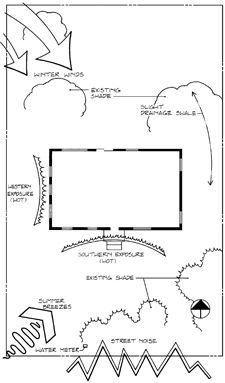
Step 1: Landscape assessment. Look at the whole landscape and draw out a base map showing existing plants, structures, wind direction, sun and shade patterns, and locations of overhead and underground infrastructure.
Step 2: Establish goals. Decide what you want from your landscape. How do you want to use your yard? What do you want your landscape to do? Make a comprehensive design plan.
Step 3: Make a list of the things that you like and that are functioning well, and a list of things that you don’t like and that are serious or chronic problems. Prioritize needs.
Step 4: Evaluate plant mixes and locations. Learn the environmental needs of the different plants in the landscape. Consider how plants affect each other.
Step 5: Think beyond plants. Think about the layers of the overall ecosystem, such as wildlife attraction, energy conservation, soil and water issues, and management inputs.
Step 6: With goals and needs in mind, develop a budget, priorities, and timelines for making changes. Start with urgent problem resolution and build out the new landscape in manageable chunks.