We have a lot of ponds and lakes in Forsyth County, most of them associated with one of the 49 dams we have here. Like pools and tennis courts, neighborhood ponds and dams need routine maintenance.
Ponds are complex ecosystems of water, plants, microorganisms, fish, turtles, frogs, birds, temperature, sunlight – you get the picture. Because ponds and lakes are living systems, weather conditions, local environmental conditions, and management practices can impact their functioning. Weather related problems can include deposits of sediment, usually from erosion and stormwater runoff, that fill the pond and decrease the volume of water it can hold. More sunlight reaches the bottom of the pond in shallow water, which encourages plant and weed growth. Summer heat also accelerates aquatic plant growth. Excess lawn fertilizer and uncollected pet waste that get washed into ponds with rainfall provide abundant nutrients for plant growth as well as algal blooms.
While we notice plant and algae issues in the summer, the optimal season for managing unwanted plants is in the early spring when they first begin growing. Aquatic plant management practices include physically removing excessive and invasive plants, strategic use of approved herbicides to reduce shore and aquatic weeds, and stocking the pond with sterile triploid grass carp that feed on pond plants.
There are, however, year-round aspects of pond management. Whether the water body was created for flood control, recreation, retaining effluent, fire protection, watering livestock, or fishing, the top maintenance priority is the dam. A dam breach or failure could result in loss of life and significant property damage.
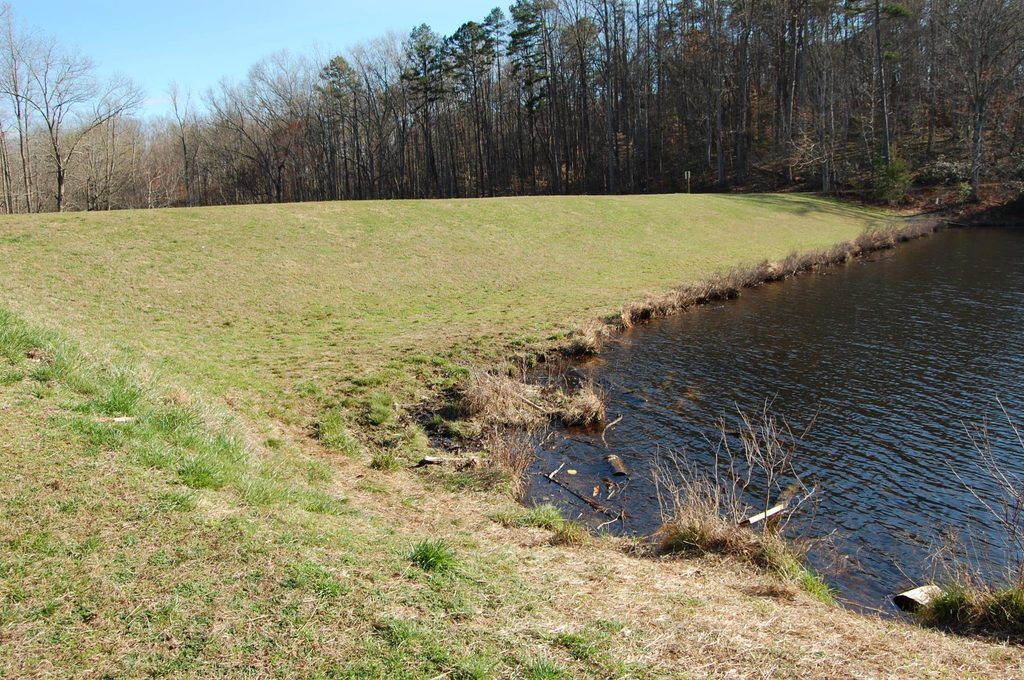
Most privately-owned dams are embankment dams made of packed earth. A variety of issues can damage embankment dams, including erosion, cracking, woody vegetation, wave action, livestock, burrowing animals, tunneling insects, and vehicle and foot traffic. Your dam management plan should include vegetation management, regular inspections, performance monitoring, timely maintenance, and emergency planning.
The upstream slope, downstream slope, and crest or top of the dam should have solid coverage in low-growing grass. This vegetation protects the dam from erosion without sinking large, deep roots into the dam that could open channels for water seepage. Regular mowing prevents trees and shrubs from growing and improves visibility for dam inspections.
Dam owners in Georgia are required to perform inspections each calendar quarter and after events that could impact the dam, such as drought, torrential rain, and earthquakes. They are also required to have the dam inspected by a professional engineer every two years between October 1 and March 31.
Before each quarterly inspection, mow the grass to improve visibility of the dam surfaces. Then examine the upstream slope, the downstream slope, the top of the dam, and the spillway. Be prepared to photograph and take notes about abnormalities, such as depressions or bulges, cracks in the soil surface, bare soil, seepage, changes in the alignment of a fence or railing, excess vegetation at the shoreline, animal burrowing, and insect mounds or tunnels.

Drought, long periods of hot, dry weather, and freeze-thaw cycles can cause soil cracking or depression. So can uneven settling in the dam foundation, movement in banks that are too steep, and earthquakes. Cracks open pathways for water to move into and within the dam. They can indicate that the dam is unstable, or they can create instability.
Cracks less than an inch in width, especially ones that show up during drought conditions or in bare soil, are low concern. Dam owners should fill the small cracks and reseed and irrigate the area to reestablish the grass cover. They can also perform some remediation tasks, such as cutting down small trees (less than 7-inches in diameter at breast height, or DBH) and small shrubs growing on the dam and removing excess vegetation at the water line to discourage beavers and muskrats from burrowing into the dam. For the other issues mentioned, call a professional.
Instructions and check sheets for inspecting embankment dams, operations and maintenance, and emergency action plans are available for download from the Georgia Environmental Protection Division’s Safe Dams Program webpage.
The Association of State Dam Safety Officials is another good resource for information on managing private or neighborhood dams. The website features the Dam Owner Academy, a series of educational videos. It is available at damsafety.org.
Upcoming Extension Events
Habitat Restoration Workshops. Forsyth County Extension and Parks and Recreation Departments are partnering on a project to remove non-native, invasive Japanese stiltgrass from our passive parks and restore the natural biodiversity that nurtures native wildlife. Through our family-friendly Habitat Restoration Workshops, you’ll learn to identify common non-native invasive plants, control and removal methods, and develop community ties while participating in a habitat restoration effort in our county parks. Come and see the difference you can make!
September 26 REGISTER
Cast Iron Cooking – Celebrating America 250. Tuesday, September 22, 7-8 p.m., Sharon Forks Library. Discover the benefits of cooking with cast iron and how to care for it. Learn how food was prepared in American history. Event passes will be handed out 30 minutes prior to the program.
UGA Extension strives to translate the science of life for use in everyday living. Forsyth County Extension is supported by the University of Georgia, Forsyth County Board of Commissioners, Forsyth County Board of Education, and community donors.
The University of Georgia is an Equal Opportunity, Veteran, Disability Institution. If you need reasonable accommodation or language access services, contact the Forsyth County Extension Office at 770-887-2418 or Forsyth.extension@uga.edu at least three weeks prior to the program date.
Sources:
Association of State Dam Safety Officials. (n.d.)
FEMA. (n.d.). National Inventory of Dams. Also a handy table at
Georgia Environmental Protection Division. (n.d.). Safe Dams Program.
Georgia Environmental Protection Division. (n.d.). Safe Dams Program.