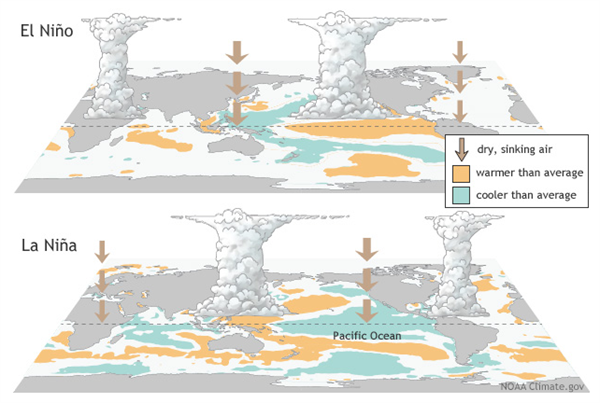
One question I often get asked when I give talks about the changing climate is whether ENSO, the tropical swing in temperatures between El Nino and La Nina, is affected by the warming climate. It turns out not to be a simple question because ENSO depends not only on sea surface temperatures but also the winds, vertical structure of the atmosphere, and the ocean currents beneath it. But it is an important question for us in the Southeast because the ENSO phase is one of the best predictors of regional climate variations that we have on a seasonal and yearly basis. NOAA discusses why this is such a hard question to answer in their latest ENSO blog at https://www.climate.gov/news-features/blogs/how-pattern-trends-across-tropical-pacific-ocean-critical-understanding-future.