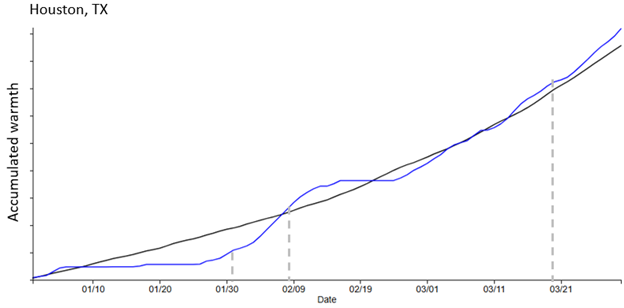
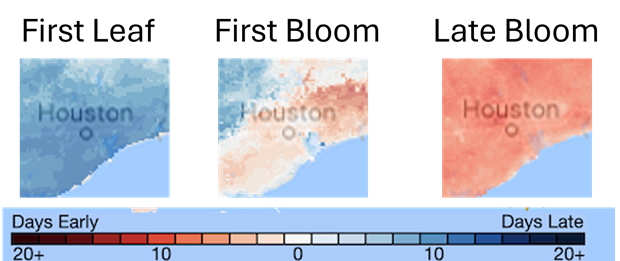
In previous years, I have discussed the use of phenology to study changes in climate that go back before instrumental records were available (because the instruments had not been invented yet). Phenology is the study of when plants exhibit biological markers associated with the change of the seasons, such as the first leaf appearance on a shrub or the first flower appears on a blooming plant. These physiological changes are related to physical properties like temperature and solar radiation changes. In the United States, these observations are cataloged by the National Phenological Society at https://usanpn.org/.
The NPN just introduced a new index called the Late Bloom Index that notes the last occurrence in a year of a particular event happening, such as the last bloom on an apple tree noted. This new index will help scientists keep track of how long the period is between the first and last occurrence of a phenological event to see how it changes from one year to the next. This will also give scientists a sense of whether the length of the seasons might be changing. You can read more about it at https://usanpn.org/news/article/introducing-late-bloom-index.