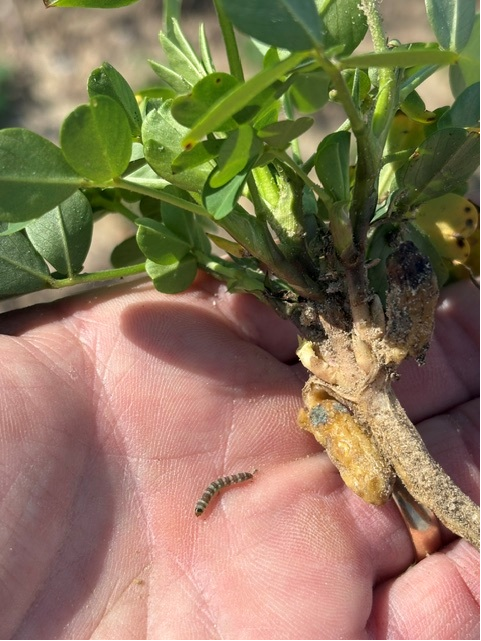
I want to give everyone a heads up on lesser cornstalk borers (LCB) that I found in some peanut fields yesterday (Figure 1). I know we have had some rain within the last two weeks, but the early dry weather in the season was a contributing factor for LCB development. Be sure to scout your peanut fields for LCB activity and damage. This insect is the most damaging pest of peanut in Georgia; it feeds on stems, pegs, and pods, and it will reduce yield and increase the risk of aflatoxin contamination.
There are two big mistakes that we want to try to avoid, and both of them can be prevented with scouting.
- First, not every field will need to be treated with an insecticide. Spraying every field because lesser cornstalk borer “might” be present is a bad idea. We do not need to use insecticides to prevent LCB infestations. When the pest reaches threshold we can treat it, kill it and move on.
- Second, missing a LCB infestation will result in significant losses. Whether you scout or not, every peanut field in Georgia needs to be scouted.
The two insecticides recommended for lesser cornstalk borer management in peanut are:
- chlorantraniliprole (Vantacor)
- novaluron (Diamond)
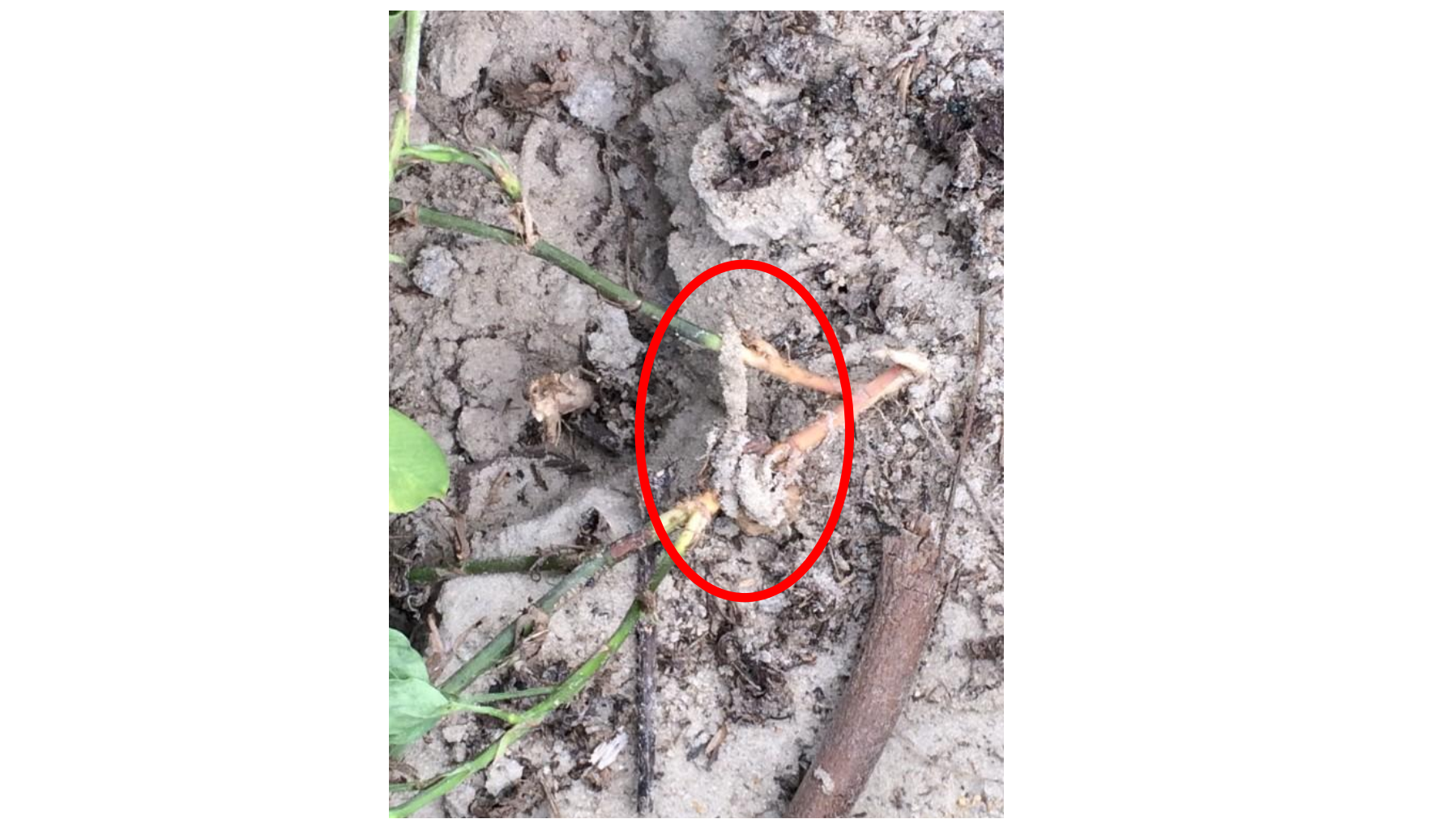
The LCB thrives in drought-like conditions. This insect is sporadic in where it shows up and where its presence is most felt. The larvae live in the soil, constructing tunnels from soil and excrement tightly woven together with silk (Figure 2).
Rain Does Not Kill Lesser Cornstalk Borers.
We cannot irrigate LCB away prior to canopy closure. Once peanut vines lap the row middles, irrigated fields that are watered adequately will rarely experience LCB populations above threshold. There is no need to panic. Now is the time to scout and make wise management decisions, and get on with the business of growing the world’s best peanuts.
Please let me know if you have questions or if I can be of assistance.
