by Amy Magner, Fulton County Master Gardener Extension Volunteer
This article is part of Garden Buzz, a series from Appen Media and the North Fulton Master Gardeners, where rotating columnists explore horticulture topics like herbs, insects, and wildlife conservation. Find all Garden Buzz articles here.
As temperatures drop and many plants go dormant, it is easy to assume that your garden enters a quiet, lifeless phase. But winter can be a time of surprising vibrancy and ecological value, especially if you intentionally create a haven for birds and pollinators. In Georgia’s relatively mild climate, it’s possible to support local wildlife year-round with just a few strategic choices.
Attracting birds and pollinators to your winter garden doesn’t just benefit the environment, it also adds life, movement, and interest to the garden during what might otherwise be a dull season. Here’s how to make your outdoor space a welcoming winter habitat.
Why Attract Wildlife in Winter?
Winter is a critical time for many species. Birds and pollinators face food shortages, fewer water sources and the loss of natural habitat due to development and tidy landscaping. By offering food, shelter and water, your garden becomes a vital sanctuary, and in return it’s possible to enjoy bird song, pollinator activity on warmer days, and a deeper connection with the natural world.
Plant with Purpose: Winter Food Sources
Native plants are the most important building blocks for supporting Georgia’s wildlife. While flowers may be fewer in winter, native seed heads, berries and evergreen plants offer much-needed sustenance.
Plant Winter-Blooming Flowers
Select plants with blooms or berries in the winter to provide a much-needed food source for pollinators like bees, butterflies and hummingbirds. Some non-native winter-blooming options for Atlanta gardens include:
- Camellias: These evergreen shrubs produce vibrant flowers in shades of pink, red and white from fall to spring. They attract hummingbirds, bees and butterflies.
- Hellebores (lenten roses): Evergreen foliage and winter blooms in shades of white, pink and purple make hellebores an excellent choice for attracting early bees and buzz pollinators like bumblebees.
- Juniper: This evergreen shrub provides both nectar for pollinators and berries that feed birds throughout the winter.
Use Native Plants
Choosing native plants not only supports local wildlife but also helps maintain the ecosystem’s balance. Native plants have co-evolved with local wildlife, providing the best possible food and habitat. Some Georgia native plants that attract birds and pollinators include:
- Yaupon Holly (Ilex vomitoria): Yaupon supports pollinators and provides year-round shelter and nesting opportunities for small birds, protecting them from predators and harsh weather conditions. Its red berries continue through winter, providing a crucial food source for birds. Robins, mockingbirds, thrashers, wrens and more feed on these berries.
- Rusty Blackhaw Viburnum (Viburnum rufidulum): This plant produces clusters of dark blue berries that persist into winter, providing an essential food source for birds when other food is scarce. Birds, like mockingbirds, thrashers, catbirds and waxwings, are known to feed on these berries.
- Wild Indigo (Baptisia australis): Wild indigo produces seed pods that provide food for goldfinches and pine siskins in winter.
- Partridge Pea (Chamaecrista fasciculata): This legume produces small, peanut-like seeds that are a valuable food source for mourning doves, quails and sparrows.
Other Great Plants for Winter Wildlife in Georgia
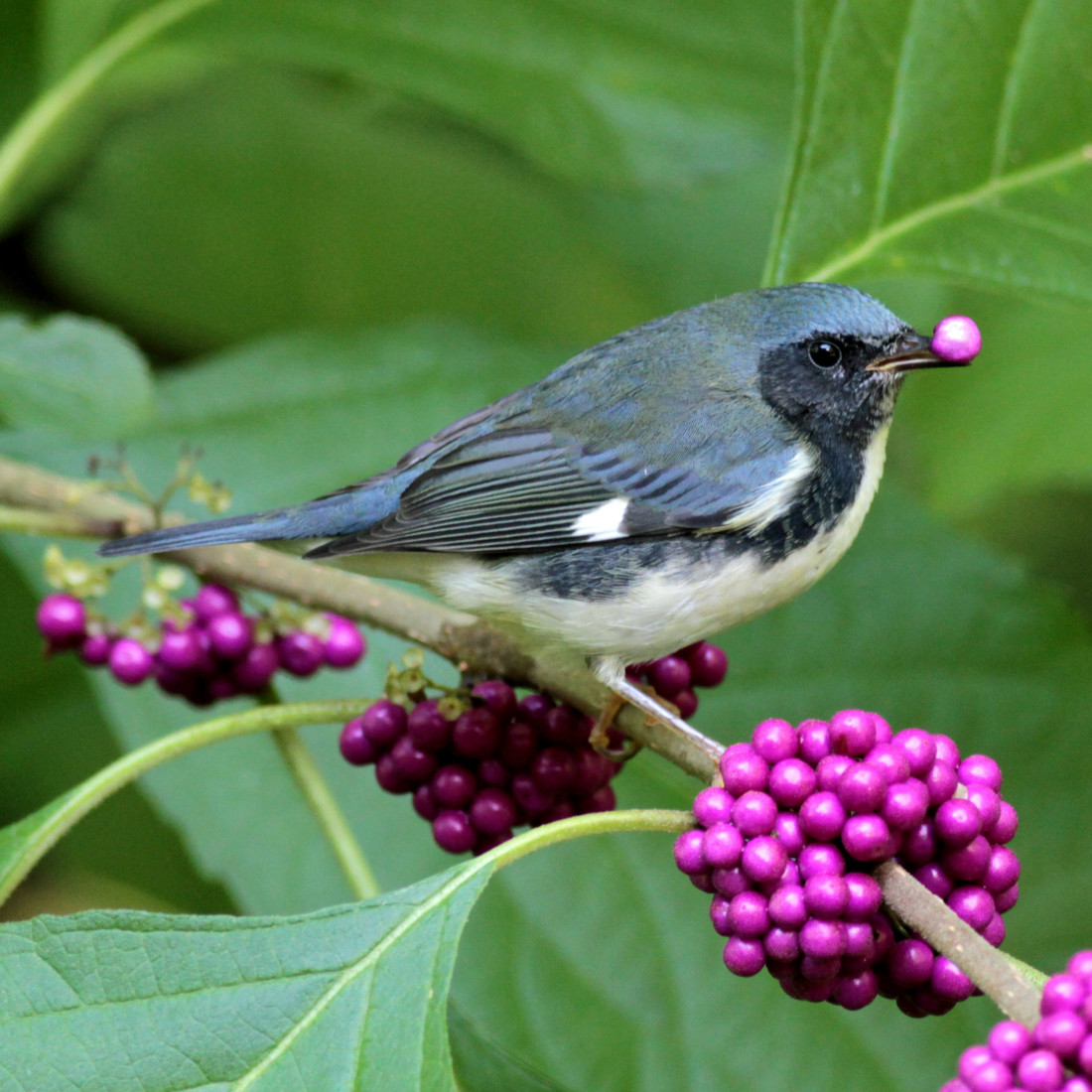
- Beautyberry (Callicarpa americana): With vibrant purple berries, this native shrub is a magnet for cardinals and mockingbirds.
- Hollies (Ilex spp.): Both evergreen and deciduous varieties provide dense cover and berries for food.
- Eastern Red Cedar (Juniperus virginiana): Offers winter berries loved by cedar waxwings.
- Coneflowers and Black-eyed Susans (Echinacea and Rudbeckia): Leave seed heads standing; finches will thank you.
- Goldenrod (Solidago spp.): Even after blooming, goldenrod stems and seeds feed small birds and provide overwintering shelter for beneficial insects.
Provide Shelter and Nesting Spots
Many pollinators, including native bees, overwinter in leaf litter, hollow stems or soil. Don’t over-clean your garden; a bit of wildness is healthy. Resist the urge to rake everything away, especially in naturalized parts of your garden. Here are a few shelter tips:
- Leave brush piles or stacked logs in a corner of the garden, creating ideal nesting sites.
- Avoid cutting back dried perennials and ornamental grasses, which can house overwintering insects and provide cover for birds.
- Add birdhouses or roosting boxes, which offer insulation from the cold and safety from predators.
- Trees and shrubs with dense foliage offer excellent shelter.
- Evergreen shrubs and dense hedges are valuable as natural shelter. It would be beneficial if at least 25 percent of the trees and shrubs in your landscape were evergreen.
Don’t Forget the Water
Water sources can be scarce in winter, especially when temperatures dip below freezing. Birds and insects need clean, accessible water every day.
As far as water sources go, the vessels should be filled no more than two to three inches deep (while changing the water frequently) and elevated in the middle of an open area to minimize predation by cats and other animals. Here are a few suggestions for adding water to your yard:
- Birdbaths: Use a heated birdbath or add warm water daily to keep it from freezing.
- Shallow dishes with stones: These are ideal for small birds or insects on mild days.
- Dripping water sources: Even a slow-dripping container can attract birds.
By incorporating these practices into your Atlanta-area winter garden, you’ll create a welcoming haven for birds and pollinators. Enjoy the beauty and satisfaction that comes from supporting local wildlife and preserving biodiversity.
Happy Gardening!
Learn More
- Pollinator Gardening
- Selecting Trees and Shrubs as Resources for Pollinators
- Attracting Birds to Your Backyard
- Birds in Winter
About the Author

This Week’s “Garden Buzz” features Amy Magner, a Master Gardener since 2014. As a member of North Fulton Master Gardeners and Sandy Springs resident, she has taught various classes, including cancer wellness, at Farm Chastain. She is also a certified Health Coach, speaker and creator of the “Changing Aging” program.
