It is a subtle sneak that happens right under our noses—and on our plates. Over the last few decades, American restaurant portions and packaged foods have quietly ballooned. What we think of as a “normal” single serving today is often large enough to feed two or three people. Nutritionists call this phenomenon portion distortion, and it is one of the easiest ways to accidentally derail our health goals without even realizing we are overeating.
The math behind this shift is surprisingly simple, yet impactful: eating just an extra 100 calories a day—the equivalent of a few extra bites of a burger, a handful of chips, or a small splash of soda—can translate to an extra 10 pounds of weight gain in a single year. Over time, those unbudgeted spoonfuls add up, significantly increasing our collective risk for chronic conditions like obesity, heart disease, high blood pressure, and type 2 diabetes.
Fortunately, gaining control over your plate does not require counting every single calorie or bringing a digital scale to dinner. It just takes a few practical, real-world strategies to reset your visual baseline and outsmart the modern food environment.
The Grocery Store Hack: Outsmarting the Label
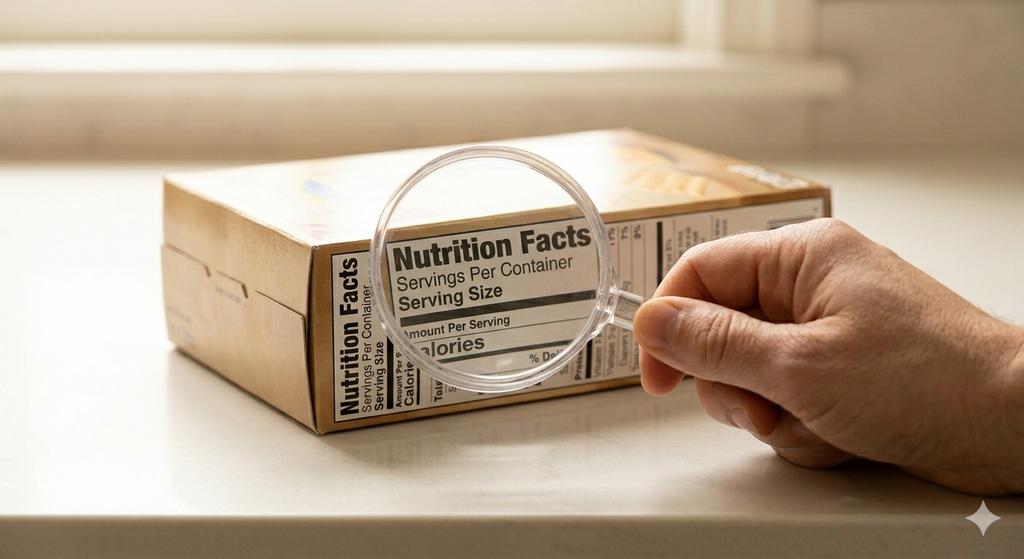
The quickest way to fix portion distortion starts before you even take a bite. When you look at a Nutrition Facts label on a package, your eyes probably jump straight to the calorie count. However, the food industry has a habit of packaging multiple servings into items that look like single-consumption snacks.
To avoid this trap, always look at the very top line of the label first: Servings Per Container. Many manufacturers pack two, three, or even four servings into a single bag of chips, a bottle of iced tea, or a canned soup. If you eat or drink the whole thing, you have to multiply every single number on that label by the number of servings. Becoming an active label-reader is half the battle won.
Your Daily Target Blueprint
What should a balanced day look like if we look past the giant restaurant platters? Based on a standard 2,000-calorie daily diet, the United States Department of Agriculture provides a clear blueprint of the essential building blocks our bodies need to thrive:
- Vegetables (3 cups): Packed with potassium, water, and fiber, vegetables help regulate blood pressure and fill you up without overloading you with calories.
- Fruits (2 cups): Nature’s sweet treat. Fruits provide essential vitamins and antioxidants with zero cholesterol.
- Grains (6 ounces): Energy is vital, but the quality matters. Aim to make at least half of your daily grains whole grains (like brown rice, whole-wheat bread, or oatmeal) for sustained energy and heart health.
- Meat and Nuts (5.5 ounces): Animal- or plant-based protein make up the structural building blocks for your muscles, skin, and bones. Level up the quality of your diet by opting for lean animal proteins like fish and poultry or supplement with plant-based protein snacks like edamame, chickpeas, and nuts, instead of potato chips.
- Dairy (3 cups): Essential for maintaining bone density, whether you are a growing child building bone mass or an adult protecting your skeletal health.

How to Eyeball Your Plate
You do not need to carry plastic measuring cups to a restaurant or a dinner party to know if you are overeating. You can use everyday household objects—or your own hand—to accurately estimate standard serving sizes anywhere you go:
| Food Type | Standard Serving Size | Everyday Visual Cue |
| Meat, Fish, or Poultry | 3 ounces | A deck of cards (or the palm of your hand) |
| Fruits, Veggies, or Dairy | 1 cup | A baseball (or your clenched fist) |
| Pasta, Rice, or Grains | 1/2 cup | A tennis ball (or a cupped hand) |
| Nut Butters or Dressings | 2 tablespoons | Two thumbs (measured from knuckle to tip) |
| Oils or Butter | 1 teaspoon | The tip of your index finger |
The “Limit List”: Sugar, Salt, and Fat
Controlling portions also means keeping a close eye on the hidden, low-nutrient extras that processed food companies and restaurant kitchens use to boost flavor and shelf-life.
Saturated and Trans Fats
Saturated fats mostly come from animal products like butter, cheese, and fatty cuts of red meat. Health guidelines suggest keeping these to less than 10% of your daily calories to protect your arteries—which equals roughly 20 grams per day on a standard diet.
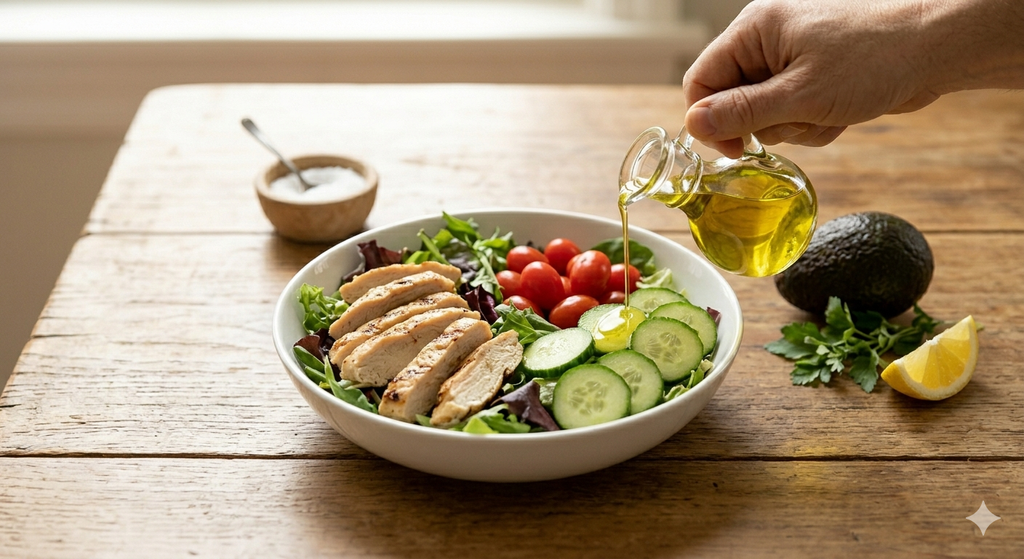
Salads are an excellent way to meet your daily vegetable goals, but the fats we add through toppings and dressings can add up quickly. Consider how the saturated fat content balances out among common salad components, proteins, and heart-healthy oil alternatives:
| Salad Ingredient & Serving Size | Saturated Fat Content |
| Cheddar Cheese (1.5 ounces, shredded) | 8.2 grams |
| Chicken Breast, Skinless (3 ounces, grilled) | 0.8 grams |
| Olive Oil (1 teaspoon, dressing base) | 0.6 grams |
| Avocado Oil (1 teaspoon, dressing base) | 0.5 grams |
| Canola Oil (1 teaspoon, dressing base) | 0.3 grams |
Even more importantly, look out for trans fats (often hidden on the ingredient block as “partially hydrogenated oils”) and avoid them entirely. They are notoriously tough on your cardiovascular system. Try swapping solid fats for heart-healthy liquid oils like olive, avocado, or canola oil. When any of these oils are heated for frying, they lose their heart protective value.
Added Sugars
Aim to keep added sugars under 25 grams (about 6 teaspoons) per day. Note the word added—you do not need to worry about the natural sugars found inherently in a whole apple or a glass of plain milk. Those natural foods come packaged with fiber and protein that slow down sugar absorption. It is the sugar added to sweeten sodas, baked goods, and processed condiments that we want to minimize. Whether it is white sugar or honey, the body processes both the same, so minimize both. Honey is more concentrated than sugar-higher in calories- so it is important not to add too much to your hot beverages or breakfast foods.
Sodium (Salt)
Our bodies need sodium to function, but the modern diet provides far too much, which can drive up blood pressure. The recommended daily limit is 2,300 milligrams, which is exactly one teaspoon of table salt. Because restaurant meals and packaged canned goods are packed with hidden sodium, the easiest way to cut back is to cook at home more often. When you do cook, lean heavily on fresh herbs, garlic, citrus, and spices to build deep flavor instead of relying entirely on the saltshaker.
By resetting our eyes to recognize true portion sizes and focusing on whole, unprocessed foods, we can still enjoy the meals we love while giving our bodies exactly what they need to stay healthy, vibrant, and balanced.