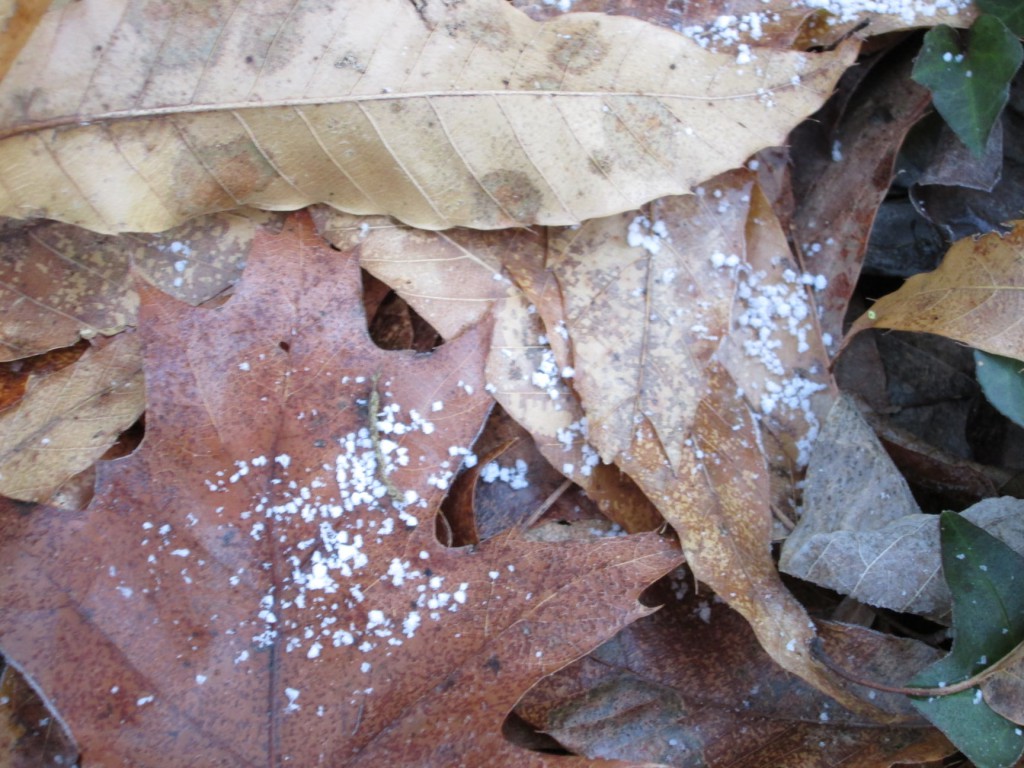
Snow comes in many different forms. The most familiar to us are dendrites, what we usually see in Christmas cards and in paper cutouts our kids make. Dendrites form in a very specific set of temperature and humidity conditions that only occur at some places in the atmosphere. But snow can also form as needles, plates, and pellets. Snow pellets are roundish, opaque amalgams of snow crystals clumped together, and are also called graupel. They differ from sleet in that sleet is frozen rain and so looks translucent or transparent instead of opaque. I had some snow pellets fall at my house on Christmas Eve after I went to bed, but I found these snow pellets on the leaves outside my house on Christmas morning, as you can see in this somewhat fuzzy picture. You can read more about graupel in this blog post from Brad Panovich, a television meteorologist in Charlotte, NC. You can find out more about different types of snow from EarthSky here.