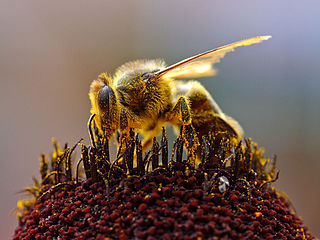
The importance of bees and other pollinators on food production cannot be understated, since without pollinators most plants could not produce food and seeds for future plants. Here are two recent stories I read that discuss two different aspects of how the changing climate is affecting pollinators.
The first story, from Morning Ag Clips, reviews a recent study from UTA that shows warmer temperatures cause many plants to produce less pollen, which could affect pollination of the plants as well as the pollinators that collect pollen. You can read it at The Impacts of Climate Change on Food Production | Morning Ag Clips.
The second story, from Growing Produce, discusses the impacts of longer growing seasons on the lifetimes of pollinators. Another recent study, this one from Washington State University, shows that worker bees will continue to fly and collect pollen and nectar in the fall as long as the weather is good, even if the hives are full of honey. This wears the bees out and makes the colonies more prone to collapse over the next winter. Some beekeepers are now considering putting hives into cold storage in the fall to reduce the length of the flying season, reducing the negative impacts of so much flying on the bees. You can read that story at Are Worker Bees Too Ambitious For Their Own Good? – Growing Produce.