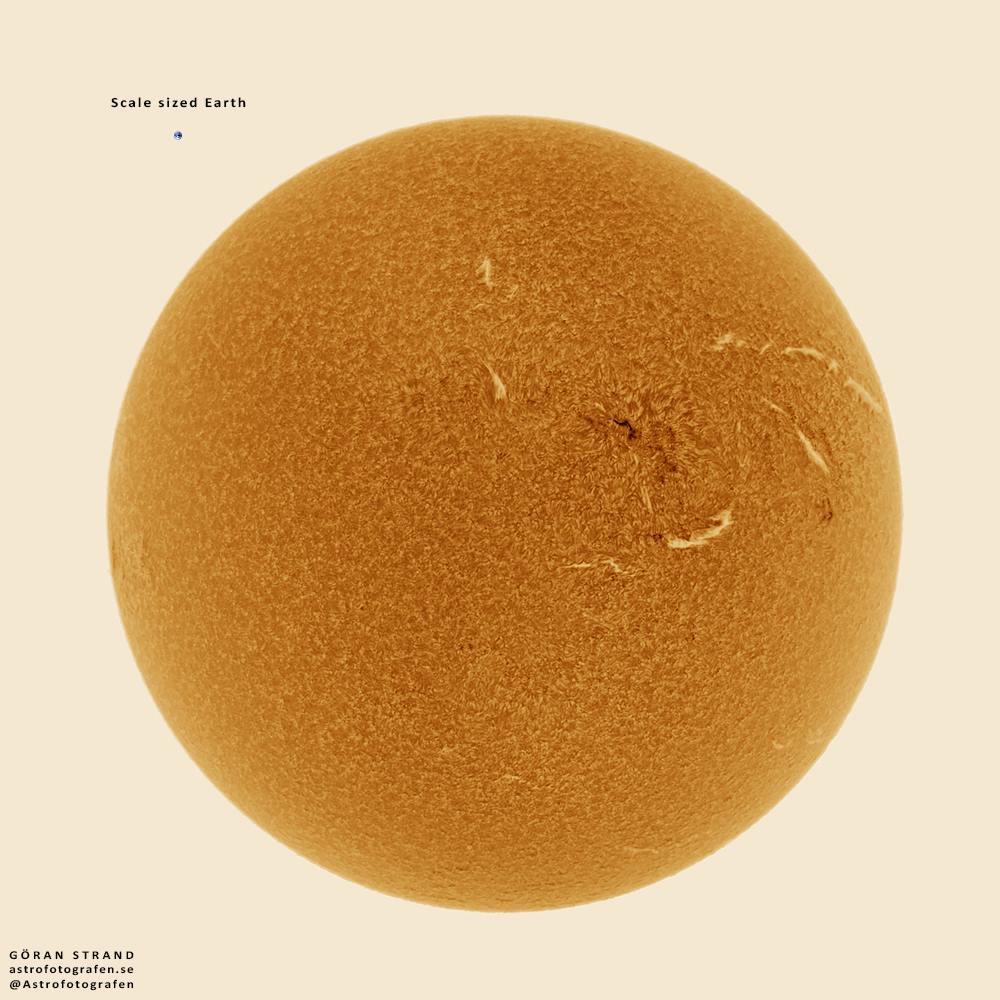
July 4 marked the day when the earth was the farthest from the sun in its orbit around our favorite star (we call that aphelion). In spite of what you might think, the seasonal swings in temperature are not controlled by our distance from the sun but by the tilt of the earth towards or away from our major energy source. So even though we are farthest from the sun now, the Northern Hemisphere is pointed towards the sun this time of year, giving us longer days and more direct sunlight, which affect the temperature more than the small orbital changes from one month to the next. We do know, however, that the orbital changes are important in very long-term climate variations, and help control the ebb and flow of the ice ages.
You can read more about it at EarthSky here.