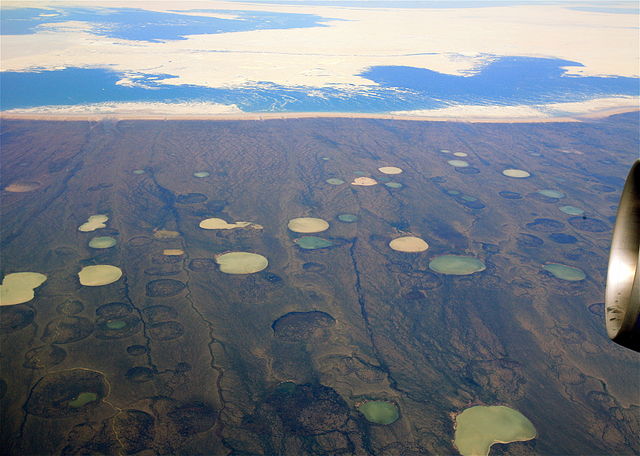
The Washington Post had an intriguing article this week on the role that Arctic soils may play in greenhouse warming. Temperatures in polar regions, particularly in the Northern Hemisphere, are increasing much faster than in other parts of the world due to changes in land cover and the switch from snow and ice to bare ground and increasing plants. As the earth defrosts, it releases methane and carbon dioxide into the atmosphere, increasing the amount of greenhouse gases that enter the atmosphere after being trapped in frozen ground in the past. This process is not currently accounted for in projections of climate change and may accelerate the warming we are already seeing. You can read the article here.
In a separate article published in ReportingClimateScience.com, researchers at University of Texas at El Paso have shown that Arctic ponds are also disappearing due to warmer temperatures and encroaching plants. This will reduce habitat for migrating birds and change the environment within and around the sites of these ponds in the future in ways that are not yet well understood.