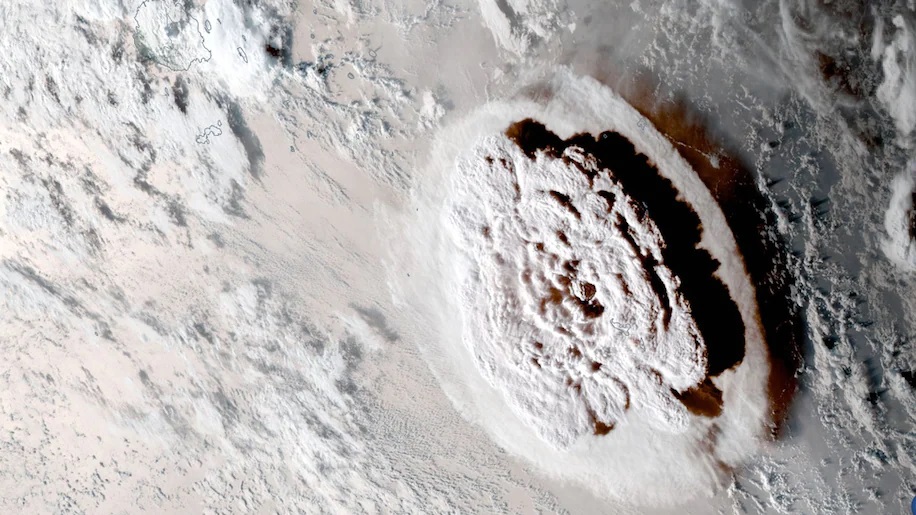
A new analysis of the aerosols shot into the atmosphere by the recent Tonga volcanic eruption show that in spite of a plume that set new records for height, the aerosols that were emitted were not enough to affect global temperatures. This was expected because the volcano did not appear to be emitting much sulfur dioxide, a key component needed to combine with water vapor to produce tiny shiny droplets that reflect the sun’s light back to space. These droplets, when present, can cool the earth for several years after an eruption.
However, the Tonga eruption only put out about 2 percent of the amount of sulfur released by the Mount Pinatubo eruption of 1991, which was the last large eruption to affect the earth’s temperature, and so the temperature impacts will be so small that scientists do not expect to be able to measure any difference. You can read more at Space here.