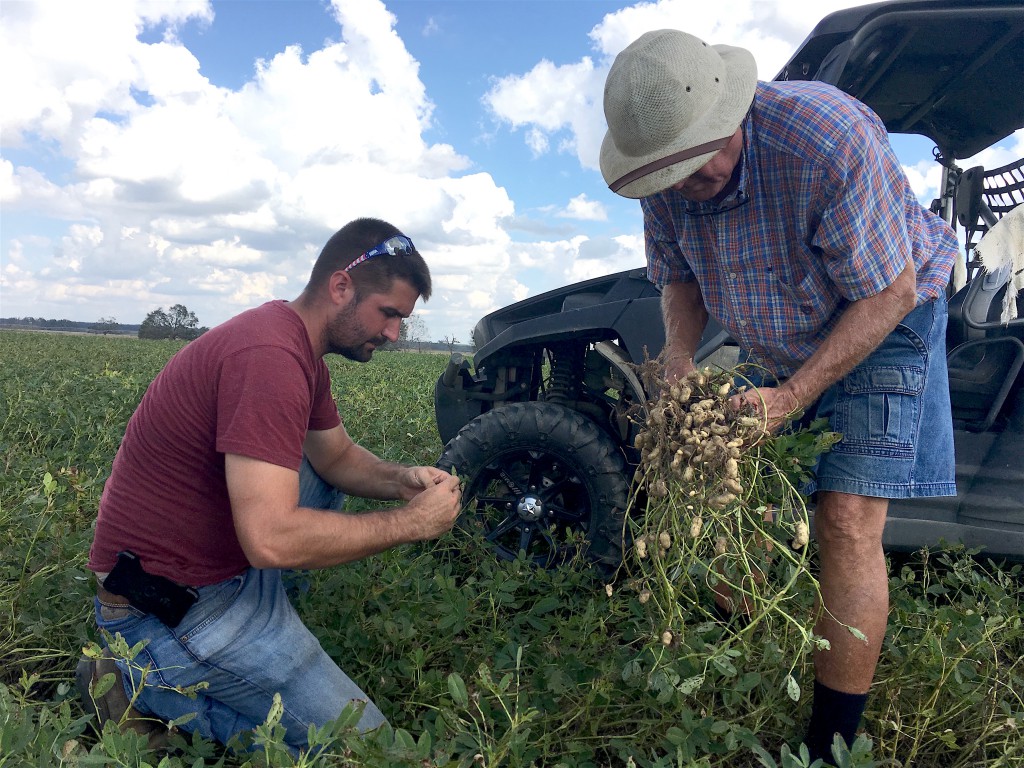
It is the time of year that farmers are trying to determine when to harvest their crops. For peanuts, maturity depends not only on the time since planting, but the weather conditions since that time. Both temperature and precipitation can affect the time to produce mature peanuts, so producers need to monitor both weather and the plants too, to make sure they are bringing the crop at the best time. This article from IFAS discusses peanut maturity in Florida and the need for monitoring accumulated Growing Degree Days (aGDD) as well as using scout boards to find actual maturity. They provide some accumulations for this year for Florida stations. If you are in Georgia, you can use the GDD calculator at the UGA Weather Network at http://georgiaweather.net/?content=calculator&variable=dd&type=dt combined with your starting date to calculate the accumulated GDD for your fields. According to Georgia Farm Progress, you should use a base temperature of 56 F for peanuts to do y our calculations.