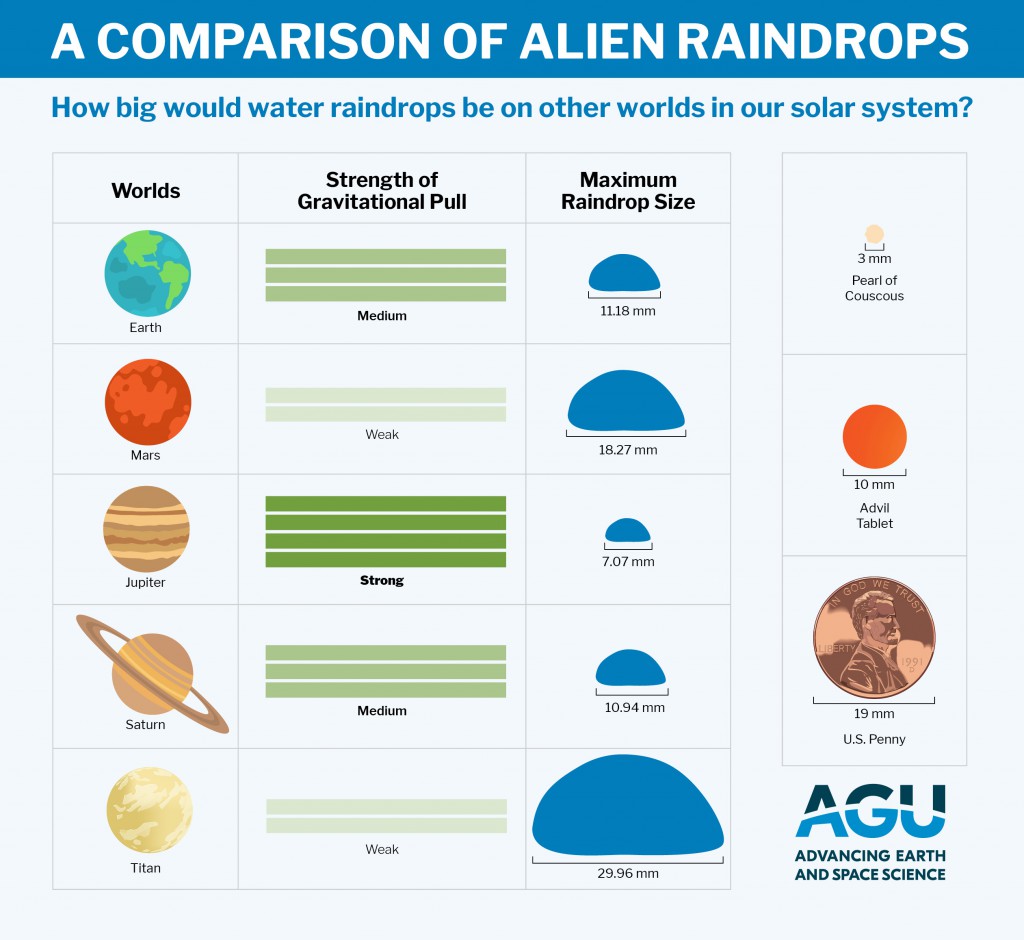
Now here’s something you don’t see every day. The American Geophysical Union has published an infographic comparing the size of raindrops on Earth to those expected on other planets (assuming they are warm enough to have rain instead of snow). The study factors in the force of gravity on each planet along with what we know about their atmospheres. You can read more here.
If you are curious about the shape they show for raindrops, that is actually correct. Falling raindrops usually look more like hamburger buns than the teardrop shape we usually think of or draw as kids. That’s because of surface tension and the upward force of the air as the raindrops fall. Here is a good (if somewhat long) video explaining why raindrops have the shape they do: https://www.youtube.com/watch?v=6G6omXLTAj0.