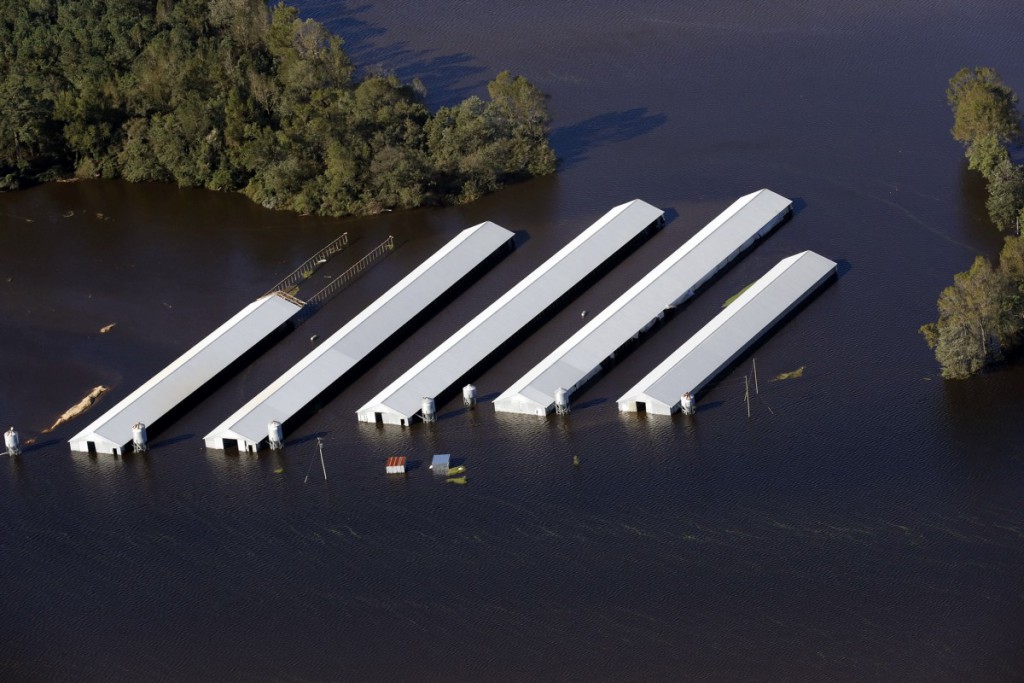
The water from Hurricane Florence’s rainfall is still rising in streams, causing major problems for coastal communities and agricultural producers in southeastern North Carolina and in parts of South Carolina. By some estimates, over 3 million animals have died, mainly hogs, turkeys and chickens in production farms. Estimated losses from all causes are over $38 million and are still rising as people return to their homes and farms. If hurricanes move more slowly in the future and drop higher amounts of rainfall, farmers in low-lying areas will face increased risks from flooding and other impacts of hurricanes and other extreme events. This week’s Georgia Climate Project question asks how we can build resilience in Georgia farming communities to deal with more frequent extreme events due to a warming climate. You can see all the questions at https://roadmap.georgiaclimateproject.org/.
20. What sources and forms of information and communication can be used to build resilience among farmers and farming communities faced with changing weather patterns and extreme events?
Why this question is important: Agricultural communities in Georgia are very diverse, as are their products and customers (Crane et al. 2010; Furman et al. 2014). As weather becomes more extreme, tools and strategies to find, communicate, and use information are needed to build resilient systems. Several tools and communication technologies have been developed for this purpose (Garcia y Garcia et al. 2006; Paz et al. 2012). For example, the U.S. Department of Agriculture’s Climate Hubs (https://www.climatehubs.oce.usda.gov) include research and tools on irrigation, animal agriculture, and forestry. There is considerable scope however for improving these technologies, adapting them for Georgia conditions, developing new tools, and/or or introducing them to growers not familiar with them. This implies the need for more explicit and participatory engagement strategies along food supply chains and methods that directly incorporate input from farmers and extension agents, to take into consideration Georgia farmers’ explicit interests, needs and ideas (Bartels et al. 2013).