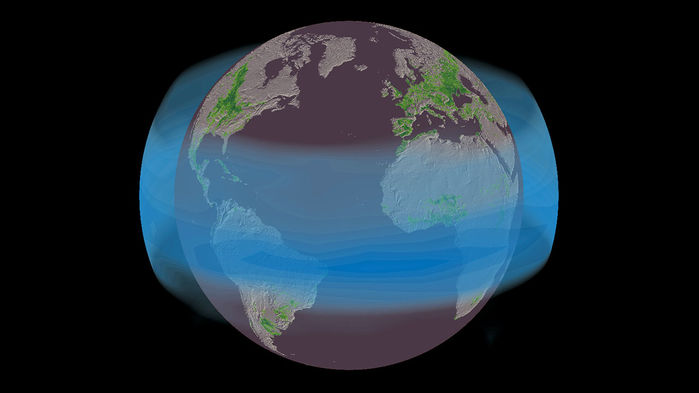
Projections of future climate indicate that global temperatures are likely to get a lot warmer by 2100. If this occurs, we will need to determine ways to counteract the warming. Geoengineering is the process of making changes to the earth to keep the earth from warming as much as we expect. These techniques could include putting mirrors in space to reflect some sunlight away from the earth or putting fertilizer in the ocean to encourage the growth of plants that would suck up some of the excess carbon.
One method that has been proposed is to increase the number of aerosols in the atmosphere by injecting tiny droplets into the air (similar to a man-made volcanic eruption), helping to cut down on incoming sunlight. However, a recent study has shown that this technique would cause problems for farmers because the decrease in incoming sunlight would negatively impact the growth of crops. Obviously, this would not be ideal for production, so this particular form of geoengineering would not be in the best interest of agricultural producers. Climate scientists are always looking for the unintended consequences of making changes to the earth’s climate system, because one change can cause feedbacks that radically change what was originally intended. You can read more about the study at Science here or in New York magazine here. Wired also has a commentary here.