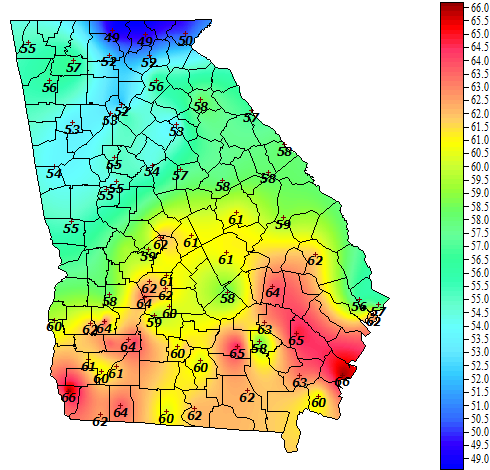
This time of year farmers are chomping at the bit to get out into the fields and start planting their crops for the season. I’ve seen a number of comments online that planting of corn is well underway in southern Georgia already. But this article from AgWeb points out that planting when the soil is too cold is counterproductive and can cause damage to seedlings that can reduce yields or increase the likelihood that your field will need to be replanted.
This year it’s especially important to watch the weather carefully because even if the temperatures are high enough one day, if the weather swings back to colder conditions the soil may cool off again. Better to wait a few days until warm weather is expected to continue for a while. You can measure your own soil temperature if you have a probe, but if you don’t, then the UGA weather network in Georgia (or FAWN in Florida or ECONET in North Carolina, to name two other mesonets) can provide you with soil temperatures across the region. You can find the Georgia data at https://www.georgiaweather.net/?content=tr&variable=XS&title=Soil%20Temperature.