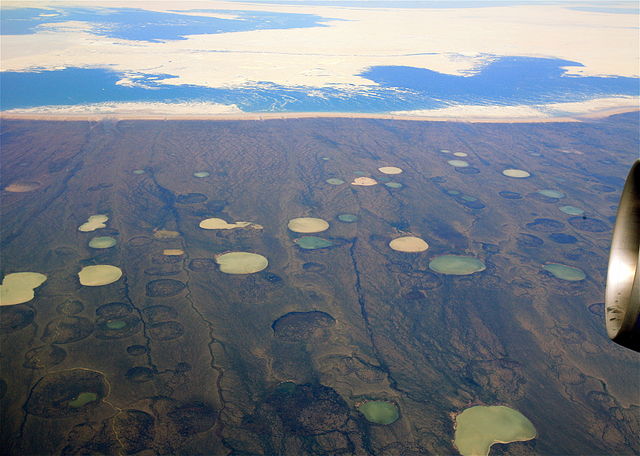
While the rapid disappearance of sea ice in the Arctic has been big news as the poles get warmer (especially the North Pole, which has ocean beneath it rather than a big chunk of ice like the South Pole does), another important story is just starting to be recognized. That is the thawing of the permafrost across large swaths of the tundra, leading to the release of huge amounts of greenhouse gases like methane that are contributing to a positive feedback in warming. Land surfaces are also changing from the vibrant tundra, which has plenty of food for arctic animals and indigenous people, to mostly sterile mud and rock, which is much less able to sustain life. Yale Environment 360 had an interesting story last week about what changes are being seen and what they mean for life in the Arctic and elsewhere. You can read it here.