Simply hearing the word snake sends shivers up some folks’ spines. However, snakes are an important component of our ecosystem in Georgia due to their major role as both a predator and prey. The rising temperatures bring on a time when some wildlife, including snakes, become more active. Snakes are common across Georgia even in urban and suburban areas. As development and population growth continue in Georgia, encounters between humans and snakes will increase.
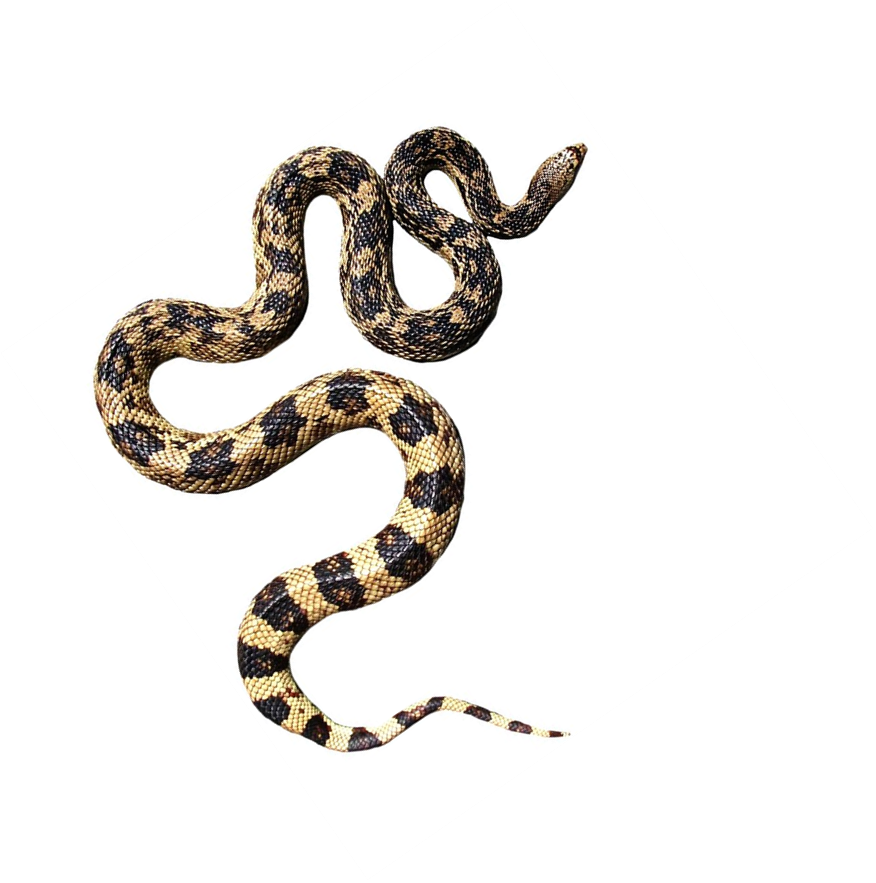
Snakes are economically beneficial because they eat rats, mice, and other animals deemed to be pests. Some snakes have been used as bioindicators to assess pollutants in terrestrial or aquatic ecosystems.
At least 20 percent of the U.S. population suffers from some degree of snake fear. Regardless of the cause, extreme fear is unnecessary. Snakes are not under every rock or behind every tree; encounters are relatively infrequent. Typically, the more people learn about snakes, the less they fear them. By learning about species identification and distribution as well as the fascinating natural history of these reptiles, you will greatly reduce your fear of Georgia’s snakes and enjoy the outdoors more.
Unfortunately, many species of snakes are declining because of human activities. Thankfully, of the snake species native to Georgia, only two are state listed as threatened in their south Georgia ranges: the eastern indigo snake and the southern hognose snake.
Biology
Snakes are reptiles characterized by elongated bodies and a lack of limbs. Snakes are closely related to lizards, but do not have external ears or eyelids. The skin of snakes is dry and scaly, not slimy like some people believe. Snakes have a forked tongue used to “sample” microscopic particles from the air. The particles are transferred to the Jacobson’s Organ to taste the air to figure out its surroundings. Snakes are “cold-blooded” meaning they rely on their surroundings for body heat. As a result, snakes cannot tolerate extreme temperatures. Therefore, when it is cold or extremely hot outside, snakes are relatively inactive.
Whether a snake is venomous or not is the top worry of most people. Odds are it is not venomous. Only seven of the 47 Georgia’s native snake species are venomous. Only one, the copperhead, usually thrives in suburban areas, which is where many Georgians live. In Paulding County, these are the snakes that you may encounter.
Venous snakes in Paulding County – Pit Vipers – Subfamily Crotalinae
copperhead Agkistrodon contortrix
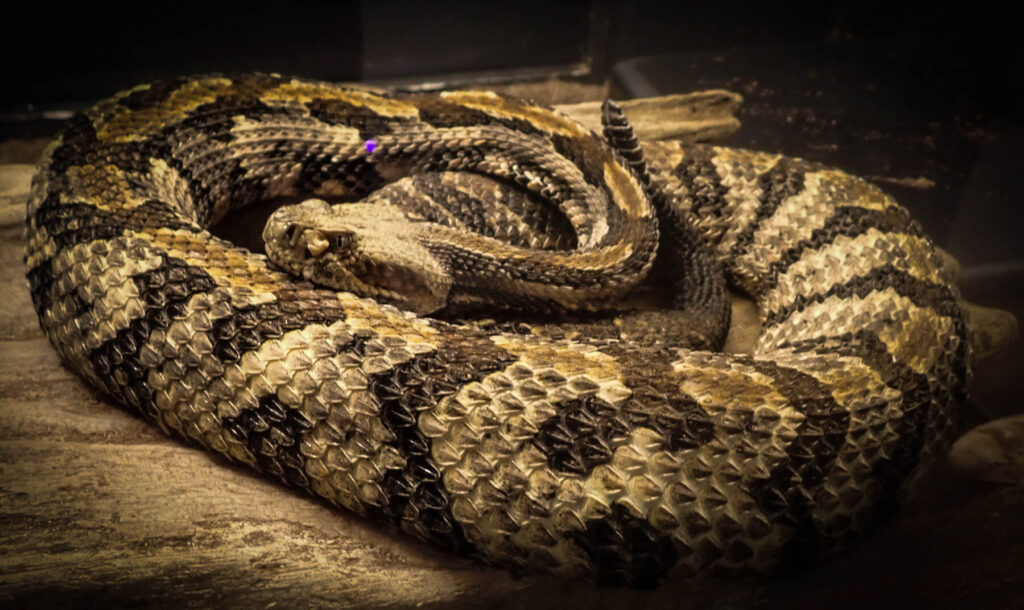
timber rattlesnake Crotalus horridus
pigmy rattlesnake Sistrurus miliarius
Non-venomous Snakes in Paulding County
Colubrids – Family Colubridae
scarlet snake Cemophora coccinea
black racer Coluber constrictor
coachwhip Coluber flagellum
mole kingsnake Lampropeltis rhombomaculata
eastern kingsnake Lampropeltis getula
rough green snake Opheodrys aestivus
corn snake Pantherophis guttatus
eastern rat snake Pantherophis alleghaniensis
northern pine snake Pituophis m. melanoleucus
southeastern crowned snake Tantilla coronata
Watersnakes and their Allies – [Family Natricidae]
plain-bellied watersnake Nerodia erythrogaster
northern watersnake Nerodia sipedon
brown watersnake Nerodia taxispilota
queen snake Regina septemvittata
Dekay’s brown snake Storeria dekayi
red-bellied snake Storeria occipitomaculata
ribbon snake Thamnophis saurita
garter snake Thamnophis sirtalis
smooth earth snake Virginia valeriae
Harmless Rear-fanged Snakes – [Family Xenodontidae]
eastern worm snake Carphophis amoenus
ring-necked snake Diadophis punctatus
eastern hog-nosed snake Heterodon platirhinos
As for what to do when you see a snake, according to DNR’s state herpetologist offers this advice:
When You See a Snake
1. First, do not attempt to handle the snake. Give it the space it needs.
2. If you want to try and identify it, do so from a distance. Resources such as georgiawildlife.com/georgiasnakes, which includes DNR’s “Venomous Snakes of Georgia” brochure, can help.
3. Remember that snakes are predators that feed on small mammals, amphibians, insects and even other snakes. There is no need to fear nonvenomous snakes. Also, Georgia’s native nonvenomous species are protected by state law. One, the eastern indigo, is even federally protected.
4. If a clearly identified venomous snake is in an area where it represents a danger to people or pets, visit georgiawildlife.com/preventing-wildlife-conflicts for a list of private wildlife removal specialists. Many bites occur when a snake is cornered or captured and defending itself
According to the Centers for Disease Control and Prevention, of the 7,000 to 8,000 people bitten by snakes in the U.S. every year, only about five result in fatalities.
In venomous snake country, always look where you put your body and keep an eye on pets and children. Most bites happen to those who try to move, kill, restrain or otherwise harass snakes, so be sane and refrain! A snake knows more about what is happening around than any other creature, because it has no ears to listen – only direct perception.
The author of this article, Phillip Prichard, is a Paulding UGA Extension Master Gardener, Master Herpetologist, and a UGA Master Naturalist, trained to provide education for homeowners on horticulture, sustainable landscaping, and environmentally friendly gardening practices using unbiased, research-based information from the University of Georgia. For more information, contact Paulding County UGA Extension at 770-443-7616 or view our online resources at www.ugaextension.org/paulding.