There’s no silver-bullet solution when it comes to fertilizing your lawn, garden, or hayfield. In fact, one of the most common mistakes I see is applying fertilizer out of habit rather than need. If you want healthier plants, better yields, and less wasted money, the first step isn’t buying fertilizer—it’s testing your soil.
Each year, the University of Georgia Extension helps thousands of Georgia residents understand exactly what their soil needs through simple, affordable soil testing. While we do offer some services related to soil contaminants, the focus here is on agronomic tests that help us understand the nutrient levels and soil conditions that directly affect plant growth.
Whether you’re managing a lawn, vegetable garden, hayfield, pasture, orchard, or wildlife plot, soil testing provides valuable insight into how well your soil can supply nutrients. Based on those results, we provide personalized recommendations for fertilizer, lime, and other amendments tailored to what you’re growing.
Plants require a proper balance of nutrients and the correct soil pH to thrive. Soils can vary widely, even within the same property. Many local soils are naturally acidic and benefit from lime applications, but without a test, you’re just guessing. That guesswork can lead to over-application of nutrients, which wastes money and increases the risk of runoff that can contaminate nearby waterways.
Soil testing takes the guesswork out of the process. It tells you exactly what your soil needs and just as importantly, what it doesn’t. For most lawns, shrubs, and ornamental landscapes, testing every two to three years is sufficient if no major issues are present. However, areas where crops are harvested and removed, like vegetable gardens and hayfields, should be tested annually. When you remove plant material, you’re also removing nutrients that will need to be replenished.
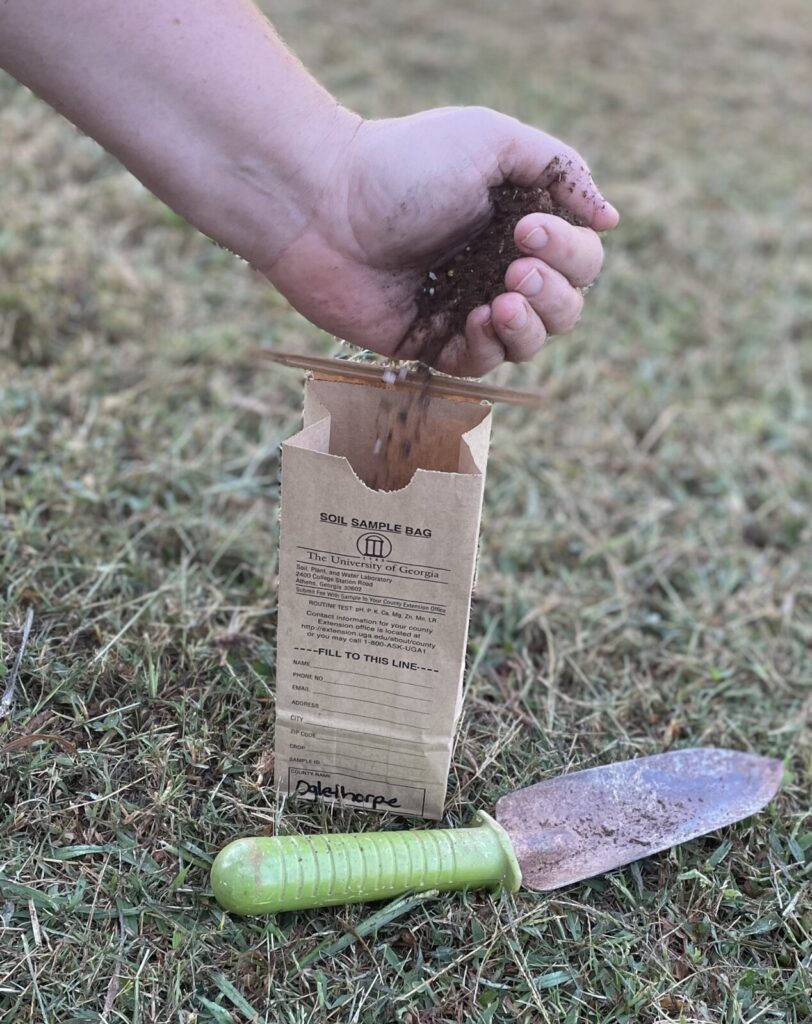
When running a soil test, unfortunately, you can’t just bring in one scoop of dirt to our office. There is a process you should follow. Proper sampling is essential for accurate results. You’ll want to collect soil from multiple spots within a single area, about 10 to 12 samples, then mix them together. For grasses, sample to a depth of about four inches; for gardens, go a bit deeper, around six inches. Remove debris, mix thoroughly in a clean plastic bucket, and bring about two cups of soil for testing.
It’s also important to separate areas that are managed differently. Your front yard and backyard may need separate samples. Raised beds should be tested individually, while larger, uniform areas like pastures can often be grouped, sometimes up to 20 acres in a single sample, depending on uniformity. Our local Extension office provides soil sample bags and can even lend sampling tools like soil probes to make the process easier.
The standard soil test costs just $8 per sample. Additional tests, such as organic matter analysis, can be added for an additional fee. Considering that improper fertilization can cost far more in
wasted products and poor plant performance, soil testing is one of the best investments you can make.
Once you submit your sample, it’s sent to the lab, and results are typically returned within about a week. The report includes measurements of soil pH and key nutrients like phosphorus, potassium, calcium, magnesium, zinc, and manganese. It also provides nitrogen recommendations based on the specific crop you’re growing.
Best of all, the report comes with clear, research-based guidance on how much fertilizer or lime to apply. If you’re unsure how to interpret the results, your local Extension agent is always available to help you make sense of the recommendations and decide what products to purchase. Many garden centers and agricultural suppliers can also assist you in finding the right materials if you bring along your soil test report.
At the end of the day, proper soil fertility is the foundation of plant health. No matter what you’re growing, your success starts below the surface. Don’t risk wasting time and money applying products your soil may not even need. A simple soil test can set you up for success.