A new invasive pest spreading rapidly throughout the United States was recently reported in Georgia. Spotted lanternfly (SLF) (Lycorma delicatula) was detected in Fulton county in the fall of 2024. Although vibrant and decorative in appearance, this pest causes serious damage to numerous plants including peaches, plums, apples, and grapevines. Its ability to feed on over 70 species of plants allows SLF to be remarkably adaptable and persistent.
Spotted lanternfly feeds on herbaceous plants in its early stages of development, shifting to woody plants and trees as it reaches maturity. In addition to physically injuring plants, SLF excretes a honeydew that facilitates the growth of sooty mold, amplifying its damaging effects.
Native to Asia, spotted lanternfly was first detected in the United States in Berks County, Pennsylvania, in 2014. At the time of this report, it was only confined to a two square mile area. However, despite quarantine efforts, SLF occupied 13 counties in Pennsylvania and had expanded into New York by 2017. Presently, spotted lanternfly has expanded into 18 states, now including Georgia.
Early action is essential for controlling the spread of this insect throughout Georgia, and public awareness is one of the first lines of defense. Human locomotion is believed to be the main mechanism for long-distance movement of SLF. The introduction of SLF into the United States is suspected to be from egg masses laid on a shipment of stone fruit from China. Eggs, nymphs (juveniles), and adults are all capable of crawling or attaching themselves to various surfaces, including motor vehicles.
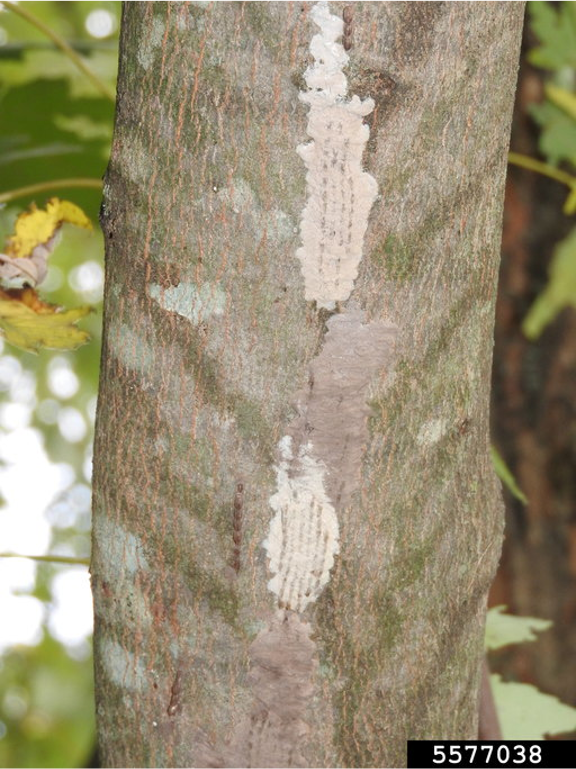
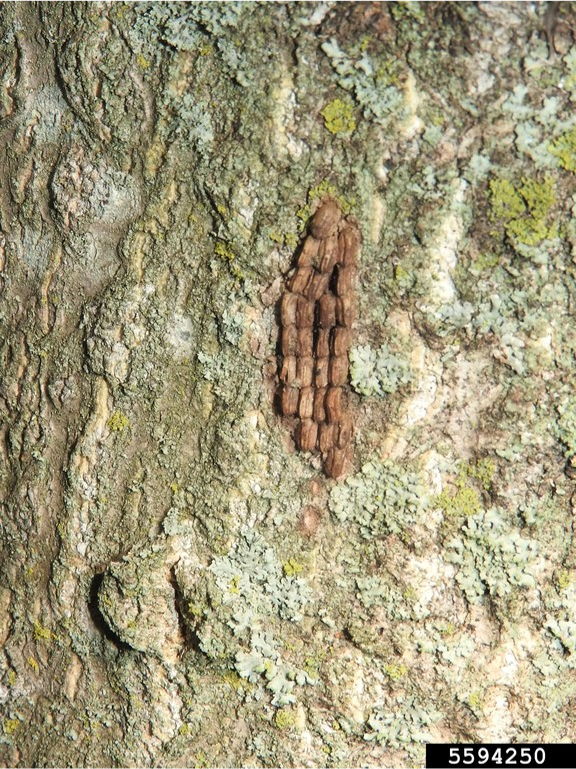
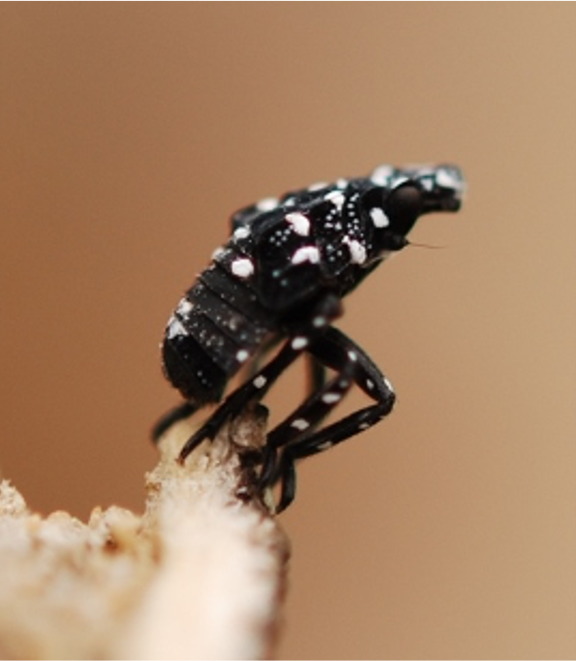
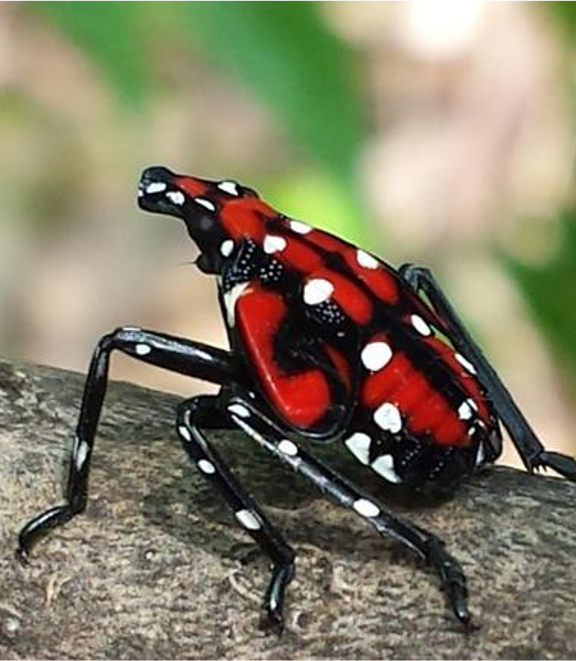
To prevent further spread, frequently check your car or any goods you are transporting for SLF egg masses, nymphs, or adults. Egg masses are typically 1-inch long and resemble smeared grayish-brown mud on the sides of stone, trees, or buildings. SLF nymphs are black with white spots. As they develop, they gain their distinctive red color. At maturity, these insects are 1 inch long and ½ inch wide with vibrant wings. Their forewings are brown with black spots, while their hindwings are bright red.
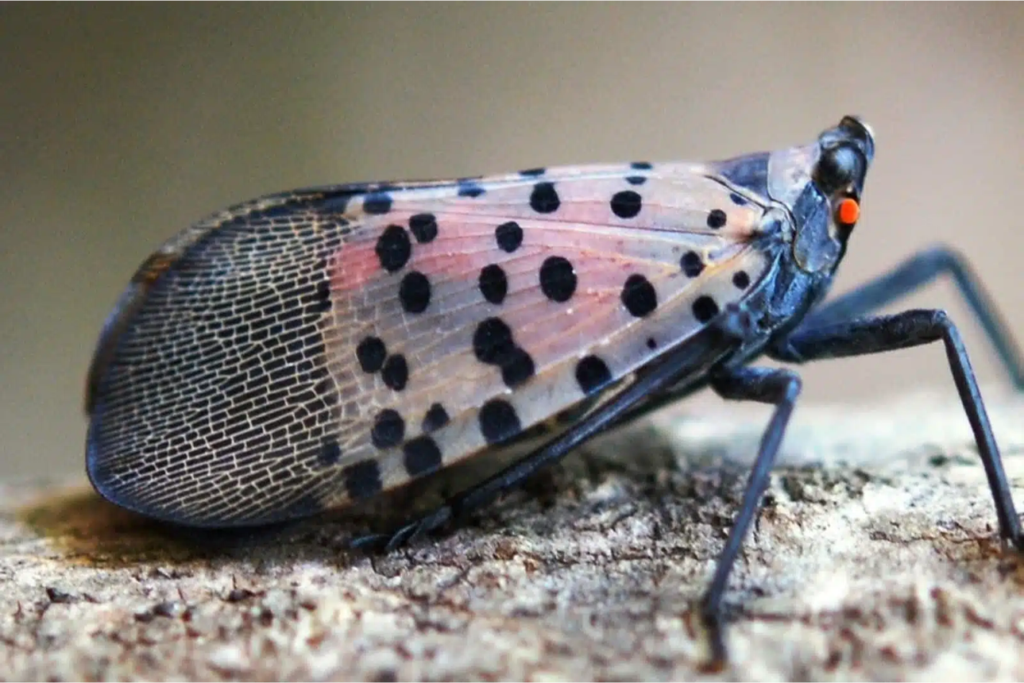
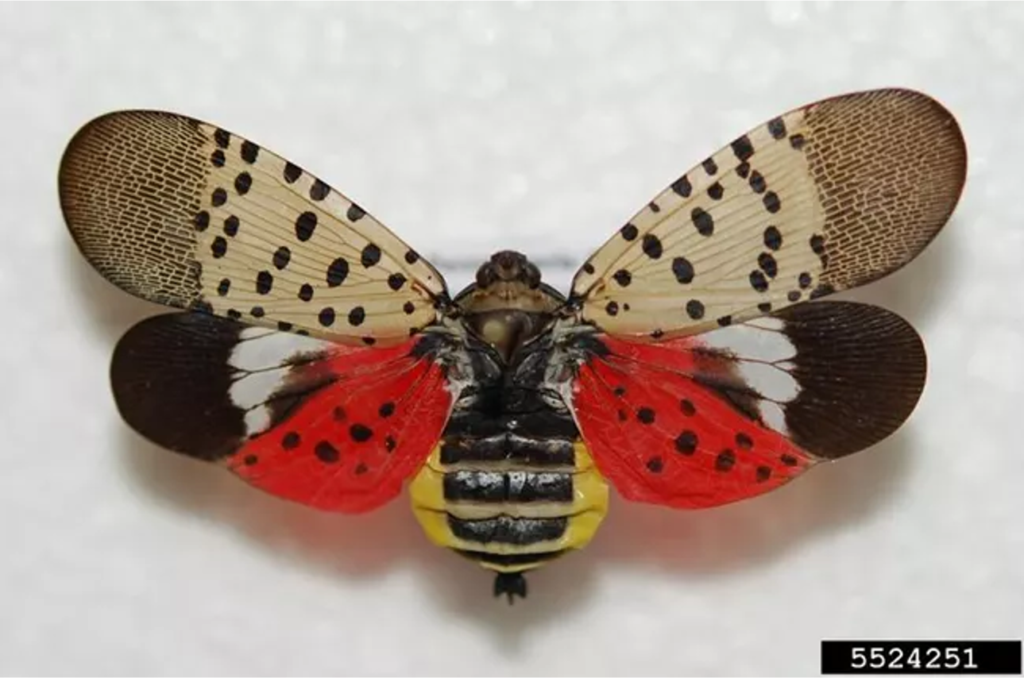
If you believe you have found a spotted lanternfly, do not hesitate to contact your county’s extension agent. We strongly ask that you document its presence, taking a picture if you are able, and kill it. Suspected spotted lanternfly sightings can also be reported using the Georgia Department of Agriculture’s online reporting tool.
Sources & Additional Information
Spotted Lanternfly: Georgia, Let’s be on the Lookout!, University of Georgia
Spotted Lanternfly: A Threat to Forests and Agriculture in Georgia by Elizabeth McCarty and Lynne Womack, University of Georgia
Invasive Spotted Lanternfly Detected in Georgia by Tyler J Harper, Georgia Department of Agriculture
Spotted Lanternfly, Georgia Department of Agriculture
Spotted Lanternfly, Animal and Plant Health Inspection Service
Spotted Lanternfly Reported Distribution Map, Cornell Integrated Pest Management


Leave a Reply