Although potted plants often thrive outdoors during Georgia’s summer months, many require overwintering indoors. As temperatures begin to drop, people are starting to move plants back inside to overwinter. The onset of colder weather also makes it increasingly tempting to bring new plants into homes and apartments so we can maintain our connection to nature as temperatures decline. But for those with pets, introducing plants into the home presents additional challenges. Many plant species have overlapping common names, making it difficult to determine which ones are truly toxic. Rubber plants (Peperomia obtusifolia) are often for the poisonous rubber tree (Ficus elastic). Similarly, while some species of palms and ferns are perfectly safe, others are among the most dangerous to cats and dogs.
This guide provides recommendations and growing instructions for the best pet-safe plants to bring into your home. The following list highlights some of the easiest-to-grow plants that can liven up your home this fall and winter without needing to worry about your pets’ health and safety.
Best Pet-Safe Plants
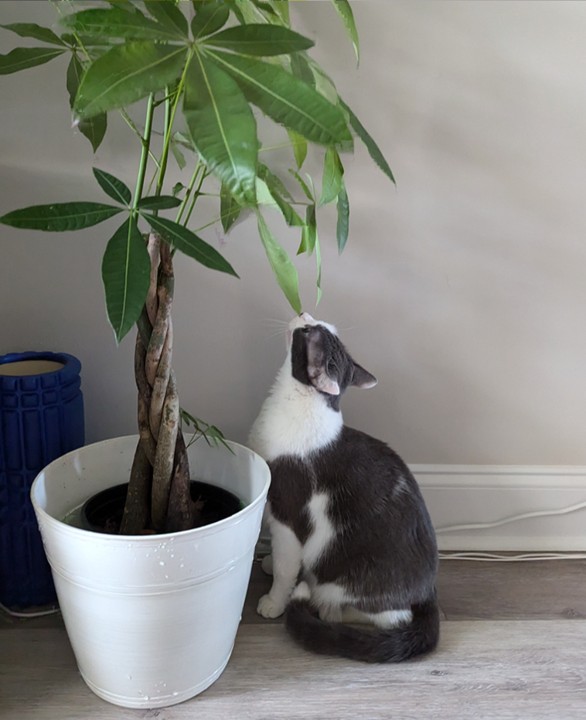
Money trees (Pachira aquatica): In its native tropical environment, P. aquatica thrives along riverbanks, swamps, and estuaries. Its fast growth rate makes this plant highly desirable, allowing you to purchase a smaller tree and quickly watch it reach heights of 6-8 feet tall indoors. Money trees prefer indirect sunlight and can develop leaf scorch when exposed to direct sun. Potting mix should be kept moist, but standing water should be avoided. DO NOT confuse P. aquatica with jade plants (Crassula ovata), which are sometimes also referred to as money trees (see under “Mildly Toxic Plants”).
Boston fern (Nephrolepsis exltata): The long, broad fronds of Boston ferns can easily provide an abundance of greenery to your home. Although they thrive under abundant sun, direct light should be avoided. Although they are one of the more drought-tolerant ferns, soil should be kept consistently moist. High humidity is necessary to prevent browning. Since many other fern species are somewhat toxic, proper identification is important before bringing N. exltata into your home.
Spider plants (Chlorophytum comosum): Spider plants are praised for being a beginner friendly, low-maintenance plants, thriving in average household humidity and temperatures. These plants are fast growing and providing ample foliage with minimal care, making them one of the most forgiving houseplants available. An additional bonus is that they are extremely easy to propagate. With proper care, spider plants will produce “plantlets” on the end of a long stem. The plantlet can either remain attached to the mother plant or separated and placed on soil or in water until roots develop.

Holiday cacti: Both Christmas cacti (Schlumbergera bridgesii) and Thanksgiving cacti (Schlumbergera truncata) are considered non-toxic to pets. These long-lived plants can survive for over 100 years with proper care. With the right lighting and maintenance, these holiday cacti can provide festive, pet-safe decoration to your house throughout your lifetime. Holiday cacti are “short-day” plants, meaning flowers are only produced when exposed to a certain quantity dark hours each day. Temperatures should be kept between 55-65°F at night to induce bloom.

Baby rubber plants (Peperomia obtusifolia): Also known as the American rubber plant, P. obtusifolia has thick, rounded, waxy leaves, making it a unique addition to your home. These plants prefer to dry out between watering. Despite their succulent nature, they are loved for still providing ample foliage. Other species in this genus include jade necklace (Peperomia Rotundifolia), Watermelon Peperomia (Peperomia Sandersii or Peperomia argyreia), and Peperomia Hederifolia, which are also non-toxic. DO NOT confuse Peperomia species with rubber trees (Ficus elastic).
While baby rubber plants are non-toxic, F. elastic is not. Parlor palm (Chamaedorea elegans): Parlor palm is commonly sought after for its wide-spreading foliage. Commonly mistaken for a single plant, each individual grows as one stem reaching 4-5 feet, which are typically combined into one cluster. Parlor palms prefer moist soil, but proper drainage is essential and soil should be left to dry in-between waterings. DO NOT confuse C. elegans with Sago palms (Cycas revoluta) which are extremely toxic (see under “Avoid at All Costs”).
African violets (Saintpaulia): African violets are a low-maintenance houseplant capable of providing numerous blooms every year. Growing best with moderate light, their vibrant pink and purple flowers make African violets and excellent floral feature to add to your home during the cooler months.
Polka dot plant (Hypoestes phyllostachya): Hypoestes comes in an incredible variety of different colored leaves, ranging from dark green, to red, to pink, giving you plenty of options to choose from. Its mottled, freckled appearance makes this plant particularly eye-catching. Although polka dot plants can grow in full sun, they are most vibrant when grown in partial shade. Flowering can occur when days shorten in the late summer or fall.
Cast iron plant (Aspidistra elatior): Cast iron plants are exceptionally hardy and can grow just about anywhere that’s not full sun. This, combined with their impressive drought tolerance, makes them ideal for semi-neglectful plant owners living in places with minimal light.
Herbs: Herbs are generally easy to grow indoors. Fortunately, there is a wide variety of herbs that are non-toxic to cats and dogs, including basil, sage, cilantro, dill, rosemary, thyme, including your cat’s favorite, catnip and cat grass.
Mildly Toxic Plants
The following plants are considered mildly toxic. Although not typically fatal, symptom severity is dependent on how much your pet consumes. If you’re worried about your cat or dog chewing on it, it’s best to leave it out of the house altogether or keep it out of reach.
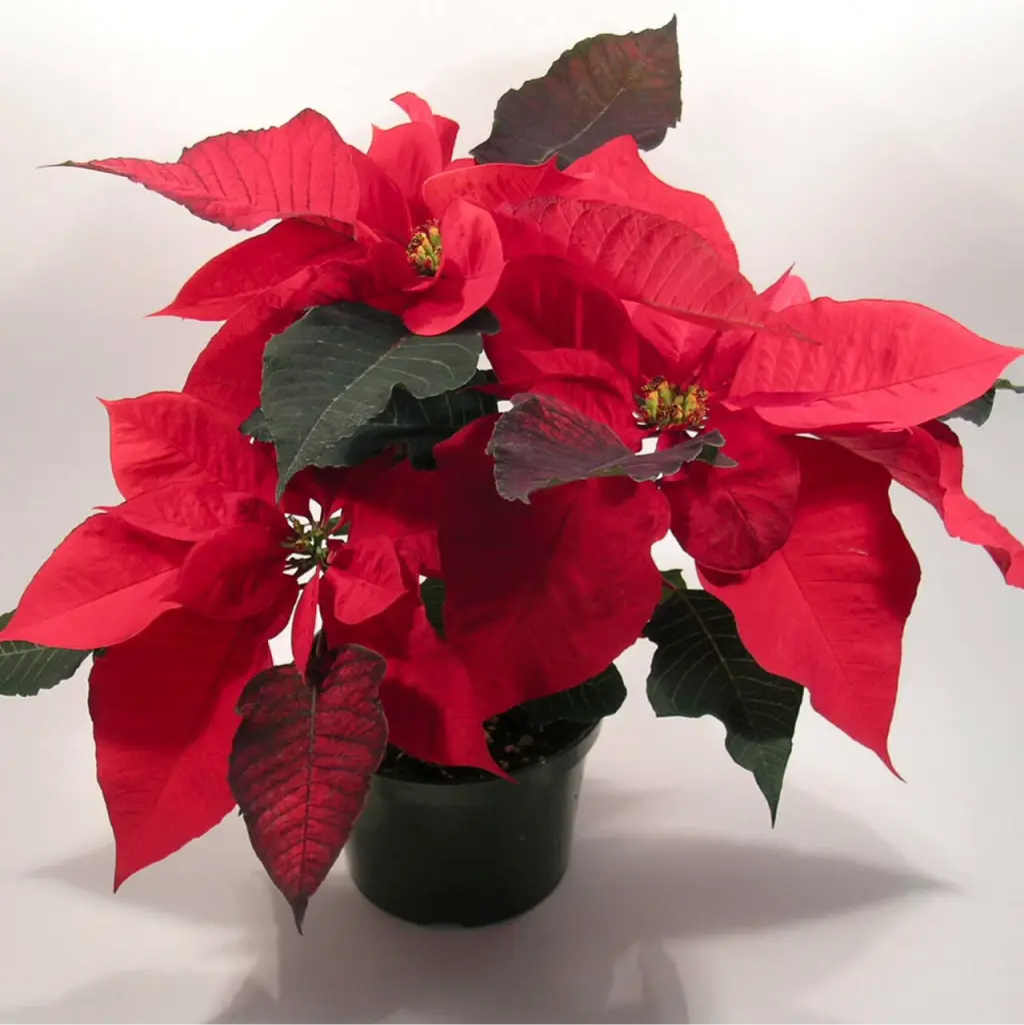
Poinsettia (Euphorbia pulcherrima): Although poinsettias have a reputation for being toxic to pets, the degree of toxicity is generally over-hyped. Their sap is considered an irritant, but severe symptoms are rare and only likely to occur if consumed in excessive quantities. Consumption can still result in vomiting, pain, and diarrhea, so it is still recommended to keep poinsettias out of reach. If you are concerned with your pets eating them but still want a festive plant, you can replace them with a non-toxic holiday cactus (see above).
Jade plant (Crassula ovata): Jade plants are occasionally marketed as money trees, which are pet-friently (see above). They are also referred to as Chinese rubber plants or Japanese rubber plants. However, Crassula argentea results in vomiting and gastrointestinal issues.
Pothos: This genus of plants is one of the most common vining plants people keep in their households. Although it’s loved for its ability to grow rapidly and branch out far beyond it’s pot, this plant contains calcium oxalate crystals that result in oral irritation if consumed. Although not typically fatal, it can result in intense burning, vomiting, and difficulty swallowing when eaten in large enough quantities.
Rubber tree (Ficus elastica): The common names of Fiscus elastica (rubber tree) and Peperomia obtusifolia (rubber plant) are often interchanged. While Peperomia obtusifolia is harmless (see above), Fiscus elastica is mildly toxic, resulting in skin irritation, indigestion, and vommiting.
Philodendron / Monstera (Monstera deliciosa): Monstera toxicity functions similarly to pothos. This plant is famous for its large, broad leaves that gain holes as they mature. However, the production of oxalate crystals irritates the skin, mouth, and throat of cats and dogs, and can result in difficulty breathing, swelling, and vomiting if consumed in large enough quantities. Fortunately, fatality is rare, but caution is warranted.
Mistletoe (Viscaceae): It is extremely common to hang mistletoe indoors during the winter holiday season. Fortunately, its toxicity is mild unless consumed in large quantities. However, eating it can still result in gastrointestinal distress, weakened breathing, and a low heart rate.
Herbs: Since there are so many pet-friendly herbs, many pet owners mistakenly believe all of them are safe. Consumption of chives result in vomiting and the breakdown of red blood cells, potentially leading to anemia or blood in the urine. More commonly grown herbs, like oregano and mint species, can result in diarrhea and vomiting when enough is consumed. Parsley can be somewhat irritating, but large amounts would need to be consumed to have a harmful effect.
Avoid at All Costs!
Lily: Lilies are among the most toxic plants to cats. Many are toxic to dogs, although the symptoms tend to be milder. Lilium spp. (Easter lilies, Japanese lilies, oriental lily hybrids, stargazer lilies, casa blanca lilies, tiger lilies) and Hemerocallis spp. (daylilies) rank highest for toxicity. Small quantities, even pollen, can result in kidney injury. Peruvuan lilies (Alstromeria spp.), lily of the valley (Convallaria spp.), calla/trumpet lilies (Zantedeschia spp.), peace lilies (Spathiphyllium spp.), and flame lilies (Gloriosa spp.), tend not to be life threatening but can still result in severe mouth irritation, vomiting, and diarrhea.
Sago Palm (Cycas revoluta): While some species of palm (see above) are perfectly safe, sago palm is extremely poisonous and should be avoided at all costs. The entire plant is toxic to cats and dogs, but the seeds are the deadliest. Ingestion can quickly result in seizures and organ failure. It is highly important to check what kind of palm you have before bringinig it into your home.
Sources & Additional Information
ASPCA Toxic and Non-Toxic Plant List
UGA Field Report Keep Your Pets Safe Around Plants
Illinois Extension Plants and Pet Safety
University of Maryland Extension Are Your Houseplants Safe for Your Pet?
NC State Pet Safe Cut Flowers and Houseplants
University of Illinois Protect your pets: Keep paws off overwintering indoor plants
University of New Hampshire Which Holiday Plants Are Safe for My Cats and Dogs?
U.S. Food and Drug Administration Take the “Oh No!” Out of Your and Your Pets’ Holiday “Ho-Ho-Ho!”
ASPCA Which Lilies Are Toxic to Pets?
University of Minnesota Holiday Cacti
University of Wisconsin Spider plant, Chlorophytum comosum
NC State Extension Pachira aquatica (Money Tree)
University of Wisconsin Boston Fern, Nephrolepis exaltata var. Bostoniensis
NC State Extension Chamaedorea elegans (Parlor Palm)
University of Florida Cast Iron Plant
NC State Extension Cycas revoluta (Sago Palm)
University of Wisconsin Polka Dot Plant
Purdue University Poinsettia Plant – Is it Poisonous to Pets?


Leave a Reply