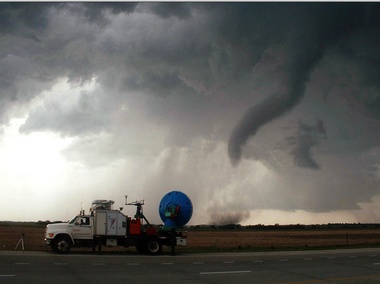
In the past, the most extensive scientific research on tornadoes has been done in Oklahoma and the central Plains, with NOAA and a host of other groups hosting large projects which intercept tornadoes and take data near and around the storms to see how they develop and evolve over time. Projects called VORTEX and VORTEX2 included hundreds of observers working together to make this happen.
Next summer, VORTEX-Southeast is coming to our region. Again, there are many partners in this endeavor, and if conditions are right, you may see some of the sensor-equipped trucks moving through the region. However, since tornadoes are harder to see in the Southeast due to higher humidity and rain as well as more hilly conditions, and roads don’t often fall in a uniform grid, they will be running this field project a bit differently than earlier ones. They will pick places that they think tornadoes will form and set up their observation posts accordingly. So instead of chasing the storms, they will let the storms come to them.
You can read more about this project at https://www.al.com/news/index.ssf/2015/04/huge_tornado_research_project.html.