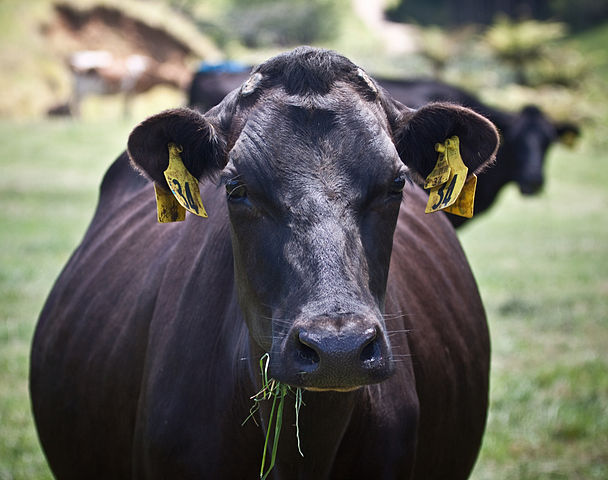
One area of hot research in reducing carbon emissions is work on reducing the emission of methane from cattle digestion. While cow belches do not put as much carbon into the air as the burning of fossil fuel for transportation and energy production, it is one area in agriculture that is being studied to see how carbon emissions can be reduced. In the last week I have seen two examples of supplements that are being considered to reduce methane production in cattle (which would also improve the cows’ ability to produce more milk or meat, since less energy would be lost to methane).
A story out of Penn State noted that “cows that consumed a feed regimen supplemented by the novel methane inhibitor 3-nitrooxypropanol — or 3NOP — gained 80 percent more body weight than cows in a control group. Significantly, feed intake, fiber digestibility and milk production by cows that consumed the supplement did not decrease.” At the same time, methane production was reduced by 30 percent. You cna read about it at here.
A separate study which was discussed in a recent story on National Public Radio noted that some recent work by Danish scientists showed that the common herb oregano also showed promise in reducing methane emissions. Use of an organic version of the herb would be a boon to farmers who wish to produce milk products organically. You can read that story here.