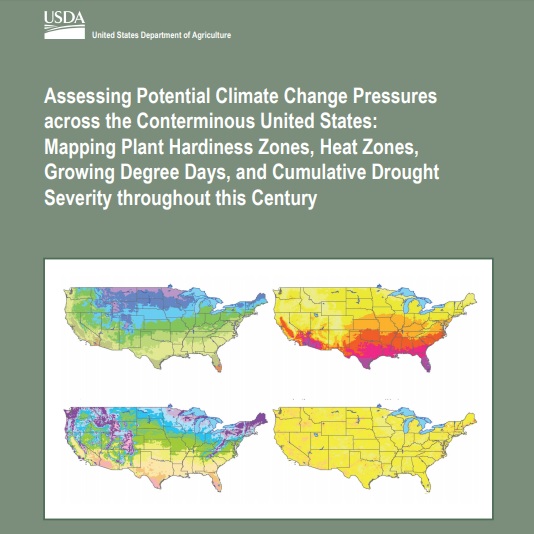
This week the USDA published a new 38-page report which contains information on the possible range of changes that we can expect to see across the United States through the end of the century. The changes include minimum temperature and associated plant hardiness zones, degree days, and drought severity. As you might expect, the changes are minimal over the short term but get more extreme as the end of the century approaches. The changes also depend in large part on how emissions of greenhouse gases change over time. One interesting result for the Southeast is that droughts are expected to decrease in the Southeast by mid-century due to increases in precipitation, although that goes away by the end of the century. There is a lot to digest in this report but it’s worth looking at, especially if you are making decisions about infrastructure like irrigation or barns or long-term crops like fruit trees or pine plantations which take a long time to mature. The report can be found at https://www.fs.fed.us/nrs/pubs/rmap/rmap_nrs9.pdf.