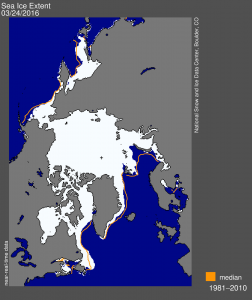
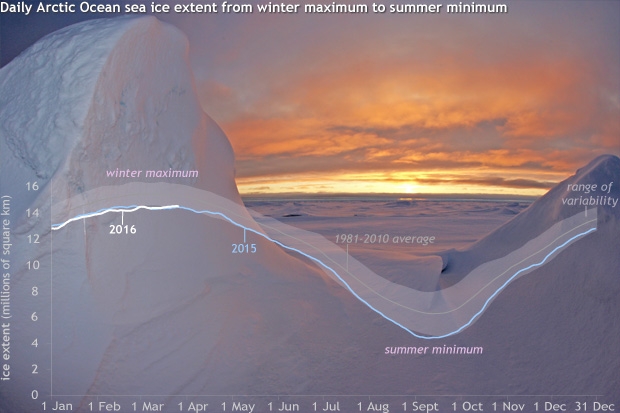
This year, due to dramatically warm conditions in the Arctic, “more of the Arctic’s sea surface seems to have remained unfrozen this winter than ever before in the era of satellite monitoring,” according to the National Snow and Ice Data Center, as quoted in Discover magazine’s ImaGeo blog here. The low extent of sea ice this year broke the previous record set last year (satellite records began in 1979). Having open ocean instead of sea ice can affect the balance of heat and moisture in the area, including potentially causing changes in the jet stream which moves storms through the US and the Southeast.
More details are available at the NOAA Climate blog at https://www.climate.gov/news-features/featured-images/arctics-winter-ice-extent-smallest-record.