The big joke in Washington DC yesterday was Senator Inhofe throwing a snowball in Congress, proving once and for all that climate change does not exist. Or not. After all, as some scientists have said, “just because I have a sandwich does not mean that there is no world hunger.” Climatologists hear this false argument all the time, and it is discouraging because it shows a willful ignorance of the basics of earth science when politicians and other try to make a weather event into a statement about climate trends. Although, to be fair, many media folk and some so-called “climatologists”–many who do not have a degree in climatology–also sometimes blame every extreme weather event on climate change, even when there is little justification for doing so.
The Washington Post‘s Philip Bump has an excellent commentary on the importance of separating out weather (“it snows in winter”) from climate. You can read it by clicking here.
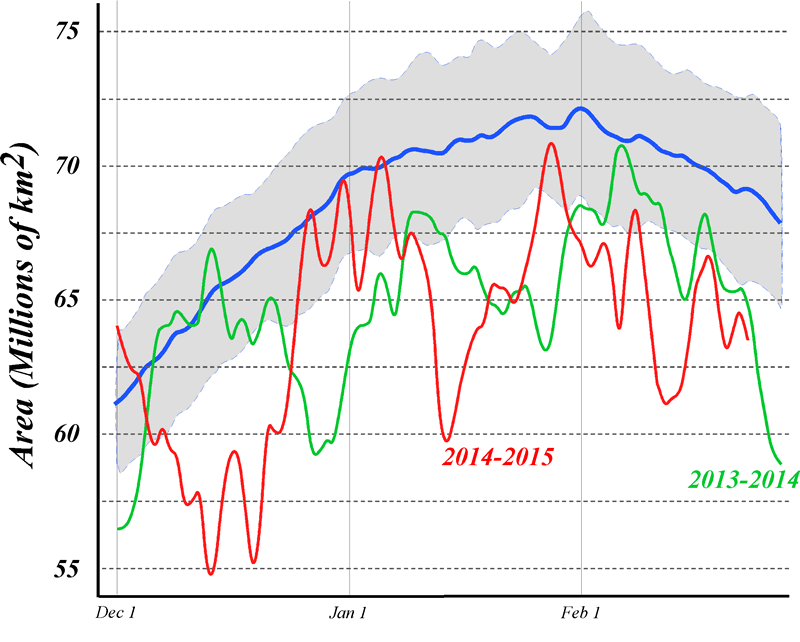
While the senator was throwing snowballs, some new research by Dr. Jon Martin at the University of Wisconsin-Madison (disclaimer–my alma mater) shows that the pool of cold air in the Northern Hemisphere has been steadily eroding over the past 66 years, based on global analysis of the size of the area which has air at 5000 feet above ground with a temperature of 23 F or lower (this is -5 C for those who like the metric system). The graph below shows the comparison of the size of the cold pool for the last two years compared to the long-term climatology. Note that this result is independent of surface observations, which some skeptics complain have been affected by urban effects and other local influences. You can read a good story about this research at the Washington Post’s Capital Weather blog here.