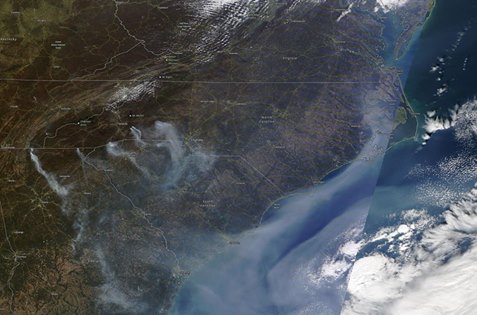
Aerosols are tiny particles floating in the air. They can come from natural sources like bursting bubbles on the ocean, which release tiny crystals of sea salt into the air, or volcanic eruptions, which emit ash and sulfuric acid as tiny droplets. They can also come from human pollution like emissions from the tailpipes of cars and trucks, plumes from factory smokestacks, and smoke from fires caused by the clearing of land. Because of their chemical and physical properties, aerosols can have a profound effect on climate.
In past blogs, I have talked about the impact of volcanic aerosols on temperature for several years following a large volcanic eruption. This article from Grist provides a broader look at how the presence of aerosols is impacting climate now and how it may affect it in the future. You can read it here.