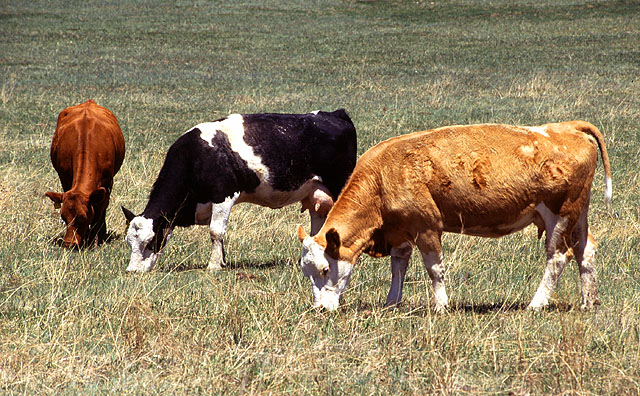
Earth.com had an article this week by Chrissy Sexton about some new research scientists from Minnesota have published in Nature Climate Change. The research concerns the impacts of increasing rainfall variability on the carrying capacity of grazing lands. As rainfall becomes more variable, the number of animals that can be supported by an acre of land decreases because you cannot count on the rains to provide sufficient forage for a large number of cows. We know from observations that even when average rainfall stays constant, the number of high-intensity rains has increased across the US, and there are more dry days between rain events. That increasing variability makes it harder for forage plants to regrow and so fewer animals can survive on the plants. You can read about the research at https://www.earth.com/news/grazing-lands-extremely-vulnerable-climate-change/.